Complete Guide to Y Strainers: Types, Uses, and Maintenance in Industry Systems
May 27, 2026
In modern industrial piping systems, filtration and flow protection are essential for ensuring operational safety, efficiency, and long-term equipment reliability. Among the many types of pipeline strainers used across industries such as oil and gas, chemical processing, power generation, water treatment, HVAC, and marine engineering, the Y strainer stands out as one of the most practical and widely adopted solutions.
A Y strainer is a mechanical filtration device designed to remove unwanted solid particles from liquids or gases flowing through pipelines. Its primary role is not full-scale filtration like a filter system, but rather protective screening, preventing debris such as rust, scale, welding slag, sand, and other particulates from damaging sensitive downstream equipment.
Compared with basket strainers or T-type strainers, the Y strainer features a compact, angled body structure that resembles the letter "Y," allowing it to be installed in both horizontal and vertical pipelines. This makes it particularly valuable in systems where space constraints exist or where intermittent cleaning is acceptable.
In recent years, growing industrial demand for efficient flow control systems and equipment protection has significantly increased the adoption of Y strainers. Their cost-effectiveness, durability, and simple maintenance structure continue to make them a preferred choice in many engineering applications worldwide.
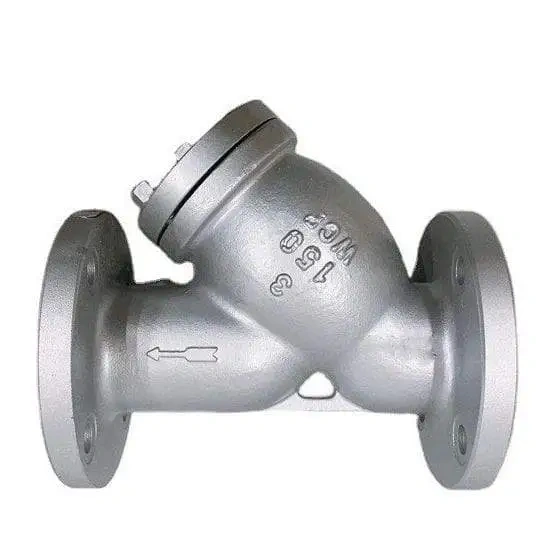
A Y strainer is a pipeline accessory designed to mechanically separate solid particles from fluid or gas streams using a mesh or perforated screening element. Unlike filtration systems that aim for fine purification, Y strainers are primarily designed for coarse filtration and equipment protection.
The device consists of a main body shaped like a "Y," a straining element installed at an angle, and a removable cap or cover that allows access for cleaning or replacement of the screen. As fluid flows through the pipeline, it passes through the mesh screen, which captures debris while allowing clean fluid to continue downstream.
One of the key advantages of this design is its low pressure drop and compact installation footprint, making it ideal for systems where efficiency and space optimization are important considerations.
Y strainers are commonly installed upstream of critical equipment such as:
- Pumps
- Control valves
- Flow meters
- Pressure regulators
- Steam traps
- Heat exchangers
By preventing debris from entering these components, Y strainers significantly extend equipment lifespan and reduce maintenance costs.
The operating principle of a Y strainer is straightforward yet highly effective. As fluid enters the strainer body, it is directed toward the internal mesh or perforated screen. Solid particles are trapped on the upstream side of the screen, while the filtered fluid passes through and continues downstream.
Over time, accumulated debris builds up on the screen surface. This accumulation increases resistance and may lead to pressure drop if not cleaned periodically. Maintenance is typically performed by removing the cover and cleaning or replacing the screen element.
In some advanced systems, Y strainers may be equipped with:
- Blow-off valves for cleaning without disassembly
- Differential pressure gauges for monitoring clogging levels
- Magnetic inserts for capturing ferrous particles
This simple yet efficient mechanism makes Y strainers highly reliable for continuous industrial operation.
The most distinctive feature of a Y strainer is its angled body structure, which allows flexible installation in both vertical and horizontal pipelines. This design also reduces space requirements compared to bulkier strainer types.
Although designed for coarse filtration, Y strainers are highly effective at removing medium to large solid particles. The mesh size can be customized depending on application requirements, offering flexibility in filtration precision.
Due to their streamlined flow path, Y strainers generally create minimal resistance in the pipeline. This ensures efficient fluid transport without significantly affecting system pressure.
Most Y strainers feature a removable cap or cover that allows quick access to the screen. Maintenance can be performed without removing the entire unit from the pipeline in many configurations.
Compared to advanced filtration systems, Y strainers are relatively inexpensive to manufacture, install, and maintain, making them a preferred choice for budget-conscious industrial systems.
Y strainers are available in several connection types to accommodate different pipeline requirements and installation conditions.
Flanged Y strainers are among the most commonly used types in industrial applications. They are designed according to standards such as ANSI, DIN, and other international specifications.
Flanged connections provide a secure and leak-resistant joint using bolts, nuts, and gaskets. This ensures reliable sealing, especially in systems carrying hazardous or high-pressure fluids.
Advantages:
- Strong and reliable sealing
- Suitable for large pipelines
- Easy disassembly for maintenance
- Compatible with standard piping systems
However, flanged Y strainers require precise alignment during installation and may be more sensitive to high temperature variations that affect gasket integrity.
Welded end Y strainers are used in systems requiring permanent and highly secure connections. These are commonly found in high-pressure and high-temperature applications where leakage must be completely avoided.
There are two main types of welded connections:
- Butt Weld Ends: Provide strong, seamless connections suitable for high-pressure pipelines.
- Socket Weld Ends: Typically used in smaller diameter pipes where tight sealing is essential.
Advantages:
- Extremely strong and durable connection
- Leak-proof performance
- Suitable for critical industrial environments
The downside is that welded strainers are more difficult to remove for maintenance, often requiring cutting and re-welding during replacement.
Threaded Y strainers are widely used in small-scale commercial and residential piping systems. They feature NPT or BSP threaded connections that allow quick and easy installation without specialized welding or flanging equipment.
Advantages:
- Simple installation
- Cost-effective
- Suitable for low-pressure systems
- Easy replacement
These strainers are typically used in water supply systems, HVAC applications, and light industrial pipelines.
Y strainers are manufactured using a variety of materials depending on operating conditions and media type.
Common materials include:
- Cast Iron: Suitable for water and non-corrosive fluids
- Carbon Steel: Used in industrial applications with moderate corrosion risk
- Stainless Steel (304/316): Ideal for corrosive environments and chemical processing
- Bronze/Brass: Common in marine and low-pressure systems
- Alloy Steel: Used in high-temperature and high-pressure applications
The selection of material directly impacts the strainer's durability, corrosion resistance, and overall performance.
Y strainers are used across a wide range of industries due to their versatility and reliability.
Used to protect pumps, compressors, and valves from debris in crude oil and gas pipelines.
Ensures that sensitive chemical handling equipment is protected from contamination and particulate damage.
Used in filtration stages to remove sediment and protect pumps and control systems.
Protects steam lines, turbines, and heat exchangers from particulate contamination.
Installed in cooling and heating systems to maintain efficient flow and prevent clogging.
Used in seawater systems where corrosion resistance and reliability are essential.
Y strainers offer several important benefits that contribute to their widespread use:
- Compact design suitable for space-limited installations
- Efficient protection of downstream equipment
- Wide range of material and size options
- Low installation and operating costs
- Easy maintenance and screen replacement
- Suitable for both liquid and gas systems
These advantages make them a practical choice for many engineering applications.
Despite their benefits, Y strainers also have certain limitations:
- Limited filtration capacity compared to basket strainers
- Require frequent cleaning in dirty fluid systems
- Not suitable for fine filtration requirements
- Potential pressure drop increase when clogged
- Maintenance may require system shutdown in some cases
Understanding these limitations is essential for selecting the right strainer type for a given application.
Proper installation is critical for ensuring optimal performance of a Y strainer.
Key installation considerations include:
- Ensure correct flow direction according to body marking
- Install in accessible locations for maintenance
- Provide support for heavy pipeline systems
- Use appropriate gasket materials for flanged connections
Avoid installing in positions where debris accumulation is excessive without cleaning access
Correct installation significantly improves system efficiency and reduces maintenance frequency.
Regular maintenance is essential for maintaining the performance of Y strainers. Over time, debris accumulation can lead to increased pressure drop and reduced flow efficiency.
Maintenance steps typically include:
- Isolating the pipeline section
- Removing the cover or cap
- Extracting and cleaning the mesh screen
- Inspecting for damage or corrosion
- Reinstalling the screen and sealing the unit
In high-demand systems, differential pressure monitoring can be used to determine when cleaning is required.
While both Y and T strainers are used for similar purposes, they differ in design and performance characteristics.
- Y Strainer: Compact, low-cost, suitable for smaller debris loads and limited space
- T Strainer: Larger filtration area, suitable for higher debris loads and easier maintenance
In general, Y strainers are preferred for compact systems and moderate filtration needs, while T strainers are used in heavy-duty applications requiring larger dirt-holding capacity.
The global demand for Y strainers is expected to grow steadily due to increasing industrial automation, expansion of water treatment infrastructure, and rising investment in energy and chemical processing industries.
Key trends include:
- Increased use of stainless steel Y strainers in corrosive environments
- Integration of smart monitoring systems for predictive maintenance
- Growing demand in emerging economies with expanding industrial infrastructure
- Development of lightweight and high-efficiency designs
As industries continue to prioritize equipment protection and operational efficiency, Y strainers are expected to remain an essential component in fluid handling systems.
The Y strainer remains one of the most practical and widely used pipeline protection devices in modern industrial systems. Its simple yet effective design, combined with cost efficiency and ease of maintenance, makes it indispensable across a wide range of applications.
From oil and gas pipelines to water treatment plants and HVAC systems, Y strainers play a crucial role in protecting valuable equipment and ensuring smooth system operation. Although they may require periodic cleaning and are not suitable for fine filtration, their advantages far outweigh their limitations in most industrial scenarios.
As industries continue to evolve toward higher efficiency and reliability standards, the Y strainer will continue to serve as a fundamental component in safeguarding pipeline integrity and optimizing fluid system performance.
Previous: What Is an Eccentric Plug Valve? Complete Guide for Industrial Flow Control
Next: Dual Plate Check Valve Advantages, Working Principles, and Maintenance Tips