Double Offset Butterfly Valve
A double offset butterfly valve, also known as a high-performance butterfly valve, features a unique two-offset shaft design that improves sealing efficiency and operational reliability. The advanced eccentric structure creates a cam action, allowing the disc to quickly move away from the seat after opening to reduce friction, lower operating torque, and minimize wear. Compared with traditional concentric butterfly valves, double offset butterfly valves provide longer service life and better performance in demanding applications. As a leading double offset butterfly valve manufacturer in China, VERVO delivers durable, high-quality valve solutions for water treatment, oil and gas, chemical, power, and industrial pipeline systems.

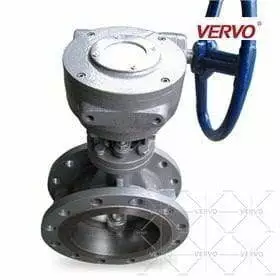
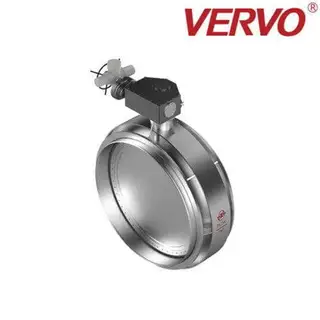
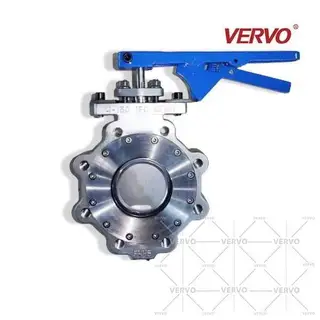
A double offset butterfly valve, also known as a high-performance butterfly valve (HPBV), is an advanced rotary valve designed to provide improved sealing performance, reduced operating torque, and longer service life compared with traditional concentric butterfly valves.
Unlike a concentric butterfly valve, where the valve stem is positioned at the center of the disc and pipeline, a double offset butterfly valve uses a unique two-offset shaft design. These two eccentric positions create a cam-like operating motion, allowing the disc to move away from the seat immediately after the valve begins to open. This minimizes unnecessary rubbing between the disc and seat, significantly reducing friction, wear, and operating torque.
The double offset structure provides better performance under higher pressure and temperature conditions while maintaining the compact and lightweight advantages of butterfly valve designs. Because of its excellent balance between reliability, efficiency, and cost, double offset butterfly valves are widely used in industrial applications such as oil and gas processing, chemical plants, power generation facilities, water treatment systems, and large pipeline networks.
As a professional double offset butterfly valve manufacturer, VERVO provides high-performance butterfly valve solutions with various materials, pressure ratings, sealing options, and actuator configurations to meet global industrial requirements.
The defining feature of a double offset butterfly valve is its two-axis offset design, which improves sealing performance and reduces mechanical stress during operation.
The first offset moves the valve shaft away from the centerline of the disc. This arrangement reduces the contact area between the disc and seat during rotation.
In a conventional concentric butterfly valve, the disc continuously rubs against the seat throughout the opening and closing process. This friction can increase wear over time.
With the first offset design, the disc begins to separate from the seat immediately when the valve opens, reducing:
- Seat abrasion
- Operating torque
- Mechanical stress
- Maintenance frequency
This feature helps extend the service life of the valve and improves operational efficiency.
The second offset moves the valve shaft away from the centerline of the pipeline bore. This creates a more efficient disc movement path and allows the disc to rotate with minimal interference.
The combination of the two offsets creates a cam effect, ensuring that the sealing surfaces only contact each other during the final closing position. As a result, the valve achieves reliable shutoff while reducing friction-related damage.
The working principle of a double offset butterfly valve is based on the rotation of an eccentric disc inside the valve body.
When the valve is fully closed, the disc presses against the seat to provide a tight seal and prevent fluid leakage. As the actuator rotates the stem, the disc moves away from the seat instead of sliding across it.
This operating process provides several advantages:
- Reduced friction between disc and seat
- Lower opening and closing torque
- Less wear on sealing components
- Faster and smoother operation
When fully open, the disc rotates approximately 90 degrees until it becomes parallel with the pipeline flow direction. The streamlined disc position allows efficient fluid passage with relatively low pressure loss.
Double offset butterfly valves can be operated through different methods, including:
- Manual lever operation
- Gear operators
- Pneumatic actuators
- Electric actuators
- Hydraulic actuators
For automated industrial systems, the low operating torque of double offset butterfly valves makes them an excellent choice for actuator integration.
The two-offset design is the primary advantage of high-performance butterfly valves. It reduces sealing friction and improves valve durability compared with single offset and concentric designs.
The eccentric movement allows the disc to quickly disengage from the seat, preventing unnecessary wear during frequent operation.
Double offset butterfly valves provide tighter shutoff performance than traditional butterfly valves. Depending on the application requirements, they can be equipped with:
- Soft seats
- Resilient seats
- Metal seats
Soft-seated designs are commonly used for water and general industrial applications, while metal-seated versions are suitable for higher temperature and more demanding services.
Because the disc does not continuously rub against the seat, less force is required to operate the valve. Lower torque requirements allow:
- Smaller actuators
- Reduced energy consumption
- Easier automation
- Longer actuator service life
Double offset butterfly valves can handle more demanding conditions than concentric butterfly valves. They are suitable for applications requiring:
- Higher pressure ratings
- Higher operating temperatures
- Frequent cycling operations
With appropriate materials and sealing configurations, these valves can be adapted to various industrial environments.
Compared with many traditional isolation valves, double offset butterfly valves require less installation space and have lower weight.
Benefits include:
- Easier transportation
- Simplified installation
- Reduced support requirements
- Lower maintenance costs
Double offset butterfly valves are available with different sealing designs depending on service conditions.
Soft-seated butterfly valves use resilient materials such as:
- EPDM
- NBR
- PTFE
- Viton
They provide excellent bubble-tight shutoff and are commonly used in:
- Water treatment systems
- HVAC systems
- Irrigation pipelines
- General industrial applications
Soft seats are ideal for moderate temperature and pressure conditions.
Metal-seated designs use metal sealing components to withstand more severe operating environments.
They are suitable for:
- High-temperature applications
- Steam systems
- Chemical processing
- Power generation facilities
Metal seats provide improved resistance to heat, erosion, and aggressive media.
Due to their excellent performance characteristics, double offset butterfly valves are widely used across multiple industries.
In oil and gas processing systems, reliable isolation and flow control are essential. Double offset butterfly valves are used in:
- Pipeline systems
- Refinery processes
- Storage facilities
- Gas transportation systems
Their durability and tight sealing make them suitable for demanding applications.
Power plants require valves capable of handling high-pressure and high-temperature fluids. Double offset butterfly valves are commonly installed in:
- Cooling water systems
- Condenser systems
- Utility pipelines
Chemical processes often involve corrosive or challenging fluids. Proper material selection allows double offset butterfly valves to provide dependable operation in these environments.
Double offset butterfly valves are widely used in:
- Pump stations
- Water distribution networks
- Filtration systems
- Wastewater treatment facilities
Their large diameter capability and low maintenance requirements make them ideal for municipal and industrial water applications.
Reduced seat contact during operation minimizes wear and extends the valve's operational lifespan.
The improved sealing mechanism provides tighter isolation compared with single offset butterfly valves.
Lower friction and wear reduce the frequency of repairs and replacement.
Lower torque requirements make these valves suitable for pneumatic and electric actuator systems.
The streamlined disc design helps maintain effective flow performance with reduced pressure loss.
Although double offset butterfly valves offer many advantages, they also have some limitations.
The advanced offset design requires more precise manufacturing processes, making double offset butterfly valves more expensive than standard concentric designs.
Compared with simple butterfly valves, double offset valves have additional design considerations and may require more specialized maintenance.
For extremely high-temperature, high-pressure, or highly abrasive applications, triple offset butterfly valves or other specialized valve types may provide better performance.
However, for many industrial systems, the improved durability and operational reliability of double offset butterfly valves justify the additional investment.
A double offset butterfly valve is a high-performance flow control solution designed to overcome the limitations of traditional concentric butterfly valves. Its two-offset shaft structure reduces friction, minimizes seat wear, lowers operating torque, and improves sealing reliability.
With excellent performance in medium-to-high pressure and temperature applications, double offset butterfly valves have become a preferred choice for industries including oil and gas, power generation, chemical processing, and water treatment.
By combining compact design, reliable shutoff capability, and automation-friendly operation, double offset butterfly valves provide an efficient and durable solution for modern industrial pipeline systems.