Angle Globe Valve
Angle globe valves are engineered to provide reliable flow regulation, efficient throttling, and reduced pressure loss in demanding industrial applications. Featuring a 90-degree angled inlet and outlet design, these valves allow smooth flow direction changes while maintaining excellent sealing performance and operational durability. Compared with conventional globe valves, angle type globe valves offer easier installation, lower piping requirements, and improved flow efficiency. They are widely used in steam, cooling water, chemical, petrochemical, and power generation systems where precise control and long service life are essential. As a leading Angle Globe Valve manufacturer in China, VERVO delivers high-quality valve solutions with advanced design, strict quality control, and customized options.
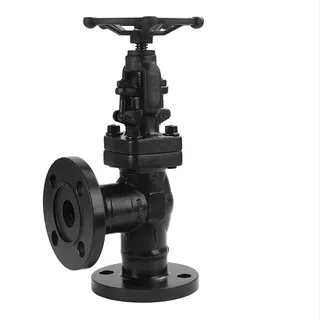
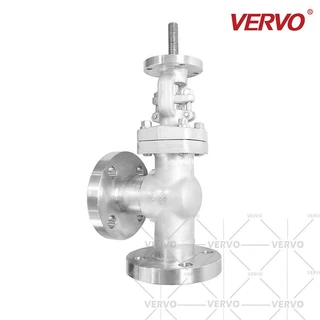
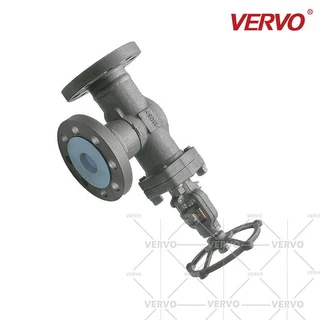
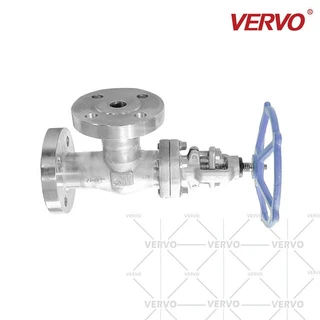
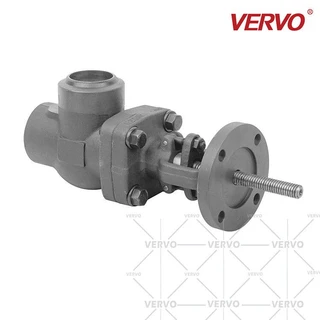
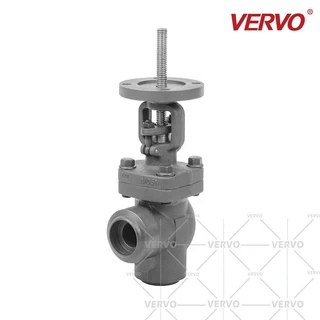
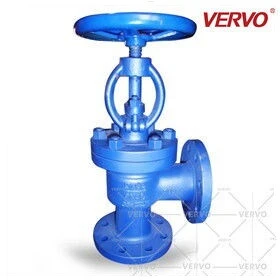
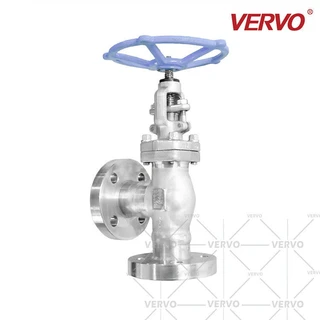
ASTM A182 F316 Globe Control Valve, 1 IN, 600 LB, DN25, PN100
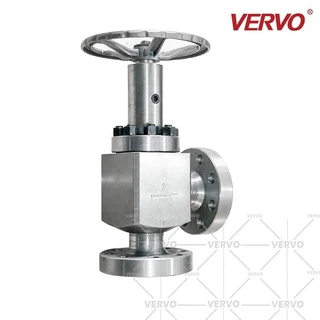
Forged Steel Throttle Regulating Valve, Angle Globe Valve, 2IN, CL900
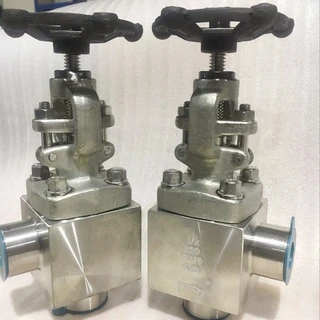

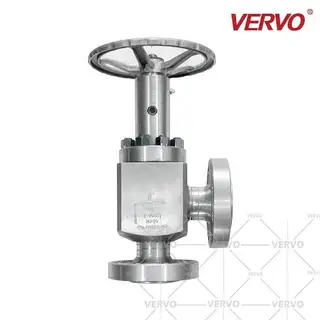
An angle globe valve is a specialized type of globe valve designed with a 90-degree angle between the inlet and outlet ports. Unlike standard globe valves, where the flow path is generally straight through the valve body, an angle globe valve changes the direction of fluid flow while also providing accurate flow control. This unique configuration allows the valve to perform both throttling and directional adjustment functions, making it an excellent choice for industrial systems that require efficient flow regulation and reduced piping complexity.
When users search for the definition of an angle globe valve, they are usually interested in understanding its operating principle, structural characteristics, and differences compared with other globe valve designs, such as straight pattern globe valves and Y-pattern globe valves. The key distinction is that an angle type globe valve integrates a 90-degree flow direction change directly into the valve body, eliminating the need for additional pipe elbows in many applications.
Angle globe valves are widely used in industries where reliable flow control, tight shutoff, and long service life are essential. They are commonly found in steam systems, cooling water systems, chemical processing plants, power generation facilities, petrochemical applications, and other demanding industrial environments.
The structure of an angle globe valve is designed to provide efficient operation, excellent sealing performance, and long-term durability. The most distinctive feature is its angled valve body, where the inlet and outlet passages are positioned at approximately 90 degrees to each other. This design allows the valve to redirect the flow smoothly while maintaining effective control over fluid movement.
The main components of an angle globe valve include the valve body, bonnet, stem, disc or plug, seat ring, packing system, and actuator. Each component plays an important role in ensuring reliable valve performance.
The valve body is the primary pressure-containing component and features an integrated 90-degree flow passage. Compared with conventional globe valves, this structure reduces the requirement for external piping changes and helps minimize installation space. The angled design also reduces turbulence and pressure loss in certain operating conditions.
The disc is the main flow control element that moves vertically toward or away from the valve seat. By adjusting the position of the disc, operators can precisely control the amount of fluid passing through the valve. The tight contact between the disc and seat provides reliable shutoff performance and helps prevent leakage when the valve is fully closed.
Different seat designs and trim materials can be selected according to operating conditions, including high-pressure, high-temperature, or corrosive environments.
The stem connects the actuator or handwheel to the disc and transfers operating force to open or close the valve. The bonnet protects the internal components and provides a sealed connection with the valve body.
High-quality angle globe valves often use advanced sealing systems, such as bellows seals or high-performance packing systems, to prevent leakage along the stem. Bellows-sealed designs are especially suitable for applications involving hazardous, toxic, or expensive fluids because they provide additional protection against external leakage.
Angle globe valves are manufactured using various materials depending on application requirements. Common materials include:
- Carbon steel for general industrial applications
- Stainless steel for corrosive environments
- Alloy steel for high-temperature and high-pressure services
- Cast iron for low-pressure applications
Material selection ensures that the valve can withstand harsh operating conditions, including extreme temperatures, aggressive chemicals, and high-pressure fluid systems.
The operating principle of an angle globe valve is similar to that of a conventional globe valve. When the valve actuator turns the stem, the disc moves vertically to adjust the opening between the disc and seat. As the opening changes, the flow rate through the valve is regulated.
When the valve is fully open, fluid flows through the angled passage with minimal restriction. When the valve is partially open, the disc position creates a controlled flow area, allowing precise adjustment of fluid movement. When the disc completely contacts the seat, the valve stops the flow.
Because of its excellent throttling capability, an angle globe valve is particularly suitable for applications requiring frequent flow adjustments rather than simple on/off operation.
The primary purpose of an angle globe valve is to regulate and control fluid flow accurately. Unlike isolation valves that are mainly designed for opening and closing pipelines, angle globe valves provide excellent flow adjustment capabilities.
The 90-degree design provides several practical advantages, especially in systems where the pipeline already requires a change in direction.
Angle globe valves are commonly used in steam distribution systems because they can handle high temperatures and provide accurate regulation. Their strong sealing capability helps maintain system efficiency while reducing the risk of steam leakage.
In cooling applications, precise flow adjustment is often necessary to maintain equipment performance. Angle globe valves allow operators to control cooling water flow rates effectively and ensure stable operation.
Chemical processing systems often require valves that can handle corrosive fluids and demanding operating conditions. Stainless steel and alloy angle globe valves provide reliable performance in these environments.
Power plants use angle globe valves in systems involving steam, water, and other process fluids. Their durability and excellent throttling performance make them suitable for high-pressure and high-temperature services.
Many manufacturing processes require accurate fluid control to maintain product quality and operational safety. Angle globe valves offer dependable regulation for gases, liquids, and other industrial media.
One of the biggest advantages of an angle globe valve is its ability to change flow direction without requiring additional pipe elbows. This can reduce installation costs, simplify pipeline layouts, and save valuable space.
The globe valve design provides superior throttling performance compared with many other valve types. Operators can adjust the disc position precisely to achieve the desired flow rate.
The angled flow path can improve fluid movement by reducing unnecessary turbulence in certain applications. This helps enhance system efficiency and reduce energy consumption.
High-quality angle globe valves provide excellent shutoff performance through precise disc and seat alignment. Advanced sealing technologies, including bellows seals, further improve leakage prevention.
Manufactured from durable materials and designed for demanding industrial conditions, angle globe valves offer excellent resistance to wear, corrosion, and temperature extremes.
Both angle globe valves and Y-pattern globe valves are designed to improve flow performance compared with traditional globe valves, but their designs are different.
An angle globe valve features a 90-degree inlet-to-outlet configuration and is mainly used when a change in pipeline direction is required. A Y-pattern globe valve has a diagonal flow path, usually around 45 degrees, which reduces flow resistance and pressure drop.
Angle globe valves are ideal for applications where space saving and directional changes are important, while Y-pattern globe valves are often preferred for high-flow applications requiring lower pressure loss.
An angle globe valve is a versatile industrial valve that combines accurate flow control with convenient pipeline direction changes. Its unique 90-degree body design reduces installation requirements while providing reliable throttling, excellent sealing, and long-lasting performance.
With durable construction, flexible material options, and strong adaptability to demanding operating conditions, angle globe valves are widely used across steam, chemical, power, cooling, and industrial process systems. For applications requiring precise regulation and dependable operation, an angle globe valve is an efficient and practical flow control solution.