Lift Plug Valve
VERVO specializes in advanced severe-service quarter-turn valves engineered for reliable performance in demanding industrial applications. Featuring an innovative lifting mechanism, lift plug valves raise the plug away from the seat before rotation, effectively eliminating friction, seat wear, and galling associated with conventional plug and ball valves. As a leading lift plug valve manufacturer in China, VERVO designs and manufactures lift plug valves with excellent sealing performance, low operating torque, and extended service life. Widely used in oil and gas, petrochemical, chemical processing, power generation, and other critical industries, these valves are engineered to withstand harsh operating conditions while delivering safe, efficient, and dependable flow isolation solutions.
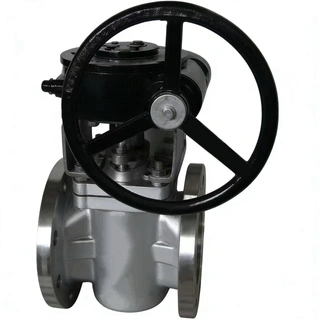
API 599 Lift Plug Valve, A351 CF8M, 3 IN, CL300, Hard-sealed
A lift plug valve is an advanced quarter-turn isolation valve designed to provide reliable shutoff performance in demanding industrial applications. Unlike conventional plug valves and ball valves that rely on sliding contact between sealing surfaces during operation, a lift plug valve uses a unique vertical lifting and rotating mechanism to protect the sealing surfaces from unnecessary wear.
Before the plug rotates, the valve mechanism lifts the plug away from the seat, creating a small clearance between the sealing surfaces. After the plug reaches the desired position, it lowers back into place to create a secure seal. This innovative operation eliminates direct sliding friction between the plug and seat, significantly reducing wear, galling, and operating torque.
Because of this special design, lift plug valves are particularly suitable for severe-service applications involving abrasive media, high operating cycles, high pressure, corrosive fluids, and demanding process conditions. They are widely used in industries such as oil and gas, petrochemical, chemical processing, power generation, mining, and other critical pipeline systems where conventional valves may experience premature failure.
As a leading lift plug valve manufacturer in China, VERVO provides high-performance lift plug valves engineered for long service life, dependable sealing, and safe operation under challenging industrial environments.
The operating principle of a lift plug valve combines vertical movement with quarter-turn rotation.
When the valve begins to operate, the plug first moves vertically upward away from the valve seat. This lifting action separates the sealing surfaces, preventing friction between the plug and seat.
Once the plug is completely disengaged, it rotates 90 degrees to open or close the flow passage.
After rotation is completed, the plug moves downward again and contacts the seat, creating a tight seal.
This sequence provides several important advantages:
- No rubbing between sealing surfaces during rotation
- Reduced operating torque
- Lower risk of seat damage
- Improved sealing reliability
- Extended valve service life
The lift-before-turn design makes lift plug valves especially valuable in applications where frequent cycling, high-pressure operation, or abrasive fluids could damage conventional valve designs.
A lift plug valve consists of several precision-engineered components that work together to provide reliable flow isolation and long-term performance.
The valve body is the primary pressure-containing component of the valve.
It houses all internal parts and provides structural support during operation. Valve bodies are commonly manufactured from high-strength materials to withstand demanding service conditions.
Typical materials include:
- Carbon steel
- Stainless steel
- Alloy steel
- Duplex stainless steel
The selected material depends on factors such as:
- Operating pressure
- Temperature range
- Fluid characteristics
- Corrosion requirements
A robust valve body design ensures mechanical strength, pressure resistance, and extended operating life.
The bonnet is mounted on the upper section of the valve body and protects the internal operating mechanism.
It provides support for:
- Valve stem
- Actuator connection
- Sealing components
The bonnet design allows access to internal components for inspection and maintenance while maintaining pressure integrity during operation.
The plug is the primary flow-control element of the valve.
It is typically a cylindrical or conical component that moves vertically and rotates inside the valve body.
During operation, the plug controls fluid flow by aligning or blocking the internal passage.
Common plug materials include:
- Stainless steel
- Carbon steel
- Alloy materials
For severe-service applications, the plug may receive special surface treatments or coatings to improve:
- Wear resistance
- Corrosion protection
- Surface hardness
- Service life
The stem connects the plug to the actuator and transfers operating force to the internal mechanism.
Unlike traditional rotary valve stems, lift plug valve stems are designed to provide controlled vertical movement before rotation.
The stem must withstand:
- Operating torque
- Pressure forces
- Repeated cycling
High-quality stem materials help ensure smooth operation and reliable performance.
The valve seat provides the sealing surface where the plug contacts the valve body.
The seat design is critical for achieving tight shutoff.
Depending on the application, seat materials may include:
- Metal seats
- PTFE
- Reinforced polymers
- Other engineered sealing materials
The lift mechanism protects the seat from sliding damage, allowing the valve to maintain sealing performance over many operating cycles.
The actuator controls the lifting and rotating movement of the plug.
Different actuator options are available depending on operating requirements:
Manual operation is suitable for smaller valves or applications requiring occasional operation.
Pneumatic actuators provide:
- Fast response
- Reliable automation
- Suitable operation in hazardous environments
Electric actuators allow:
- Remote operation
- Automated control
- Integration with process systems
Hydraulic actuators provide high torque output for large valves and high-pressure applications.
The most significant advantage of a lift plug valve is its ability to eliminate sliding contact during operation.
Traditional valves often experience wear because sealing surfaces rub against each other every time the valve opens or closes.
The lift-and-rotate mechanism prevents this problem by separating the plug from the seat before movement.
Benefits include:
- Reduced seat damage
- Lower maintenance requirements
- Longer operating lifespan
- Improved reliability
This makes lift plug valves ideal for applications requiring frequent cycling or continuous operation.
Lift plug valves provide reliable sealing because the plug engages the seat only after rotation is completed.
The controlled seating action helps prevent:
- Leakage
- Surface damage
- Uneven wear
This makes them suitable for critical applications where process containment and safety are essential.
Because the plug does not scrape against the seat during rotation, less force is required to operate the valve.
Lower operating torque provides advantages such as:
- Smaller actuators
- Reduced energy consumption
- Easier operation
- Lower equipment costs
For automated systems, reduced torque requirements can improve actuator efficiency and reliability.
Many lift plug valves feature a streamlined internal design with minimal dead zones.
This prevents process media from accumulating inside the valve body.
Advantages include:
- Reduced contamination risk
- Easier cleaning
- Lower chance of blockage
- Improved process efficiency
This feature is especially valuable in applications involving:
- Slurries
- Viscous fluids
- Chemical products
- Hygienic processes
Lift plug valves are available in different configurations to meet complex process requirements.
Multi-port designs can provide:
- Flow diversion
- Mixing capability
- Pipeline switching
- Reduced installation requirements
This flexibility allows engineers to design more efficient piping systems.
Lift plug valves are commonly used in:
- Pipeline isolation
- Refinery systems
- Gas processing facilities
- Storage terminals
Their durability and tight shutoff capability make them suitable for hydrocarbon applications.
Petrochemical facilities require valves capable of handling:
- High temperatures
- Aggressive chemicals
- Frequent operation
Lift plug valves provide reliable performance under these demanding conditions.
Chemical plants benefit from lift plug valves because of their:
- Corrosion resistance
- Reliable sealing
- Low maintenance requirements
They are used in chemical transfer, processing, and isolation systems.
Power plants use lift plug valves in systems requiring dependable shutoff and long-term durability.
Their ability to withstand harsh operating conditions makes them suitable for critical process applications.
Mining operations often involve abrasive slurries and solid particles.
The wear-resistant design of lift plug valves helps improve reliability in these challenging environments.
Choosing the correct lift plug valve requires evaluating several operating factors:
- Valve size
- Pressure rating
- Temperature range
- Fluid characteristics
- Corrosion requirements
- Operating frequency
- Actuator requirements
- Applicable industry standards
Material selection is especially important when handling aggressive chemicals, abrasive media, or extreme temperatures.
Working with an experienced valve manufacturer helps ensure the selected valve meets application requirements and delivers optimal performance.
Lift plug valves provide an advanced solution for severe-service isolation applications where traditional valve designs may experience excessive wear and maintenance issues. Through their innovative lift-and-rotate mechanism, these valves eliminate sliding contact between the plug and seat, reducing friction, preventing galling, and extending service life.
With advantages including excellent sealing performance, low operating torque, reduced maintenance requirements, dead-space-free design, and flexible configuration options, lift plug valves have become a trusted choice for oil and gas, petrochemical, chemical processing, power generation, and mining industries.
As a professional lift plug valve manufacturer in China, VERVO delivers durable and reliable valve solutions engineered for demanding industrial environments. By combining advanced technology, quality materials, and precision manufacturing, VERVO lift plug valves provide safe, efficient, and long-lasting flow isolation performance for critical applications.