DBB Ball Valve
Double Block and Bleed (DBB) ball valves are designed with two independent sealing elements and a central bleed port, providing reliable isolation and enhanced safety performance. This structure allows trapped pressure between the two sealing points to be safely vented, ensuring zero-leakage operation and easy verification of valve integrity. DBB ball valves are widely used in critical industries such as oil and gas, petrochemical processing, and chemical plants, where safe and dependable isolation is essential. Their compact design reduces system complexity while improving operational safety. As a leading DBB ball valve manufacturer in China, VERVO delivers high-quality, engineered solutions for demanding applications.
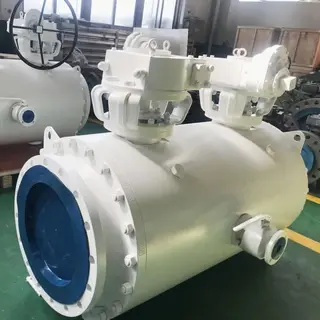
ASTM A105 DBB Ball Valve, API 6D, 18 Inch, CL150, RF Flanged
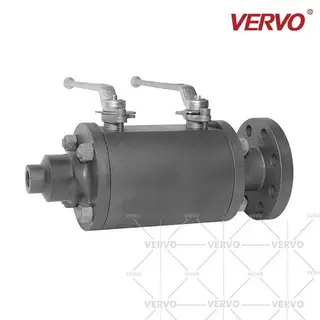
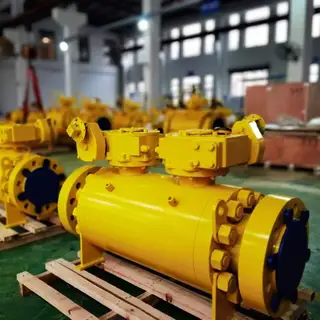

A Double Block and Bleed (DBB) ball valve is a specialized industrial valve designed to provide enhanced isolation, safety, and leakage prevention in high-risk pipeline systems. It integrates two independent sealing barriers within a single valve body, along with a bleed or vent port located between the two sealing surfaces.
The purpose of this configuration is to create a secure isolation zone within the pipeline. The two sealing elements act as a “double block,” preventing upstream and downstream flow, while the bleed port allows controlled release of trapped pressure or fluid between the seals. This ensures that any leakage past the first seal can be safely detected and discharged before it reaches the second barrier.
DBB ball valves are widely used in industries where operational safety, zero leakage, and system integrity are critical, such as oil and gas production, petrochemical processing, chemical manufacturing, and high-pressure pipeline networks.
The working principle of a DBB ball valve is based on dual isolation combined with controlled pressure venting. The valve typically contains two ball seats or sealing surfaces positioned in series within a single valve assembly.
When the valve is in the closed position, both upstream and downstream seals block fluid flow independently. This creates two separate barriers that prevent media from passing through the valve. Between these two sealing points lies a cavity equipped with a bleed port or drain valve.
This intermediate bleed system serves a critical safety function. After the main valves are closed, the bleed port can be opened to release any trapped pressure or residual fluid within the cavity. If pressure is present, it indicates potential leakage past one of the seals. This feature allows operators to verify sealing integrity without removing the valve from service.
During maintenance operations, the DBB configuration ensures that the isolated pipeline section is completely depressurized and safe to work on. This significantly reduces operational risks and improves system reliability.
The most important feature of a DBB ball valve is its dual sealing system. Each sealing surface operates independently, ensuring that if one seal becomes damaged or worn, the second seal continues to provide effective isolation. This redundancy greatly enhances safety in critical systems.
The bleed port positioned between the two sealing elements allows operators to safely discharge trapped pressure or fluid. It also enables real-time monitoring of seal performance, making it easier to detect internal leakage without disassembling the system.
Instead of installing multiple valves in series, a DBB ball valve combines isolation and bleeding functions into a single compact unit. This reduces installation space, minimizes piping complexity, and lowers overall system cost.
DBB ball valves are designed for high-risk environments where leakage can lead to serious safety hazards or environmental damage. The dual-block mechanism ensures maximum protection against accidental release of hazardous fluids or gases.
The bleed function allows operators to test sealing integrity while the system remains in place. This simplifies maintenance procedures and reduces downtime in industrial operations.
The DBB valve operates through a sequence of controlled isolation steps. First, the valve is closed, activating both upstream and downstream seals. This creates a fully isolated chamber in the middle section of the valve body.
Next, the bleed valve is opened. If no fluid or pressure is released, it confirms that both sealing surfaces are functioning correctly. If fluid is detected, it indicates leakage past one of the seals, allowing maintenance personnel to identify potential issues before they escalate.
This process ensures a high level of operational safety and system integrity. It is particularly important in applications where hazardous, flammable, or high-pressure fluids are present.
Although both DBB ball valves and standard ball valves are used for flow control and isolation, their design and functionality differ significantly.
A standard floating ball valve typically features a single sealing system. The ball is not fixed but “floats” slightly within the valve body, allowing it to be pressed against the downstream seat by media pressure. This provides basic on/off control but offers limited redundancy.
Key characteristics include:
- Single sealing interface
- Basic isolation function
- No pressure verification capability
- Reliance on system pressure for sealing performance
- Suitable for general-purpose applications
In contrast, a DBB ball valve incorporates multiple sealing mechanisms and an integrated bleed port.
Key characteristics include:
- Two independent sealing systems (double block)
- Intermediate bleed or drain port
- Ability to verify sealing integrity
- Redundant isolation for enhanced safety
- Suitable for critical and high-risk applications
The DBB design significantly improves safety and operational reliability compared to conventional ball valves.
DBB ball valves offer a wide range of performance benefits that make them essential in demanding industrial systems:
- Enhanced safety through dual isolation
- Reliable prevention of cross-contamination
- Real-time leakage detection capability
- Reduced need for multiple valve installations
- Compact design for space-saving piping layouts
- Improved maintenance efficiency and reduced downtime
- High suitability for hazardous and high-pressure fluids
- Compliance with strict industrial safety standards
These advantages make DBB ball valves a preferred choice in critical flow control systems.
DBB ball valves are widely used in industries where safe isolation and leak prevention are essential.
DBB valves are commonly installed in pipeline isolation systems, wellhead control, sampling points, and refinery processes. They provide safe maintenance access while ensuring zero leakage of hydrocarbons.
In chemical plants, DBB valves are used to handle volatile, corrosive, or high-pressure fluids. Their dual sealing system ensures process safety and environmental protection.
DBB valves help prevent cross-contamination between chemical lines and allow safe maintenance of process equipment without shutting down entire systems.
In power plants, DBB valves are used in fuel systems, steam lines, and auxiliary pipelines where safe isolation is required for maintenance operations.
DBB valves are widely applied in compressed gas and air systems to ensure secure isolation and safe pressure release during servicing.
Proper selection of a DBB ball valve requires careful analysis of operating conditions, including pressure rating, temperature range, fluid type, and system safety requirements. Material selection for valve bodies, seats, and seals must also align with the application environment to ensure long-term reliability.
In many cases, DBB ball valves are designed according to international standards such as API, ASME, or ISO specifications, ensuring compatibility with global industrial systems.
DBB ball valves represent an advanced solution for modern industrial flow control systems that demand maximum safety, reliability, and efficiency. By combining dual isolation with integrated pressure bleeding capability, they provide a higher level of protection than standard valve designs.
Whether used in oil and gas pipelines, chemical processing plants, or high-pressure industrial systems, DBB ball valves ensure secure operation, simplified maintenance, and enhanced system integrity in the most demanding environments.