Three Way Ball Valve
A three way ball valve features a precisely engineered ball with a drilled port that controls fluid direction between three connected pipeline paths. By rotating the ball 90 degrees, the valve enables diversion, mixing, or switching of flow depending on system requirements. It is widely used in water treatment, chemical processing, food and beverage production, HVAC systems, and residential plumbing applications due to its reliable sealing performance and flexible flow control capability. Designed for durability and smooth operation, it ensures efficient system performance under various working conditions. As a leading three way ball valve manufacturer in China, VERVO delivers high-quality, precision-engineered valve solutions for global industrial applications.
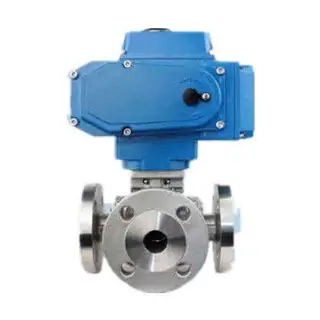
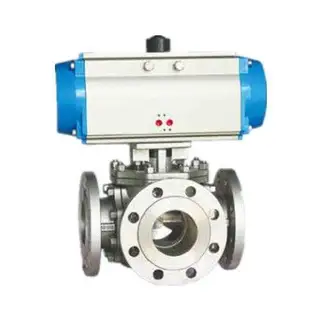
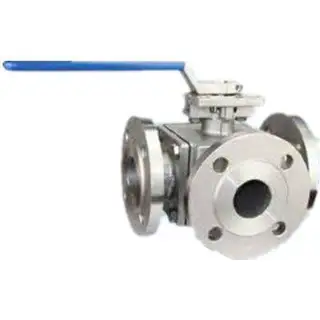
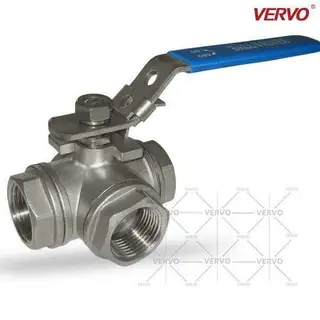
A three way ball valve is an advanced flow control device designed with three connection ports that allow the regulation, distribution, or mixing of fluid within a piping system. Unlike standard two-way valves that simply open or close a single flow path, a three way ball valve enables multiple flow directions, making it an essential component in complex industrial and commercial piping networks.
By integrating three pipeline connections into a single compact valve body, this design reduces system complexity, minimizes installation costs, and improves overall operational efficiency. three way ball valves are widely used in industries where precise flow control, switching, or blending of media is required, including water treatment, chemical processing, oil and gas, HVAC systems, food and beverage production, and light industrial automation.
The core structure of a three way ball valve consists of a spherical ball with precisely machined internal ports. These ports are drilled through the ball in specific patterns, allowing fluid to pass through different flow paths depending on the ball’s position.
The valve operates using a simple quarter-turn mechanism:
- When the handle is rotated 90 degrees, the internal ball also rotates.
- This rotation aligns or blocks internal passages.
- As a result, the flow direction between the three ports is changed instantly.
This simple yet highly effective mechanism ensures fast switching, reliable sealing, and stable flow control performance.
The valve body typically includes:
- Valve body (housing the internal components)
- Ball (flow control element)
- Stem (connects actuator/handle to the ball)
- Seats (provide sealing between ball and body)
- End connections (threaded, flanged, or welded)
Each component plays a critical role in ensuring safe and efficient operation under different pressure and temperature conditions.
three way ball valves are mainly categorized into two structural types based on the internal port configuration: L-port and T-port designs. Each type is designed for specific flow control requirements.
The L-port design features a passage shaped like the letter “L” inside the ball. This configuration allows fluid to be directed from the center port to either of the two side ports, but not both simultaneously.
Key characteristics include:
- Directional flow switching
- Ability to connect one inlet to one of two outlets
- Simple and reliable flow diversion
- Cannot mix two inlet flows
Typical applications include:
- Flow direction switching systems
- Pipeline selection control
- Equipment bypass systems
The L-port valve is ideal for applications where the flow needs to be redirected rather than mixed.
The T-port design features a "T-shaped" internal passage, offering more flexible flow control capabilities. It can connect multiple ports simultaneously or allow full flow distribution depending on its position.
Key characteristics include:
- Ability to mix or split flow streams
- Connection of one, two, or all three ports
- Greater versatility than L-port valves
- Suitable for continuous flow regulation systems
Typical applications include:
- Mixing hot and cold fluids
- Chemical blending systems
- Continuous process control
- Multi-line distribution systems
T-port valves are preferred in applications requiring flexible flow management and precise process control.
three way ball valves offer a wide range of benefits that make them highly popular across industrial sectors.
One of the biggest advantages is their ability to perform multiple functions within a single valve body. They can:
- Divert flow between different pipelines
- Mix multiple fluid streams
- Isolate or shut off flow completely
This eliminates the need for multiple valves, reducing system complexity.
By integrating three flow paths into one valve, the system requires less piping, fewer fittings, and reduced installation space. This compact design is especially valuable in space-limited installations.
three way ball valves are manufactured using high-quality materials such as:
- Stainless steel
- Carbon steel
- Brass
- Engineering plastics (for low-pressure systems)
These materials ensure excellent resistance to:
- Corrosion
- High pressure
- Temperature fluctuations
- Chemical exposure
The quarter-turn mechanism allows quick switching between flow positions. This is especially important in emergency shut-off systems and automated processes requiring rapid response.
When fully open, the valve provides smooth flow with minimal resistance. This reduces pressure drop across the system and improves overall efficiency.
Due to their simple internal structure and fewer moving parts, three way ball valves require minimal maintenance. High-quality seats and seals further extend service life and reduce downtime.
Three way ball valves are widely used in multiple industries due to their flexibility and reliability.
Industrial Applications
- Chemical processing plants
- Petrochemical industries
- Pharmaceutical manufacturing
- Oil and gas distribution systems
Water and Utility Systems
- Water treatment plants
- Irrigation systems
- Cooling water circulation
- Wastewater management
HVAC Systems
- Heating and cooling distribution
- Temperature control loops
- Chilled water systems
- Boiler systems
Food and Beverage Industry
- Ingredient mixing systems
- Beverage processing lines
- Hygienic fluid transfer applications
Residential and Commercial Use
- Plumbing systems
- Heating systems
- Domestic water control systems
Their adaptability makes them suitable for both simple and highly complex flow networks.
A three way ball valve is designed for easy and intuitive operation. It is typically controlled manually using a lever handle or automatically using an actuator.
To operate the valve:
- Identify the pipeline configuration and flow direction requirements.
- Rotate the handle to the desired position (usually 90 degrees for switching).
- Ensure the flow path aligns with the system requirement (mixing, diverting, or isolation).
- Confirm correct flow direction after adjustment.
In automated systems, the valve can be controlled using electric or pneumatic actuators, allowing remote operation and integration into industrial control systems.
Proper selection of the valve type (L-port or T-port) is essential before installation to ensure correct flow behavior.
Choosing the right three way ball valve requires careful evaluation of several factors:
- Fluid type (water, gas, oil, chemicals)
- Operating pressure and temperature
- Flow capacity requirements
- Port configuration (L-port or T-port)
- Material compatibility
- End connection type (threaded, flanged, welded)
- Automation requirements
Incorrect selection may lead to reduced performance, leakage, or premature wear.
A three way ball valve is a highly efficient and versatile flow control solution designed to manage complex piping systems with ease. Its ability to mix, divert, or isolate flow within a single compact unit makes it an essential component in modern industrial and commercial applications.
With options such as L-port and T-port configurations, users can select the most suitable design based on their specific process requirements. Combined with durable construction, simple operation, and low maintenance needs, three way ball valves provide reliable long-term performance across a wide range of industries.
As a leading three way ball valve manufacturer in China, VERVO is committed to delivering high-quality, precision-engineered valve solutions that meet global standards and support efficient industrial flow control systems.