Forged Steel Ball Valve
Forged steel ball valves are quarter-turn valves that use a spherical closure element to control fluid flow in pipelines and process systems. The internal ball contains a central bore that aligns with the pipeline when open, allowing smooth flow, and rotates 90 degrees to fully block passage when closed. It is positioned between two resilient sealing seats, ensuring tight shut-off, reliable sealing performance, and reduced leakage in high-pressure and high-temperature applications across industrial sectors. As a leading forged steel ball valve manufacturer in China, VERVO delivers durable, precision-engineered solutions for demanding flow control environments.
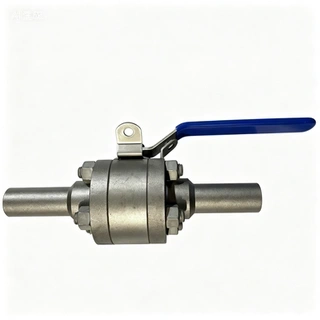
3-Piece Forged Steel Ball Valve, A182 F316, 1 IN, CL1500, BW
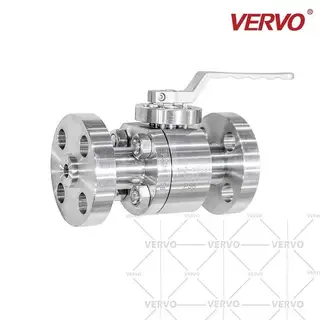
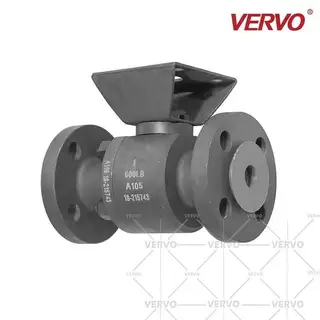
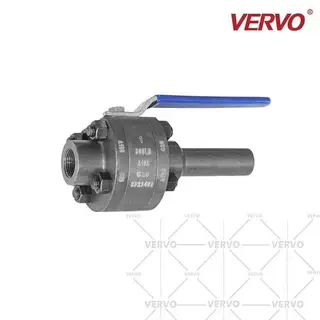
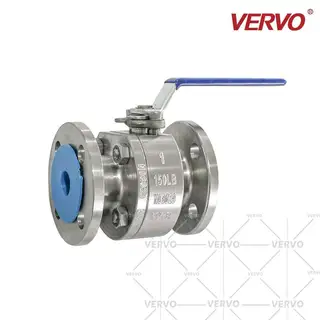
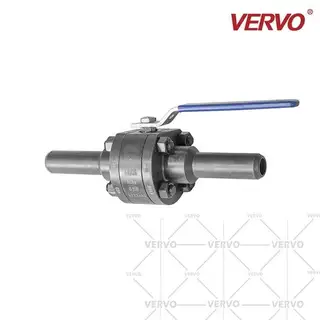
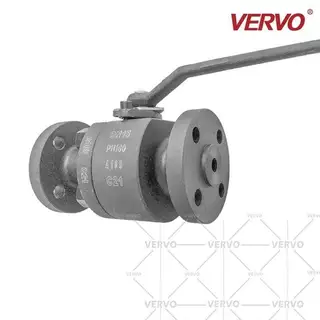
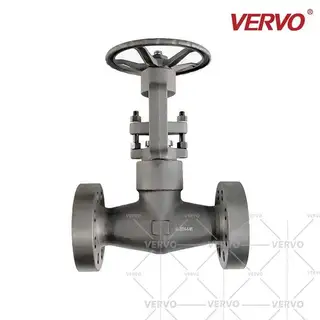
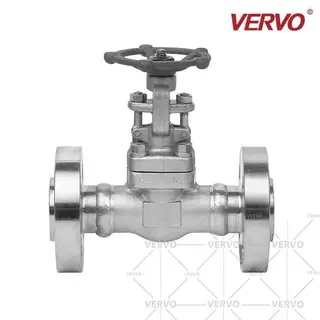
A forged steel ball valve is a type of industrial quarter-turn valve designed for precise and reliable flow control in demanding pipeline systems. Unlike standard cast ball valves, forged steel ball valves are manufactured through a forging process that compresses and strengthens the steel structure, resulting in superior mechanical integrity, higher density, and improved resistance to pressure and temperature fluctuations. This makes them especially suitable for critical applications in oil and gas, petrochemical processing, power generation, chemical plants, and other heavy-duty industries.
The defining feature of a ball valve is its spherical closure element, commonly referred to as the “ball.” This ball contains a central bore that allows fluid to pass through when aligned with the pipeline. When the valve is rotated 90 degrees, the bore becomes perpendicular to the flow path, effectively blocking the medium and ensuring tight shut-off. The ball is securely supported within the valve body and held between two precision-engineered sealing seats. This design ensures smooth operation, minimal friction, and excellent sealing performance even under high-pressure conditions.
Forged steel ball valves are available in a variety of stainless steel grades, each offering different levels of corrosion resistance, mechanical strength, and suitability for specific working environments. The most commonly used grades include:
Grade 304 is one of the most widely used stainless steels in industrial valve manufacturing. It provides a balanced combination of corrosion resistance, mechanical strength, and affordability. Valves made from 304 stainless steel are suitable for general-purpose applications involving water, oil, gas, and mild chemical media. Its versatility makes it a standard choice across many industries.
Grade 304L is a low-carbon version of 304 stainless steel. The reduced carbon content significantly improves weldability and minimizes the risk of intergranular corrosion after welding. This makes 304L particularly suitable for welded piping systems and applications where post-weld heat treatment is not feasible. It offers similar corrosion resistance to 304 but with enhanced structural stability in welded conditions.
Grade 316L contains molybdenum, which significantly enhances its resistance to chloride-induced corrosion and harsh chemical environments. It performs exceptionally well in marine, offshore, and highly corrosive industrial applications. Due to its excellent resistance to pitting and crevice corrosion, 316L is widely used in seawater systems, chemical processing plants, and pharmaceutical production lines where purity and durability are critical.
Forged steel ball valves offer multiple performance advantages that make them a preferred choice in high-demand industrial environments.
The wetted parts of forged steel ball valves are manufactured using high-quality materials that comply with international standards. Many valves feature nickel-plated surfaces or advanced surface treatments that enhance hardness and wear resistance. This significantly reduces the risk of vulcanization-related damage and cracking when handling aggressive or high-temperature media, ensuring long service life and stable operation.
Thanks to the forging process and the use of high-performance alloys or stainless steel, these valves can withstand extreme operating pressures and temperatures. Their robust structure makes them ideal for high-pressure transmission systems and demanding throttling conditions. Whether used in gas pipelines or chemical transport systems, forged steel ball valves maintain reliable performance even under harsh conditions.
Forged steel ball valves are designed with corrosion resistance in mind, not only in the valve body but also in internal components. The valve seats are commonly made from PTFE (polytetrafluoroethylene) or other high-performance polymer materials that are chemically inert to nearly all industrial media. This ensures long-term sealing integrity, stable performance, and resistance to aging, even in chemically aggressive environments. As a result, maintenance requirements are reduced and operational lifespan is significantly extended.
The structural design of forged steel ball valves is inherently symmetrical, allowing them to withstand high pipeline stress without deformation or displacement. This stability ensures consistent performance whether the valve is fully open, partially open, or fully closed. The precision-machined ball and seats provide excellent sealing capability, preventing leakage even under high differential pressure. Additionally, the smooth rotation mechanism minimizes torque requirements and prevents sticking, making them suitable for viscous fluids such as oils, resins, and slurry media.
Due to their durability and reliability, forged steel ball valves are widely used across multiple industrial sectors. They are commonly installed in oil and gas pipelines, refinery systems, chemical processing plants, power stations, and water treatment facilities. In offshore and marine environments, their corrosion-resistant properties make them especially valuable. They are also frequently used in high-pressure steam systems, compressed gas distribution, and industrial automation processes where dependable shut-off performance is essential.
Forged steel ball valves represent a high-performance solution for modern industrial flow control systems. Their forged construction, combined with advanced materials such as 304, 304L, and 316L stainless steel, ensures exceptional strength, corrosion resistance, and operational reliability. With superior sealing performance, long service life, and adaptability to extreme conditions, these valves remain a critical component in ensuring safe and efficient fluid handling across a wide range of industries.