Lift Check Valve
VERVO provides high-quality lift check valves engineered for reliable backflow prevention and efficient fluid control in high-pressure and high-velocity applications. Featuring a movable disc or piston design, these valves lift from the seat to allow forward flow and automatically close to stop reverse flow and minimize leakage. Compared with swing check valves, lift check valves deliver faster closing response, superior sealing performance, and enhanced durability under demanding operating conditions. As a leading lift check valve manufacturer in China, VERVO manufactures valves under strict quality standards, supplying dependable solutions for oil and gas, chemical processing, power generation, water treatment, and industrial pipeline systems worldwide.
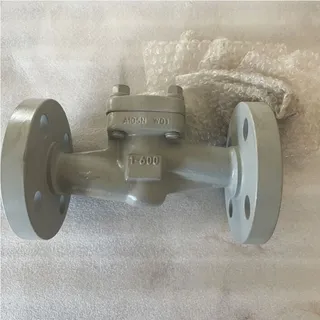
Carbon Steel Lift Check Valve, API 602, A105N, 1 IN, CL600
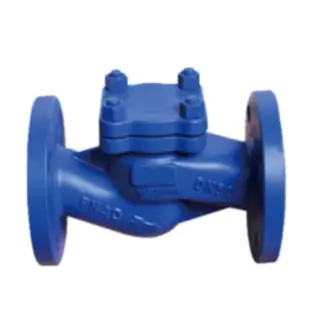
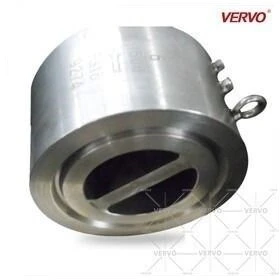
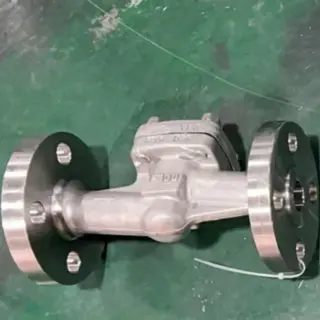
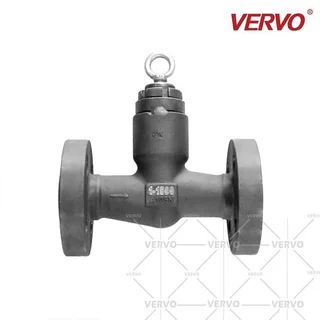
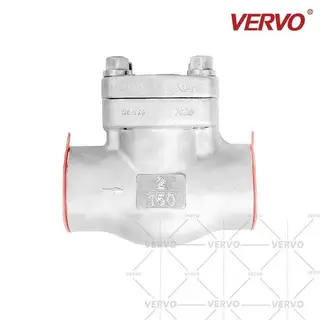
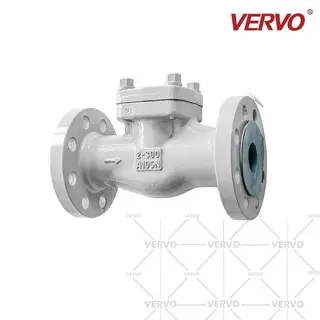
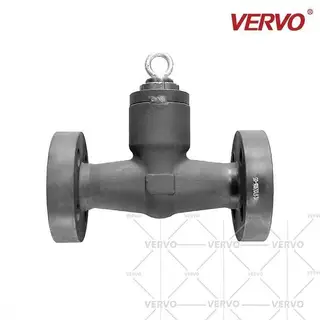
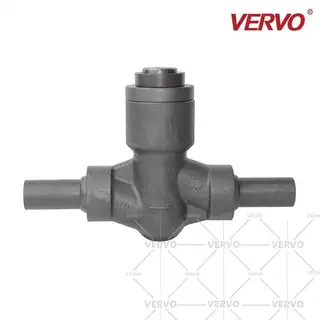
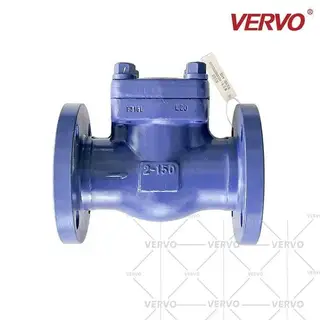
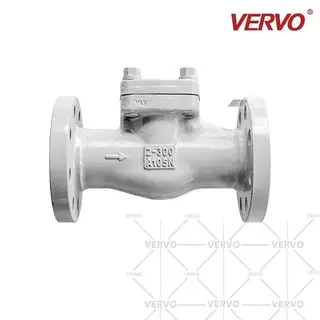
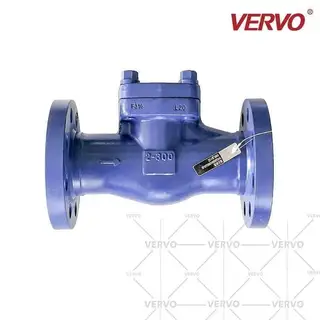
A lift check valve is an automatic non-return valve designed to allow fluid flow in only one direction while preventing reverse flow within a piping system. It operates without external power or manual control by using the pressure difference of the flowing medium to open and close the valve.
During normal operation, upstream pressure pushes the internal disc or plug upward from the valve seat, allowing fluid to pass through the valve. When the flow rate decreases, stops, or reverses, the disc automatically returns to the seat under gravity, spring force, or back pressure, creating a tight seal that blocks reverse flow.
The primary purpose of a lift check valve is to protect pumps, compressors, pipelines, and other equipment from damage caused by backflow. By maintaining a continuous and reliable one-way flow path, lift check valves improve system safety, efficiency, and operational stability.
Compared with swing check valves that use a hinged disc mechanism, lift check valves use a vertical lifting movement. This design provides faster response, precise sealing performance, and excellent reliability in high-pressure and high-velocity applications.
Lift check valves are widely used in industries such as:
- Oil and gas processing
- Chemical and petrochemical plants
- Power generation facilities
- Water treatment systems
- Steam systems
- Industrial piping networks
- Hydraulic systems
A lift check valve consists of several key components that work together to control fluid movement and prevent reverse flow.
The valve body is the main pressure-containing component that houses the internal parts and connects the valve to the piping system.
Common body materials include gunmetal, red brass, cast steel, stainless steel, and alloy steel depending on the application requirements.
Gunmetal / Red Brass Body
Gunmetal, also known as red brass, is a commonly used material for small and medium-sized lift check valve bodies. It is an alloy mainly consisting of copper, tin, and zinc.
Advantages of gunmetal include:
- Excellent corrosion resistance
- Good mechanical strength
- High wear resistance
- Long service life
- Suitability for water and general fluid applications
Because of these characteristics, gunmetal lift check valves are often used in:
- Water supply systems
- HVAC systems
- Plumbing applications
- Marine environments
For more demanding industrial applications, manufacturers may use carbon steel, stainless steel, or alloy steel bodies to withstand higher pressure and temperature conditions.
The disc is the movable internal component responsible for controlling fluid flow.
Unlike swing check valves that use a hinged flap, lift check valves use a vertically moving disc, piston, or plug design.
Common disc configurations include:
Plug-Type Disc
A plug-type disc moves vertically along a guide system. When upstream pressure increases, the plug lifts away from the seat and allows fluid flow.
Advantages include:
- Reliable sealing
- Fast response
- Suitable for high-pressure systems
Ball-Type Disc
Some lift check valves use a ball as the closing element. The ball rises when flow pressure is sufficient and drops back onto the seat when flow decreases.
Ball designs provide:
- Simple operation
- Low maintenance
- Effective sealing performance
During reverse flow conditions, gravity and back pressure force the disc downward onto the seat, preventing unwanted fluid movement.
The valve seat is the sealing surface where the disc contacts the valve body to stop reverse flow.
A properly designed seat ensures:
- Tight shut-off
- Reduced leakage
- Long operating life
Seat materials vary depending on:
- Fluid type
- Temperature
- Pressure rating
- Corrosion requirements
Common seat materials include:
- Stainless steel
- Bronze
- PTFE
- Rubber compounds
- Hardened alloys
For applications involving aggressive fluids or high temperatures, special sealing materials may be selected to improve durability.
The operating principle of a lift check valve is based on pressure difference and automatic movement of the internal disc.
During normal operation, fluid enters through the inlet side of the valve. When the upstream pressure becomes higher than the downstream pressure, the force pushes the disc upward.
Once the disc lifts from the seat:
- The flow passage opens
- Fluid moves through the valve
- Pressure continues to maintain the open position
The valve remains open as long as sufficient forward flow pressure exists.
When the forward flow decreases or stops, the pressure difference across the valve changes.
If downstream pressure becomes greater than upstream pressure, reverse flow begins to develop. At this point:
- The disc moves downward
- The disc contacts the seat
- The flow passage closes
This automatic closing action prevents fluid from flowing backward through the pipeline.
Pressure differential is the driving force behind lift check valve operation.
The valve depends on the difference between upstream and downstream pressure:
- Higher inlet pressure opens the valve
- Balanced pressure allows the disc to close
- Reverse pressure forces the valve shut
Proper pressure differential ensures stable valve operation and minimizes unnecessary pressure loss.
The automatic closing function is one of the most important features of lift check valves.
Closing is achieved through:
Gravity
The weight of the disc naturally pulls it downward when flow decreases.
Back Pressure
Reverse pressure pushes the disc against the seat, creating a secure seal.
Spring Assistance
Some lift check valves include springs to improve closing speed and performance in systems requiring rapid response.
This automatic mechanism protects pipelines and equipment from:
- Reverse flow
- Pump damage
- Pressure fluctuations
- System contamination
Lift check valves offer several important benefits for industrial applications.
The primary advantage of a lift check valve is dependable one-way flow control. It automatically prevents reverse flow without requiring external operation.
The vertical disc movement creates direct contact between the disc and seat, providing effective sealing performance.
This makes lift check valves suitable for systems where leakage prevention is critical.
Lift check valves are commonly used in high-pressure systems because of their strong structure and reliable closing mechanism.
Applications include:
- Steam pipelines
- Process equipment
- High-pressure fluid systems
Compared with some other check valve designs, lift check valves can close quickly when flow conditions change.
This helps reduce the risk of reverse flow and improves system protection.
Because lift check valves have a simple internal structure with few moving parts, they typically require limited maintenance when properly selected and installed.
Although lift check valves provide excellent performance, they also have some limitations.
Due to their internal flow path design, lift check valves generally create greater pressure loss compared with some other check valve types.
This should be considered when designing systems where energy efficiency is important.
Fast disc movement during closing can create pressure surges known as water hammer.
Water hammer may cause:
- Pipeline vibration
- Noise
- Mechanical stress
Solutions include:
- Installing dampeners
- Adjusting system pressure
- Selecting suitable valve designs
Debris or solid particles in the fluid can become trapped between the disc and seat.
This may prevent proper opening or closing.
To avoid operational problems:
- Install filtration systems
- Keep the medium clean
- Select appropriate valve designs for dirty services
Lift check valves are widely used across many industries.
Applications include:
- Pipeline systems
- Refinery equipment
- Pump discharge lines
- Process systems
Their reliable sealing performance makes them suitable for controlling hydrocarbons and other critical fluids.
Chemical plants use lift check valves to protect equipment from reverse flow and maintain safe process operation.
Common applications include:
- Chemical transfer systems
- Reactor pipelines
- Pump protection systems
Power plants rely on lift check valves in:
- Steam systems
- Feedwater systems
- Cooling systems
Their ability to handle high temperatures and pressures makes them valuable in energy facilities.
Lift check valves are commonly installed in:
- Water pumps
- Filtration systems
- Distribution pipelines
They help maintain proper flow direction and prevent equipment damage.
A lift check valve is an essential component for maintaining safe and efficient fluid flow in industrial piping systems. Its automatic operation, reliable sealing performance, and ability to handle high-pressure applications make it suitable for demanding environments across multiple industries.
With a vertically moving disc or plug design, lift check valves provide effective backflow prevention while protecting pumps, pipelines, and processing equipment. Although considerations such as pressure drop, water hammer risk, and fluid cleanliness must be addressed, proper valve selection and installation can ensure long-term reliable performance.
By choosing a high-quality lift check valve manufacturer, users can obtain durable, precisely engineered solutions that meet international standards and deliver dependable operation in critical flow control applications.