Localization of Key Spare Parts for Cryogenic Valves
Jun 30, 2026
In an operating environment of an LNG receiving station at -196°C, reverse engineering was performed on the core spare components of cryogenic ball valves and butterfly valves. First, using the 3D point cloud of the relevant components obtained via blue light scanning, a solid model with a deviation of less than 0.01 mm was constructed. Then, we established a thermo-mechanical coupled finite element model. By optimizing the valve seat cone angle by 0.5° to 1.0° and correcting the ball curvature radius by 0.2%, we reduced the simulated peak stress by approximately 12% and achieved a maximum cryogenic deformation of ≤0.01 mm. Domestically produced 316L stainless steel was selected as a replacement for imported ASTM A182 F316 stainless steel. After solution treatment at 1050 °C, followed by cryogenic treatment at −196 °C for 24 hours and tempering at 200 °C for two hours, the Charpy impact energy exceeds 60 J at −196 °C, and the retained austenite content is no more than 15%, thereby meeting the low-temperature toughness requirements. For applications requiring higher toughness, 9Ni steel or F316 stainless steel can be used instead. The sealing pair adopts a structure that combines a metal hard seal with an elastic soft seal. The metal sealing surface is coated with an HVOF WC-12Co coating with a roughness not exceeding 0.4 μm. For the soft seal ring, a composite structure consisting of perfluoroether rubber and a metal spring accumulator is adopted. This soft seal ring achieves a rebound rate of no less than 15% at −196°C and maintains a leakage rate that meets ISO 5208 Class C under an internal pressure of 10 MPa. For small-diameter soft-seal valves, verification may be performed in accordance with Class B. The butterfly valve seat gasket incorporates a replaceable split structure design together with a wedge-shaped pre-tightening groove, which effectively compensates for changes in the sealing gap resulting from thermal cycling. The prototype parts underwent dimensional inspection and cycle life testing. Their dimensional accuracy matched that of imported parts, while their surface quality and cycle life even exceeded those of the imported ones, providing technical support for subsequent mass production.
The production process uses advanced equipment and enhanced quality control methods to effectively meet the high-precision requirements of domestically manufactured spare parts. Strict batch-to-batch consistency in product performance is maintained, ensuring a smooth transition from single-piece trial production to full-scale mass production.
(1) Disassembly and Cleaning: Imported cryogenic valves are disassembled non-destructively using a coordinate measuring machine (CMM) to accurately record the geometric dimensions and surface roughness of the ball, valve seat, and sealing ring. A non-acidic cleaning agent, combined with ultrasonic cleaning, is then used to thoroughly remove oil and residual particles from the component surfaces, ensuring a clean environment for subsequent processing. Immediately after cleaning, low-temperature drying is carried out to prevent moisture-induced dimensional changes, ensuring measurement and remanufacturing accuracy.
(2) Machining and Heat Treatment: A 0.01 mm-precision CNC machining center was used to form key components—namely the ball and valve seat—under a nitrogen atmosphere. Cutting parameters were optimized to 2000 rpm, 0.1 mm/rev feed rate, and 0.05 mm depth of cut, while TiAlN-coated tools were adopted to improve surface quality.Heat treatment was carried out using a combined process of annealing and cryogenic treatment—850°C annealing for two hours, then -196°C cryogenic treatment for 24 hours. This achieved a grain size refinement of domestically produced 06Cr19Ni10 to above ASTM grade 7, thereby effectively mitigating low-temperature embrittlement.
(3) Assembly and Quality Control: Based on the secondary design scheme, a robot-assisted assembly system was implemented to precisely control the clearance between key components to within 0.02 mm. Statistical Process Control (SPC) was employed to monitor real-time fluctuations in process parameters, ensuring batch-to-batch consistency. Meanwhile, an industrial internet platform was used to collect production data in real time, capturing raw material batch numbers, process parameters, and inspection results. This provided fully traceable data to support subsequent process iterations and quality optimization.
(4) Inspection and Testing: Inspection standards for domestically produced spare parts were established to ensure compatibility with the actual operating conditions at LNG receiving terminals. A performance database was also created using a data acquisition system, enabling a direct comparison of performance parameters between domestically produced and imported spare parts.The resilience of domestically produced sealing rings at -196°C deviates by less than 5% from that of imported products.
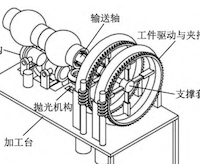
(5)Processing of Cryogenic Butterfly Valves Using Dedicated Equipment: Milling of the open ends on both sides of the cryogenic butterfly valve body is carried out using specialized cutting equipment.A ring-shaped clamping assembly ensures that the valve body is held securely in place. Once clamped, the automatic milling assembly is activated to machine the target surfaces of the valve body. After one side is completed, the valve body is automatically flipped to machine the other side, effectively improving processing efficiency.
A rigorous system evaluation framework covering geometric accuracy, surface integrity, and performance realization has been established for finished products. This framework ensures that domestically produced spare parts possess verifiable quality levels and long-term reliability.
(1) Testing Standards
Based on standards such as GB/T 26480 and JB/T 7927, a comprehensive evaluation is conducted on the appearance quality, geometric dimensions, sealing performance, and pressure resistance of domestically produced spare parts. The sealing test mandates a leakage rate of less than 10⁻⁴ Pa·m³/s. The pressure test requires no visible leakage when the valve is subjected to an internal pressure of 10 MPa. The cycle life test requires a minimum of 5,000 opening and closing cycles to validate long-term operational reliability.
(2) Testing Methods
Appearance Inspection: Visual inspection is used to evaluate the overall appearance quality of valve spare parts, verifying the integrity of the surface coating and the absence of defects in welded areas, thereby ensuring that the product has no obvious damage or visible flaws.
Dimensional Inspection: Key parameters—including structural length, end dimensions, and shell wall thickness—are measured on both imported and domestically produced parts using micrometers and other precision tools, as illustrated in Figure 2. It must be ensured that the accuracy of each structural dimension meets the preset design requirements. Regarding material testing, chemical composition and metallographic structure analysis are conducted on the materials of major pressure-bearing components. Each batch sharing the same furnace number is tested at least once to verify compliance with applicable standards.
Sealing Test: Testing is carried out at both ambient and cryogenic temperatures. At ambient temperature, a helium leak detector is employed to ensure the leakage rate is maintained below 10⁻⁵ Pa·m³/s. At cryogenic temperatures, sealing performance is verified using the immersion method, with the requirement that no bubbles are released underwater.
Pressure Resistance Test: The test piece undergoes cryogenic pre-cooling treatment, followed by hydrostatic and pneumatic tests at 1.5 times the nominal pressure. The pressure is increased in stages and monitored throughout the process to verify the pressure resistance stability and sealing performance of the valve body.The testing procedure is conducted in strict accordance with API 6D and related standards, with acceptance criteria including pressure gradient, holding time, absence of visible damage, and pressure drop.
Cryogenic Performance Test: Initial performance tests are repeated in a simulated operating environment at -196°C. The testing includes switching operation and sealing performance evaluation, verifying the valve's functional maintenance status and ensuring its normal operation under extreme low-temperature conditions.
Cyclic life testing: Cyclic opening and closing tests were conducted on the valve at both ambient temperature and -196°C, while simultaneously recording the sealing performance decay value and the operating force change curve to assess its long-term service reliability.
Quality assessment and feedback: Using a mathematical model, the sealing performance, pressure resistance, and durability of domestically produced spare parts were quantitatively evaluated, benchmarked against imported equivalents, and systematically recorded. In parallel, a closed-loop feedback mechanism was implemented, whereby test data were used to optimize process parameters, enabling continuous improvement.
Taking graphite packing 1689 PG55 as an example, an API 622 packing type test was conducted. The sampled material information is shown in Table 3.

Figure 2. Dimension Inspection Table for Low-Temperature Screw Valve Seat Gasket Spare Parts
Table 3. Packing Low-Leakage Test Information
Item | Description |
Packing Material | Graphite packing (two braided graphite rings reinforced with metal wire and three molded graphite rings) |
Graphite Packing Model | 1689 PG55 |
Stem Diameter | 25.4 mm |
Sample Number | ROCKP202312090 |
Sample Condition | Intact |
Packing Cross-Section | 6.35 mm × 6.35 mm |
Packing Gland Bolt Size | 5/8 in. |
Packing Sleeve Inner Diameter | 26.0 mm |
Packing Sleeve Outer Diameter | 38.1 mm |
Packing Compression After Installation | 16.4% |
Recommended Packing Tightening Torque | 50 N·m |
Total Mechanical Cycles | 1,510 |
Total Thermal Cycles | 5 |
Test Pressure | 41.4 barg |
Test Medium | 99.9% methane |
Maximum Permissible Leakage | 100 ppmv |
Actual Maximum Leakage | 35.2 ppmv |
Following five days of cycling between high temperature and room temperature, the final packing leakage test results are presented in Figure 3. These results show that the packing maintains consistently low leakage under simulated field conditions, thereby complying with the API 622 standard. Following the test, the device operated normally and the equipment could still be calibrated. No notable changes were found in the packing ring, packing gland, packing sleeve, or valve stem when compared to their pre-test condition. Furthermore, the packing configuration drawings revealed no visible scratches, flash, or other surface defects, confirming that the product met all technical requirements.

Figure 3 Packing material dissipation test results
Domestic cryogenic valve spare parts continue to exhibit deficiencies in high-precision sealing, material performance, and processing technology. The specific issues and corresponding improvement directions are outlined as follows:
(1) Insufficient low-temperature performance of sealing materials: Domestic fluororubber and modified polymer sealing rings exhibit 10–15% lower resilience compared to their imported counterparts. After long-term operation, micro-leakage may occur, with a leakage rate of approximately 10⁻³ Pa·m³/s, which has not yet stably met the API 6D standard requirement of 10⁻³ Pa·m³/s. During long-term service at -196°C, the sealing material is prone to permanent compression set, leading to a reduction in sealing surface preload after cryogenic cycling. The material's low-temperature toughness is enhanced through molecular structure optimization, resulting in an elongation at break exceeding 200%. Additionally, nano-reinforcement technology is employed to improve the material's fatigue resistance. When integrated with a grading and screening mechanism based on low-temperature compression rebound testing, the leakage rate can be consistently maintained at the 10⁻⁴ Pa·m³/s level.
(2) Batch processing dimensional chain quality fluctuations: In large-scale production, the combined effects of machine tool thermal drift, tool wear, and fixture repeatability errors cause key mating dimensions to fluctuate by 0.02 mm, exceeding the 0.01 mm target control range. This issue is especially critical for components sensitive to sealing line contact width and assembly clearance. By introducing a high-precision five-axis CNC machining center, optimizing cutting parameters, integrating online measurement technology and real-time tool compensation technology, and supplementing these with statistical process control (SPC), the dimensional tolerance is ensured to stably converge within ±0.01 mm.
(3) Insufficient consistency between surface roughness and hardened layer: Due to inconsistencies in the thickness and porosity of the coating on the sealing metal surface during actual production, combined with errors in machining and grinding, the surface roughness of some batches only reached Ra 0.8 μm. As a result, the sealing surface exhibited insufficient adhesion and wear resistance that did not meet the required standards.By optimizing the spraying parameters and grinding process, and employing laser surface treatment technology, the surface finish was improved to Ra 0.4 μm. Simultaneously, the heat treatment process was optimized to enhance the material's corrosion resistance, with a holding time of more than 2.5 hours after heat treatment.
(4) The test standard system still needs to be improved: Although domestic spare parts have initially achieved interchangeability, the on-site availability of specialized disassembly and assembly tools, positioning devices, and cryogenic protection equipment remains incomplete. This results in extended maintenance windows and reduced maintenance efficiency. Furthermore, the lack of a unified standard covering multiple domestic sites makes it difficult to quantitatively compare cryogenic cycle life and sealing attenuation, hindering cross-project data and technology sharing. By developing rapid disassembly and assembly tools along with cryogenic protection devices, a unified cryogenic cycle life test standard is established, and a multi-site performance database is built, thereby accelerating the standardization process for spare parts replacement.
Taking the Qingdao LNG receiving terminal as the verification scenario, two application chains are selected: the Phase III expansion project and the Longkou LNG new construction project. Through actual application results, the performance of domestic spare parts under real operating conditions is verified, and their economic efficiency and supply chain guarantee capabilities are evaluated. The 40-inch Class 900 cryogenic ball valves deployed at Qingdao Station Phases I and II were entirely imported, with a unit cost of approximately RMB 8 million and a procurement lead time of about six months. In June 2023, a valve seat seal failure caused a 15-day operational shutdown, resulting in direct economic losses exceeding RMB 10 million. During the Phase III expansion project, the localization team completed delivery of the first batch of eight domestically manufactured ball valves. The valve ball, seat, and sealing elements are all made from a combination of 06Cr19Ni10 stainless steel and composite fluororubber. After 48 hours of on-site cryogenic trial operation and 2,000 pressurized cycles, the leakage rate stabilized at 1.2 × 10⁻⁴ Pa·m³/s, an order of magnitude better than the API 6D limit. By August 2024, 168 units had been completed. Hourly cold-state performance testing revealed a 12% reduction in opening and closing torque relative to imported components, zero leakage at -196°C, and a 40-day reduction in the overall project construction period. The domestically produced pressure relief valves for storage tanks that were put into operation at the Beihai LNG terminal during the same period also utilize this domestically produced sealing assembly and have been operating stably to date.
This research focused on the localization of key spare parts for cryogenic valves in LNG receiving terminals, completing a systematic, closed-loop study covering the entire chain from material selection and process development to on-site verification. The developed product, following extended testing at -196°C and 10 MPa, achieves a leakage rate of 1.2 × 10⁻⁴ Pa·m3/s and a cycle life of over 5,000 cycles. All performance indicators comply fully with API 6D requirements, and certain indicators surpass the standard. Field application data from the Qingdao, Longkou, and Beihai LNG terminals show a 40% reduction in procurement costs, a decrease in delivery time from six months to two months, and annual maintenance cost savings exceeding tens of millions of RMB, demonstrating significant economic benefits. Technically, a dual-system replacement combining 06Cr19Ni10 austenitic steel and composite fluororubber has been developed, along with a proprietary cryogenic heat treatment process and a database that achieves seamless data integration across four dimensions: raw materials, processes, testing, and maintenance. Future plans include building a -200°C ultra-low temperature material database, completing 10,000 long-cycle cyclic tests, and integrating intelligent sensing and vibration spectrum early warning functions to provide sustainable technical and standard support for the independent controllability of energy equipment.
Previous: How Non-Slam Check Valves Improve Pipeline Safety and Reduce Water Hammer Damage
Next: High-Performance Cast Steel Globe Valves for Industrial Applications