Threaded Ball Valve
A threaded ball valve features a threaded end connection that allows quick installation and a secure, leak-resistant fit within piping systems. It is widely used in industrial applications requiring reliable shut-off performance under varying pressure and temperature conditions. Commonly applied in small-diameter pipelines, typically 4 inches and below, threaded ball valves are available in one-piece, two-piece, and three-piece body constructions to suit different maintenance and performance needs. They are suitable for water, oil, gas, and general industrial media, offering smooth operation and durable sealing performance. As a leading threaded ball valve manufacturer in China, VERVO is committed to delivering high-quality, precision-engineered valve solutions for global customers.
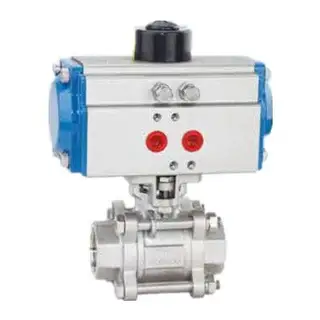
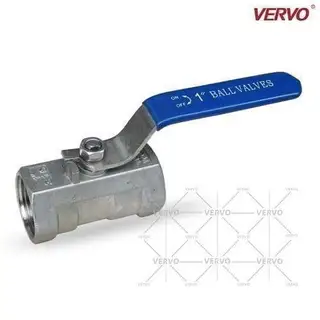

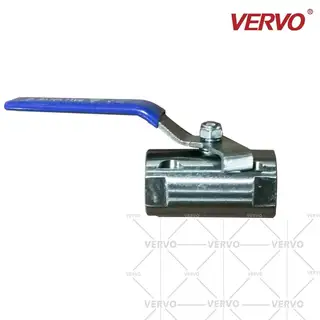
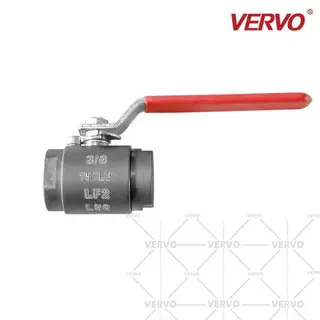
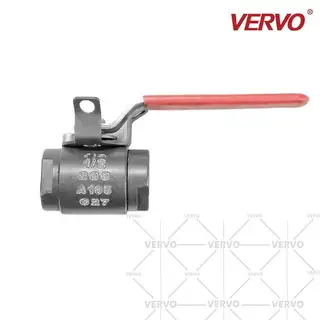
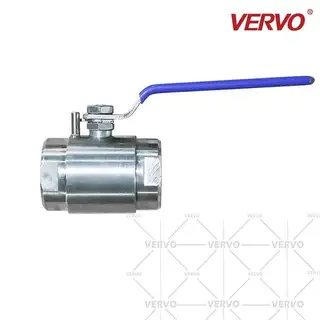
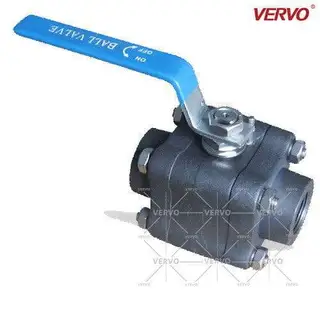
A threaded ball valve is a widely used type of quarter-turn shut-off valve designed to control the flow of liquids or gases through a piping system. It operates using a spherical closure element known as a "ball," which has a precisely machined hole (or bore) through its center. When the bore is aligned with the pipeline, fluid flows freely through the valve. When the ball is rotated 90 degrees using the stem, the solid portion of the ball blocks the flow path, creating a tight and reliable shut-off.
This simple yet highly effective operating principle makes threaded ball valves one of the most dependable and versatile components in industrial, commercial, and residential fluid control systems. They are valued for their quick operation, excellent sealing performance, long service life, and ease of installation.
Because of their compact structure and threaded end connections, these valves are especially suitable for small to medium pipeline systems where welding or flanged connections are not practical. They are commonly used in applications involving water, oil, gas, air, and various chemical media.
The operation of a threaded ball valve is based on a rotating ball mechanism. Inside the valve body, the ball is positioned between two seats and supported by a stem that extends to an external handle or actuator.
When the handle is turned:
- A 0° rotation keeps the valve fully open, allowing maximum flow.
- A 90° rotation turns the ball perpendicular to the pipeline, completely blocking the flow.
Intermediate positions can regulate flow in some specialized designs, although most ball valves are used for on/off control.
This quarter-turn operation allows fast response and simple operation, making it ideal for systems that require frequent shut-off or isolation.
A threaded ball valve is composed of several essential components, each contributing to its performance and durability.
The valve body is the main pressure-containing structure that houses all internal components. It is typically manufactured using high-strength materials such as:
- Brass
- Stainless steel (304 or 316)
- Carbon steel
- PVC or CPVC (for low-pressure applications)
The body is designed to withstand internal pressure, external mechanical stress, and environmental conditions. Its threaded ends allow direct connection to pipelines without the need for welding or flanges.
The ball is the core flow control element of the valve. It features a smooth, polished surface and a central bore that allows fluid passage.
Key characteristics include:
- Precision machining for tight sealing
- Corrosion-resistant surface treatment
- High durability under repeated rotation
When rotated, the ball either aligns with the pipeline (open position) or blocks it completely (closed position), ensuring reliable shut-off performance.
The seat is the sealing element that ensures leak-proof closure when the valve is in the closed position. It surrounds the ball and provides a tight seal when pressed against it.
Common seat materials include:
- PTFE (Polytetrafluoroethylene)
- RPTFE (Reinforced PTFE)
- NBR (Nitrile Rubber)
- EPDM (Ethylene Propylene Diene Monomer)
The seat material is selected based on temperature, pressure, and chemical compatibility requirements. High-quality seats are essential for minimizing leakage and extending valve service life.
The stem connects the external handle or actuator to the internal ball. It transmits rotational force from the operator or automation system to the ball mechanism.
Important features of the stem include:
- Blowout-proof design for safety
- Anti-static properties in some industrial applications
- High mechanical strength for repeated operation
A well-designed stem ensures smooth and reliable valve operation over long service periods.
Threaded ball valves are distinguished by their threaded inlet and outlet connections. These threads allow the valve to be directly screwed into the pipeline.
Advantages include:
- Easy installation and removal
- No welding required
- Reduced installation cost
- Suitable for maintenance-friendly systems
Common thread standards include BSP, NPT, and metric threads depending on regional requirements.
Threaded ball valves offer several important advantages that make them a preferred choice in many industries.
Their compact design makes them ideal for installations with limited space. The simple internal structure reduces the likelihood of mechanical failure.
A 90-degree turn is all that is required to fully open or close the valve, making it highly efficient for emergency shut-off applications.
High-quality seats ensure tight sealing, preventing leakage even under moderate pressure conditions.
Threaded connections eliminate the need for welding equipment, reducing installation time and labor costs.
These valves can be used in a wide range of systems, including:
- Water supply systems
- HVAC systems
- Oil and gas pipelines
- Chemical processing
- Industrial automation systems
Selecting the correct threaded ball valve is essential for ensuring system safety, efficiency, and long-term reliability.
Material is one of the most important factors in valve selection. The wrong material can lead to corrosion, leakage, or early failure.
Common materials include:
- Brass: Suitable for general water and air applications
- Stainless steel: Ideal for corrosive and high-pressure environments
- PVC: Used in low-pressure chemical and water systems
Industry data shows that a significant percentage of valve failures are linked to incorrect material selection. Therefore, compatibility with the working fluid is critical.
Every valve is designed for a specific pressure and temperature range. Operating beyond these limits can lead to:
- Seat deformation
- Leakage
- Structural failure
- Safety hazards
It is essential to ensure that the valve's rated pressure class matches or exceeds system requirements, including potential pressure surges.
Proper sizing is crucial for maintaining efficient flow performance. An undersized valve can restrict flow and increase pressure drop, while an oversized valve may reduce control precision.
Engineers typically evaluate flow requirements using flow coefficient (Cv) calculations to ensure optimal selection.
Thread standards vary depending on region and industry. Ensuring compatibility between valve threads and piping systems is essential to avoid leakage or improper installation.
Common standards include:
- NPT (National Pipe Thread)
- BSP (British Standard Pipe)
Environmental conditions play a significant role in valve performance. Factors such as humidity, outdoor exposure, chemical presence, and vibration must be considered during selection.
For harsh environments, corrosion-resistant materials or protective coatings may be required.
Threaded ball valves are widely used across multiple industries due to their simplicity and reliability.
Typical applications include:
- Residential plumbing systems
- Industrial water distribution
- HVAC systems
- Compressed air lines
- Chemical dosing systems
- Light oil and fuel pipelines
Their versatility makes them one of the most commonly used valve types worldwide.
A threaded ball valve is a simple yet highly efficient flow control device that plays a critical role in modern piping systems. Its quarter-turn operation, compact structure, and reliable sealing performance make it suitable for a wide range of industrial and commercial applications.
Understanding its key components—such as the body, ball, seat, stem, and threaded connections—helps users make informed decisions when selecting the right valve. Careful consideration of material type, pressure and temperature ratings, size, and application environment ensures optimal performance and long service life.
As a leading threaded ball valve manufacturer in China, VERVO is committed to delivering high-quality, precision-engineered valve solutions designed to meet global industry standards and customer requirements.