Side Entry Ball Valve
A side entry ball valve is one of the most commonly used valve types across various industrial applications. It features a body assembled from the side using bolts and nuts, allowing secure and stable construction. This category includes both two-piece and three-piece ball valve designs. A three-piece valve has two sets of bolts and nuts on the body, while a two-piece valve has only one. Due to its structure, maintenance and internal repair typically require removing the valve from the pipeline. As a leading side entry ball valve manufacturer in China, VERVO provides durable, reliable, and high-performance flow control solutions.
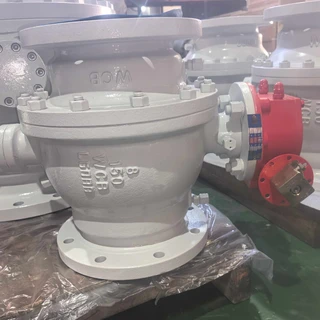

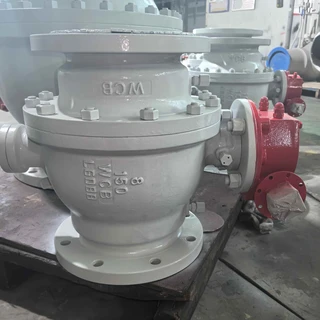
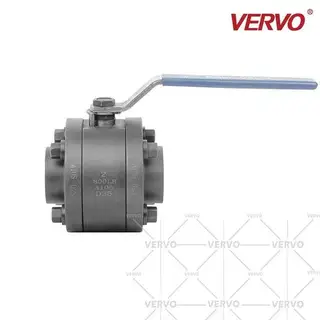
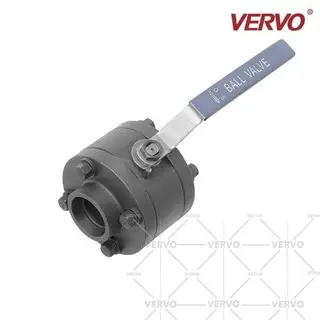
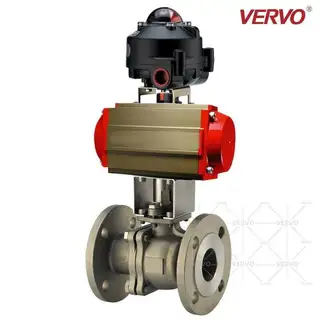
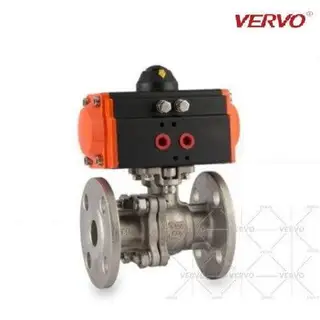
A side entry ball valve, also known as a split-body ball valve, is a widely used industrial valve designed for efficient flow control in pipelines. Its unique structure allows the internal components—such as the ball, seat, and stem—to be inserted laterally into the valve body during assembly. This side-entry configuration makes it one of the most common and practical valve designs used across oil and gas, petrochemical, water treatment, and general industrial systems.
Side entry ball valves are known for their simple yet robust construction, reliable sealing performance, and adaptability to a wide range of operating conditions. They are typically available in two-piece and three-piece body designs, offering flexibility for different installation and maintenance requirements.
A side entry ball valve is a type of quarter-turn valve in which the ball is installed from the side of the valve body. Unlike top entry designs, where internal components are accessed from above, the side entry structure requires disassembly of the body sections to insert or remove internal parts.
The valve operates using a spherical ball with a central bore. When the valve is open, the bore aligns with the pipeline, allowing fluid to flow freely. When rotated 90 degrees, the solid portion of the ball blocks the flow, providing a tight shutoff. This simple operating mechanism ensures fast response, reliable sealing, and minimal pressure drop.
The assembly of a side entry ball valve is based on a split-body structure, where the valve body is divided into two or three separate pieces. These sections are precisely machined and then assembled using high-strength bolts and nuts.
During manufacturing, the internal components—ball, seats, seals, and stem—are inserted into the valve body before final assembly. Once positioned correctly, the body sections are tightly bolted together to form a secure and pressure-resistant unit.
This design provides several important advantages:
- Easier manufacturing and assembly process
- Reliable alignment of internal components
- Strong mechanical integrity under pressure
- Simplified integration into pipeline systems
Because of its straightforward construction, side entry ball valves are widely used in industrial applications where cost efficiency and dependable performance are essential.
Side entry ball valves are typically categorized into two main structural types:
Two-Piece Ball Valve
A two-piece ball valve consists of a main body and an end connection piece. It is secured using a single set of bolts and nuts. This design is compact, cost-effective, and commonly used in general-purpose applications such as water systems, HVAC, and light industrial processes.
Three-Piece Ball Valve
A three-piece ball valve includes a central body section and two end caps, connected using two sets of bolts and nuts. This design allows for easier maintenance of internal components because the central section can be removed without disturbing the pipeline connections.
The three-piece structure is particularly suitable for applications requiring frequent cleaning, inspection, or replacement of internal parts, such as in chemical processing or food and beverage industries.
One of the most important advantages of side entry ball valves is their compact structure. Their streamlined design makes them ideal for installations where space is limited. They can be easily integrated into tight piping systems without requiring significant modifications to existing infrastructure.
This compactness makes them highly popular in industrial plants, mechanical systems, and compact skid-mounted equipment.
Side entry ball valves are engineered to handle high-pressure environments and large flow capacities. Their strong split-body construction ensures that the valve remains stable and secure even under demanding operating conditions.
The robust sealing system provides reliable shutoff performance, making these valves suitable for:
- Oil and gas pipelines
- Chemical processing systems
- Industrial water distribution networks
- Steam and gas applications
Their ability to maintain performance under pressure makes them a trusted solution for critical industrial systems.
The body of a side entry ball valve is designed for strength and durability. Typically manufactured from materials such as carbon steel, stainless steel, alloy steel, or cast iron, these valves are built to withstand harsh operating environments.
Key structural benefits include:
- Resistance to mechanical stress and vibration
- Long service life under continuous operation
- Reliable sealing even in aggressive media
- Compatibility with high-temperature applications
This makes side entry ball valves suitable for both standard and heavy-duty industrial use.
Side entry ball valves use precision-engineered seats made from materials such as PTFE, RPTFE, or other elastomers to ensure tight sealing. The ball rotates smoothly within the valve body, providing a bubble-tight shutoff when closed.
This sealing reliability is essential in applications involving hazardous or corrosive fluids, where leakage prevention is critical for safety and environmental protection.
The operation of a side entry ball valve is based on a simple quarter-turn mechanism:
The valve is opened by rotating the stem, aligning the bore of the ball with the pipeline.
Fluid flows through the valve with minimal resistance.
When the valve is closed, the stem rotates the ball 90 degrees.
The solid part of the ball blocks the flow path, stopping fluid movement completely.
This simple mechanism ensures fast operation, low torque requirements, and consistent performance.
One key characteristic of side entry ball valves is that maintenance typically requires removal from the pipeline. Since the body is assembled using bolted sections, internal inspection or repair involves disassembling the valve.
While this may require temporary system shutdown, the advantage lies in the valve’s strong structural integrity and cost-effective design. In many industrial applications, the trade-off between maintenance convenience and robust performance is well balanced.
Side entry ball valves are widely used across multiple industries, including:
- Oil and gas production and transportation
- Petrochemical and chemical processing plants
- Water treatment and distribution systems
- Power generation facilities
- HVAC and building systems
- General industrial fluid control systems
Their versatility, affordability, and reliability make them one of the most commonly installed valve types worldwide.
A side entry ball valve is a durable, efficient, and widely used flow control device designed for industrial pipeline systems. Its split-body construction allows for easy assembly, strong structural integrity, and reliable sealing performance under a variety of operating conditions.
Available in both two-piece and three-piece designs, it offers flexibility for different installation and maintenance needs. With its compact structure, high-pressure capability, and dependable operation, the side entry ball valve remains a fundamental solution for modern industrial flow control applications across multiple sectors.