Pressure Seal Check Valve
VERVO provides high-quality pressure seal check valves designed for reliable one-way flow control and superior backflow prevention in demanding industrial applications. Featuring advanced disc, ball, piston, or lift-type mechanisms, these valves automatically open under forward flow conditions and close tightly when reverse flow occurs. As a leading pressure seal check valve manufacturer in China, VERVO manufactures durable valves with excellent sealing performance, high-pressure resistance, and long-term operational reliability. Our pressure seal check valves are widely used in power generation, oil and gas, petrochemical, chemical processing, and other critical pipeline systems requiring safe and efficient fluid control solutions.
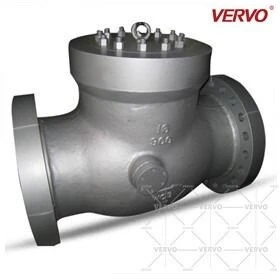
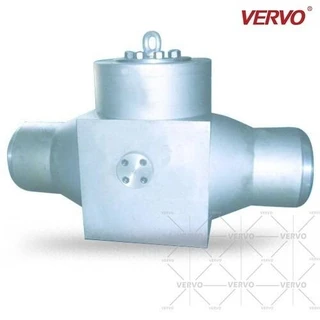
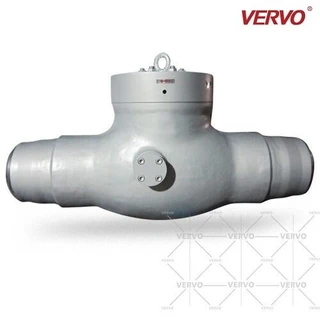
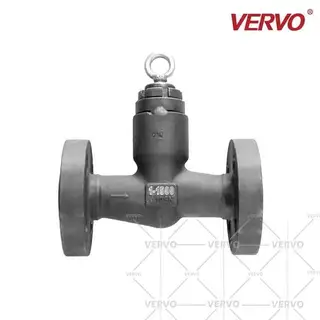
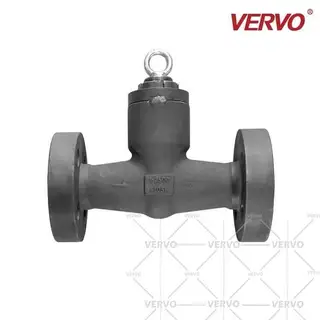
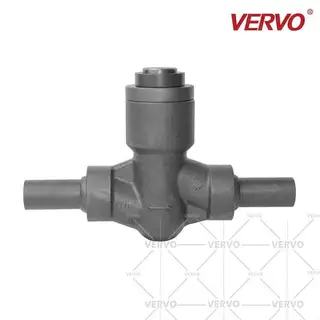
A pressure seal check valve is a specialized automatic check valve designed to allow fluid flow in only one direction while preventing reverse flow in high-pressure and high-temperature piping systems. As a critical component in industrial flow control applications, it helps protect pipelines, pumps, compressors, turbines, and other equipment from damage caused by backflow, pressure fluctuations, and process contamination.
Unlike standard check valves that rely mainly on conventional bonnet and gasket structures, pressure seal check valves feature a pressure-assisted sealing design. This unique construction allows the sealing force to increase as the internal system pressure rises. As a result, the valve provides enhanced leak resistance and reliable performance in demanding operating environments.
Pressure seal check valves typically use different internal closing mechanisms, including disc, ball, piston, and lift designs. When the fluid flows in the correct direction, the internal mechanism opens automatically to allow smooth passage. When the flow stops or attempts to reverse, the closing element returns to the seat and blocks reverse movement.
Due to their excellent pressure-handling capability, pressure seal check valves are widely used in industries such as:
- Power generation
- Oil and gas
- Petrochemical processing
- Chemical manufacturing
- Water treatment
- Steam systems
- Industrial pipeline applications
For applications requiring safe operation under extreme conditions, pressure seal check valves provide reliable protection, improved efficiency, and long service life.
The operating principle of a pressure seal check valve is based on differential pressure and automatic flow response. Unlike manually operated valves, these valves require no external power source or operator control. They automatically adjust according to the direction and pressure of the flowing medium.
During normal operation, fluid enters the valve from the inlet side. When the upstream pressure becomes higher than the downstream pressure, the force generated by the fluid pushes the valve disc, ball, or piston away from the valve seat.
This creates an open flow passage, allowing the medium to move through the pipeline.
The valve remains open as long as forward flow continues. The internal components are designed to minimize resistance, allowing efficient fluid transportation while maintaining system performance.
When the forward flow slows down, stops, or reverses, the pressure balance inside the valve changes. The downstream pressure becomes higher than the upstream pressure, forcing the internal closing element back toward the seat.
The disc, ball, or piston then seals against the valve seat, preventing reverse flow.
This automatic closing action helps protect the system from:
- Equipment damage
- Fluid contamination
- Pressure instability
- Unwanted process interruption
Because the valve responds immediately to flow changes, it provides continuous protection without requiring manual operation.
The most important feature of a pressure seal check valve is its pressure-assisted sealing structure.
In conventional valve designs, sealing performance depends mainly on external bolting force and gasket compression. However, under high-pressure conditions, these traditional sealing methods may experience increased stress and potential leakage risks.
Pressure seal check valves solve this problem by using internal pressure to strengthen the seal. As the pressure inside the valve increases, the sealing components are pushed tighter against the valve body and bonnet connection.
This creates several advantages:
- Stronger sealing force at higher pressures
- Reduced external leakage risk
- Improved reliability under thermal cycling
- Longer service life
- Lower maintenance requirements
This makes pressure seal check valves especially suitable for high-pressure steam, gas, and industrial process systems.
Pressure seal check valves are available in several designs to meet different industrial requirements.
A swing-type pressure seal check valve uses a hinged disc that moves away from the seat during forward flow. When flow reverses, the disc swings back and closes against the seat.
Advantages include:
- Simple construction
- Low pressure loss
- Suitable for large pipeline systems
- Reliable operation
Swing check valve designs are commonly used in power plants, water systems, and industrial pipelines.
A lift-type pressure seal check valve uses a vertically moving disc or piston mechanism.
When fluid pressure is sufficient, the disc lifts upward to allow flow. When pressure decreases or reverses, the disc returns to the seat.
Key benefits include:
- Fast closing response
- Excellent sealing capability
- Suitable for high-pressure applications
- Stable operation
Lift designs are frequently used in steam and process systems.
A piston check valve uses a guided piston as the closing element.
This design provides:
- Precise movement
- Reliable shut-off
- Strong pressure resistance
It is commonly applied in systems requiring accurate flow control and high-pressure performance.
One of the greatest advantages of pressure seal check valves is their ability to withstand extreme operating pressures.
The pressure-assisted sealing design becomes stronger as internal pressure increases, making these valves suitable for applications where pressure exceeds 500 psi.
Reliable sealing is essential in systems transporting hazardous or valuable fluids.
Pressure seal check valves provide excellent protection against leakage by maintaining a strong seal between the valve components.
They are commonly used for:
- Steam
- Natural gas
- Chemical fluids
- Hydrocarbon products
Pressure seal check valves operate automatically based on fluid conditions.
They do not require:
- Manual adjustment
- External power
- Continuous operator monitoring
This reduces system complexity and improves operational safety.
By preventing reverse flow, pressure seal check valves help protect important industrial equipment, including:
- Pumps
- Compressors
- Turbines
- Heat exchangers
- Pipeline systems
This reduces downtime and lowers maintenance costs.
Pressure seal check valves are designed for severe industrial environments involving:
- High pressure
- High temperature
- Frequent operation cycles
Their durable construction ensures dependable performance over long service periods.
Power plants rely heavily on pressure seal check valves for steam and water control systems.
Common applications include:
- Main steam pipelines
- Boiler feedwater systems
- Turbine protection systems
- Condensate systems
In high-temperature steam applications, preventing reverse flow is essential for protecting turbines and maintaining energy efficiency.
The oil and gas industry requires highly reliable valves for transporting and processing hydrocarbons.
Pressure seal check valves are used in:
- Crude oil pipelines
- Natural gas systems
- Refinery processes
- Offshore platforms
They help prevent reverse flow that could cause equipment failure, contamination, or safety risks.
Chemical processing systems often involve aggressive fluids and high-pressure conditions.
Pressure seal check valves are used in:
- Chemical pipelines
- Process equipment
- Reaction systems
- Transfer systems
Their strong sealing performance helps maintain safe and efficient production.
Water treatment plants use pressure seal check valves to maintain proper flow direction and protect equipment.
Applications include:
- Pump discharge lines
- Filtration systems
- Water distribution networks
These valves help prevent contamination caused by reverse flow.
Pulp and paper manufacturing requires consistent fluid control during processes such as bleaching, chemical treatment, and drying.
Pressure seal check valves help maintain stable operation and improve system efficiency.
Choosing the correct valve material is essential for achieving reliable performance.
Common materials include:
Carbon steel pressure seal check valves are widely used for:
General industrial applications
High-strength requirements
Stainless steel provides excellent corrosion resistance and is suitable for:
- Chemical processing
- Marine environments
- Corrosive fluids
- Alloy Steel
Alloy steel is commonly selected for:
- High-temperature steam systems
- Power generation applications
- Severe service conditions
Pressure seal check valves are essential components for modern high-pressure industrial systems. Their advanced pressure-assisted sealing design provides reliable backflow prevention, excellent leakage protection, and long-term durability under demanding operating conditions.
With various configurations, including swing, lift, and piston designs, pressure seal check valves can meet the requirements of industries such as power generation, oil and gas, chemical processing, and water treatment.
When selecting a pressure seal check valve, users should carefully consider operating pressure, temperature, fluid characteristics, valve materials, and application requirements. Choosing a reliable pressure seal check valve manufacturer ensures high-quality products, safe operation, and dependable performance throughout the service life of the system.