High Pressure Globe Valve
High pressure globe valves are linear motion valves designed to precisely regulate, throttle, or shut off fluid flow in systems operating above 1,500 psi (100 bar). Although their name originates from the traditional globe-shaped body design, modern high pressure globe valves feature advanced configurations that enhance flow efficiency while maintaining reliable operating performance. By moving the disc vertically toward or away from the stationary seat, these valves provide accurate flow control through manual handwheel operation or automated actuators. As a leading high pressure globe valve manufacturer in China, VERVO supplies durable, high-performance solutions engineered to withstand demanding industrial pipeline conditions.
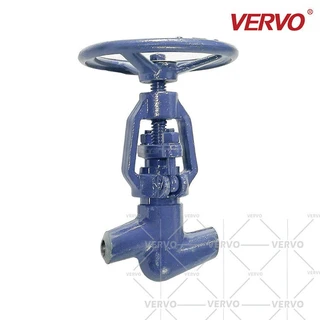
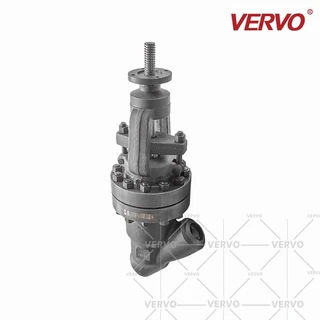
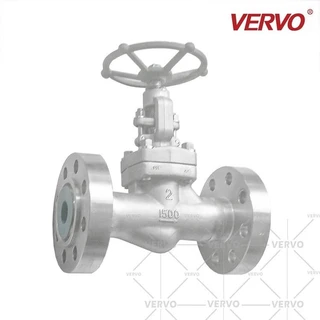
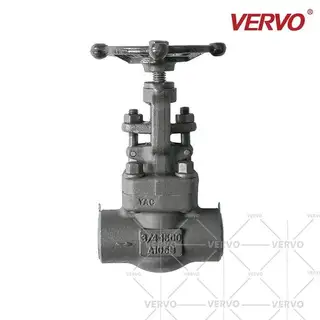
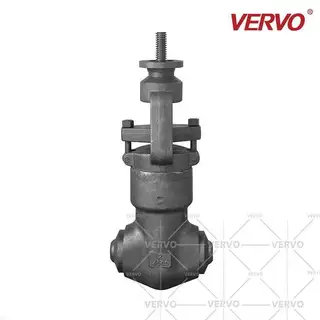
A high pressure globe valve is a linear motion industrial valve engineered to control, regulate, throttle, or completely shut off fluid flow in high-pressure piping systems. It is commonly used in applications where operating pressures exceed 1,500 psi (approximately 100 bar), requiring reliable sealing performance, precise flow adjustment, and long-term mechanical durability.
Unlike simple on/off valves that are mainly designed for isolation service, high pressure globe valves are specifically developed for applications requiring accurate flow control. Their ability to provide excellent throttling performance makes them widely used in demanding industries such as oil and gas, power generation, petrochemical processing, chemical production, steam systems, and high-pressure water applications.
The globe valve originally received its name from its traditional spherical body design. However, modern high pressure globe valves are available in various body configurations, including straight-pattern, angle-pattern, and forged designs, which optimize flow characteristics, reduce pressure loss, and improve performance under extreme operating conditions. Although the external structure has evolved, the fundamental operating principle remains unchanged: controlling fluid flow through the vertical movement of a disc or plug against a stationary seat.
The valve operates through the linear movement of the stem. When the handwheel is rotated or an actuator is activated, the stem moves upward or downward, positioning the disc or plug to adjust the opening between the valve seat and flow passage. This precise movement enables operators to achieve accurate flow regulation while maintaining reliable shutoff capability.
The working principle of a high pressure globe valve is based on controlled linear movement between the valve disc and seat. Unlike rotary valves that use a quarter-turn motion, globe valves rely on vertical stem travel to modify the flow area.
When the valve is opened, the stem lifts the disc away from the seat, creating a larger flow passage. As the distance between the disc and seat increases, more fluid can pass through the valve. When throttling is required, the disc is positioned partially open, allowing operators to precisely regulate flow rate, pressure, and system performance.
When the stem moves downward, the disc approaches the seat, gradually reducing the available flow area. Once the disc makes full contact with the seat, the valve reaches the closed position and prevents fluid passage according to the specified leakage standard.
The controlled movement of the disc provides several advantages, including:
- Accurate flow adjustment
- Stable throttling performance
- Reliable shutoff capability
- Reduced risk of sudden pressure changes
- Improved system efficiency
Because the disc movement is perpendicular to the fluid flow direction, high pressure globe valves can withstand significant pressure differences while maintaining accurate control. This makes them particularly suitable for systems involving high-pressure steam, water, chemicals, and process fluids.
The operation of a high pressure globe valve involves several key components working together, including the body, bonnet, stem, disc or plug, seat ring, packing system, and actuator or handwheel.
The valve body provides the pressure-containing structure and is manufactured from high-strength materials capable of handling severe operating conditions. Common materials include carbon steel, stainless steel, alloy steel, and other specialized alloys selected according to pressure, temperature, and fluid characteristics.
The stem connects the operating mechanism to the internal disc. As the handwheel rotates or the actuator receives a control signal, the stem converts rotational movement into linear movement. This allows the disc to move smoothly toward or away from the seat.
The disc and seat assembly is the primary flow-control area. Their design determines sealing performance, pressure resistance, and throttling accuracy. High pressure globe valves often use hardened trim materials or surface treatments to reduce wear caused by high-velocity fluids, cavitation, and erosion.
For automated systems, pneumatic, electric, or hydraulic actuators can replace manual handwheel operation. These actuators allow integration with distributed control systems (DCS) and process automation platforms, enabling remote monitoring and precise adjustment.
High pressure globe valves are widely selected for critical applications because of their excellent control characteristics and robust construction.
One of the biggest advantages of a globe valve is its ability to provide accurate throttling. The linear movement of the disc allows operators to make small adjustments to the flow opening, making the valve ideal for processes where maintaining stable flow conditions is essential.
Industries such as power plants and chemical processing facilities often require continuous flow adjustment rather than simple open or closed operation. High pressure globe valves provide the control accuracy needed for these applications.
High pressure service requires valves capable of handling significant mechanical stress. High pressure globe valves are designed with reinforced bodies, reliable sealing systems, and durable internal components to withstand elevated pressures and temperature fluctuations.
Forged and cast construction options allow manufacturers to optimize valve strength based on application requirements. Pressure ratings may include ANSI Class 600, Class 900, Class 1500, and higher depending on the design standard.
A properly designed globe valve provides dependable shutoff performance through precise contact between the disc and seat. Advanced sealing designs reduce leakage and improve operational reliability in demanding environments.
Many high pressure globe valves are tested according to international standards such as API 598 to verify pressure integrity, shell strength, and seat leakage performance. These inspections ensure that the valve can operate safely under real-world conditions.
High pressure globe valves are manufactured using corrosion-resistant and wear-resistant materials to extend service life. Specialized trim materials, hard-facing treatments, and optimized flow channels help reduce damage caused by erosion, corrosion, and high-pressure fluid movement.
These features make them suitable for continuous operation in harsh environments involving steam, water, hydrocarbons, and aggressive chemicals.
Modern high pressure globe valve development combines advanced engineering analysis, material technology, and performance testing to improve reliability and efficiency.
Computational fluid dynamics (CFD) simulations are commonly used to analyze internal flow patterns, identify areas of turbulence, and optimize valve geometry. Improved flow path designs help reduce pressure loss, minimize vibration, and increase energy efficiency.
Prototype testing and performance verification are also essential parts of valve development. Manufacturers conduct pressure tests, flow tests, and sealing evaluations to confirm that valves meet required standards and operating conditions.
Real-world testing follows strict industry requirements, including API 598 pressure testing procedures, which evaluate shell strength, seat tightness, and leakage performance. These tests ensure that high pressure globe valves provide safe and dependable operation throughout their service life.
Due to their precise control capability and strong pressure resistance, high pressure globe valves are used in a wide range of industrial systems, including:
- Power Generation: High-pressure steam lines, boiler systems, and turbine bypass applications
- Oil and Gas: Process pipelines, refinery units, and high-pressure hydrocarbon systems
- Petrochemical Industry: Chemical processing equipment and reaction systems
- Water Treatment: High-pressure water distribution and pumping systems
- Chemical Processing: Corrosive and high-temperature fluid control
- Industrial Manufacturing: Process control systems requiring accurate regulation
Selecting the correct high pressure globe valve requires consideration of several factors, including operating pressure, temperature range, fluid properties, flow requirements, material compatibility, and control method.
Important selection criteria include:
- Pressure class and design standard
- Valve size and flow capacity
- Body and trim materials
- End connection type
- Manual or automated operation
- Required leakage rating
- Service environment
A properly selected high pressure globe valve improves process efficiency, enhances safety, and reduces maintenance requirements.
As a professional high pressure globe valve manufacturer, VERVO provides reliable valve solutions designed for demanding industrial applications. With advanced manufacturing technology, strict quality control, and compliance with international standards, VERVO high pressure globe valves deliver accurate flow control, dependable sealing, and long-term performance in critical high-pressure systems.