Through Conduit Gate Valve
A through conduit gate valve is a full-bore industrial valve designed to provide reliable shut-off and uninterrupted pipeline flow. Its internal gate moves vertically between seats, creating a straight-through passage when fully open, which ensures minimal pressure drop, low turbulence, and efficient fluid transmission. The valve is constructed with key components such as the body, bonnet, gate, and stem, and is available in rising or non-rising stem configurations as well as slab or expanding gate designs. It offers excellent bidirectional sealing performance and is highly suitable for pigging operations in oil and gas pipelines. As a leading through conduit gate valve manufacturer in China, VERVO delivers durable, high-performance valves for demanding industrial applications.
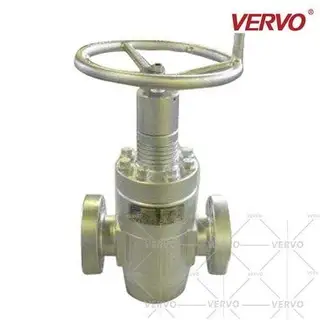
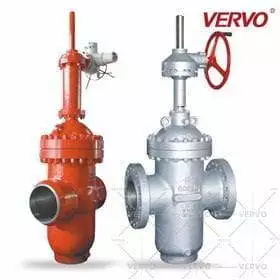
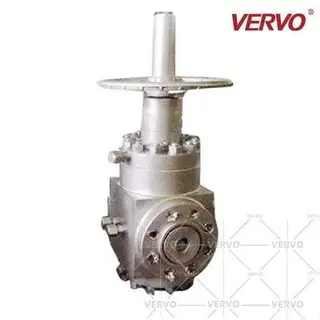
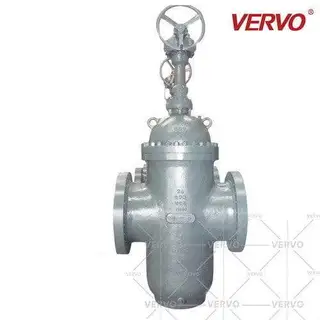
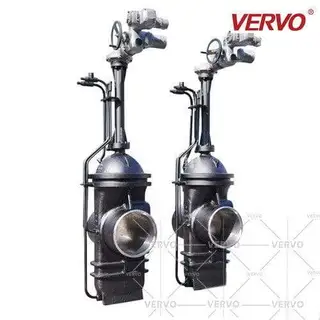
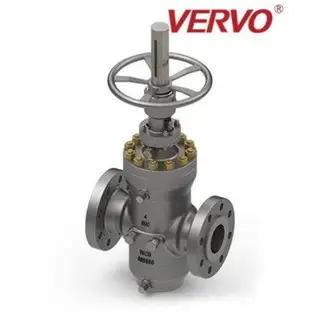
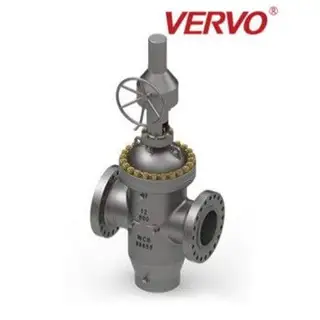
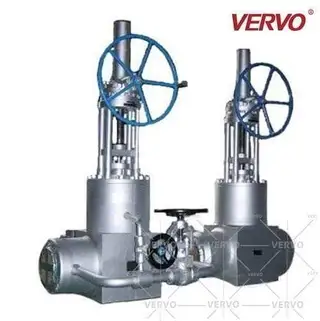
A through conduit gate valve, also known as a full-bore gate valve, is a high-performance industrial valve widely used in oil and gas transmission, petrochemical processing, power plants, and pipeline transportation systems. It is specifically designed to provide tight shutoff while maintaining an unobstructed flow path when fully open. Unlike conventional reduced-bore valves, the through conduit design ensures that the internal flow passage matches the pipeline diameter, allowing smooth fluid passage with minimal pressure drop and reduced turbulence.
This valve is particularly suitable for demanding applications where pipeline efficiency, pigging capability, and long-term sealing reliability are essential. With a robust structure and advanced sealing design, the through conduit gate valve plays a critical role in ensuring safe and efficient pipeline operations.
The operation of a through conduit gate valve is based on a simple but highly effective linear motion mechanism. The valve uses a gate component that moves vertically to control the opening and closing of the flow passage.
The stem, which is connected to a handwheel, gearbox, or actuator, drives the gate up and down inside the valve body. When the valve is fully opened, the gate is completely lifted and aligned with the internal conduit, creating a straight, full-bore flow path. This allows the medium—whether liquid, gas, or slurry—to pass through without obstruction.
When the valve is closed, the gate moves downward until it fully blocks the flow passage between the seats, ensuring complete shutoff. This design provides excellent sealing performance and prevents leakage in both directions.
Key advantages of this working principle include:
- Full-bore flow with almost zero pressure loss
- Smooth operation with low torque requirement
- Reliable sealing for complete isolation
- Reduced wear due to linear movement design
Because of its simple structure and efficient operation, the through conduit gate valve is widely trusted in critical pipeline systems.
A through conduit gate valve is composed of several key components that work together to ensure reliable performance under high-pressure conditions.
The valve body is the main pressure-retaining component. It is designed to withstand high internal pressure and harsh operating environments. It also forms the flow passage that aligns with the pipeline.
The bonnet provides sealing protection for internal components and supports the stem assembly. It ensures safe containment of pressure within the valve body.
The gate is the core closing element of the valve. It moves vertically to open or block the flow path. Depending on the design, it can be a slab gate or wedge gate.
The stem transmits mechanical force from the handwheel or actuator to the gate. It ensures precise control of valve opening and closing operations.
These components are engineered for durability, precision, and long service life, making the valve suitable for heavy-duty industrial applications.
Through conduit gate valves are available in several configurations to meet different operational and installation requirements.
In a rising stem design, the stem moves upward as the valve opens and downward as it closes. This movement allows operators to visually determine the valve position at a glance.
Advantages include:
- Clear indication of valve position
- Easy maintenance and operation
- Simple mechanical structure
However, this design requires additional vertical space for stem movement, making it less suitable for compact installations or confined environments.
The non-rising stem design keeps the stem in a fixed vertical position while the internal mechanism moves the gate. This configuration is widely used in applications with limited installation space.
Key benefits include:
- Compact structure suitable for underground or confined spaces
- Protection of stem threads from external environment
- Ideal for buried or enclosed pipeline systems
This type is commonly used in urban pipeline networks and industrial facilities with space constraints.
The slab gate design uses a flat gate that slides between two sealing seats. It is particularly effective in applications involving fluids with suspended solids, slurry, or particulate matter.
Advantages include:
- Strong resistance to particle interference
- Stable sealing performance under thermal expansion
- Suitable for pigging operations in pipelines
- Reduced risk of seat damage caused by debris
This design is widely used in oil pipelines and slurry transportation systems.
The wedge gate design features a tapered gate that is forced into a matching seat to achieve tight sealing. This structure provides strong sealing force and is suitable for high-pressure and high-temperature environments.
Key advantages include:
- Excellent sealing under extreme pressure conditions
- High structural strength and durability
- Suitable for thermal and mechanical stress environments
- Reliable shutoff performance in critical systems
This type is commonly used in refineries, petrochemical plants, and high-pressure steam systems.
Through conduit gate valves offer several important performance benefits that make them ideal for modern pipeline systems:
- Full-bore design ensures unrestricted flow
- Bidirectional sealing capability for flexible installation
- Excellent pigging compatibility for pipeline cleaning
- Low pressure drop and high energy efficiency
- Strong sealing performance under high pressure
- Long service life with minimal maintenance requirements
These features make them a preferred solution in industries where operational safety and efficiency are critical.
Through conduit gate valves are widely used in:
- Oil and gas transmission pipelines
- Petrochemical refining systems
- Natural gas distribution networks
- Power generation plants
- Slurry and mining pipeline systems
- Long-distance pipeline transportation
Their ability to handle high-pressure flow and maintain tight shutoff makes them indispensable in these sectors.
A through conduit gate valve is a reliable and efficient full-bore isolation valve designed for demanding pipeline applications. Its straight-through flow design minimizes pressure loss while ensuring strong sealing performance and operational safety. With multiple configurations such as rising stem, non-rising stem, slab gate, and wedge gate types, it can be adapted to a wide range of industrial requirements.
Whether used in oil and gas pipelines, petrochemical plants, or power systems, the through conduit gate valve delivers stable performance, long service life, and superior flow efficiency, making it an essential component of modern industrial pipeline infrastructure.
As a professional manufacturer, VERVO provides high-quality engineered solutions designed to meet global industry standards and ensure reliable long-term operation in the most challenging environments.