High Performance Butterfly Valve
High performance butterfly valves are engineered for demanding industrial applications where standard resilient seated valves cannot withstand high temperatures, pressures, or severe operating conditions. Featuring advanced offset designs, these valves provide reliable isolation, precise throttling, low operating torque, and long-term sealing performance. They are widely used in oil and gas, petrochemical, power generation, water treatment, and industrial process systems requiring rapid shutoff, structural strength, and consistent operation. With a compact quarter-turn design, high performance butterfly valves are easy to automate while maintaining excellent durability under mechanical and thermal stress. As a leading high performance butterfly valve manufacturer in China, VERVO delivers reliable and customized valve solutions for global industries.
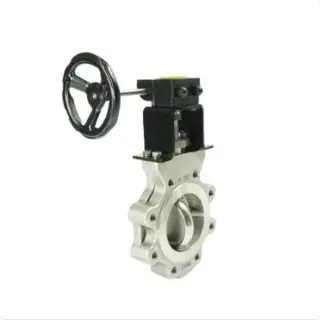
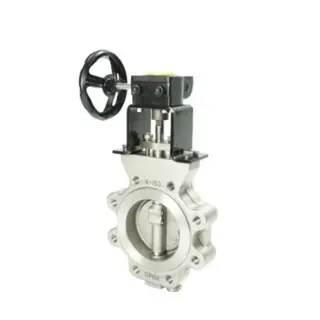
A high performance butterfly valve (HPBV), also known as a double offset butterfly valve, is an advanced rotary valve designed to regulate, throttle, and isolate fluid flow in demanding industrial applications. Unlike conventional butterfly valves, high performance butterfly valves feature an offset shaft design that reduces friction between the disc and seat during operation, improving sealing performance and extending service life.
A typical butterfly valve operates by rotating a circular disc inside the pipeline. When the disc rotates approximately 90 degrees, it controls the opening and closing of the flow passage. This simple quarter-turn operation provides fast shutoff, efficient flow control, and easy automation integration.
High performance butterfly valves are widely recognized as an industry-standard solution for applications requiring reliable isolation and accurate throttling under higher pressure and temperature conditions. Their optimized design provides several advantages, including a straight-through flow path, high flow capacity, compact structure, and the ability to handle certain solids, slurries, and viscous media.
Compared with traditional resilient-seated butterfly valves, high performance butterfly valves offer improved mechanical strength, tighter shutoff capability, and better resistance to demanding operating environments. They are commonly used as an economical alternative to larger and heavier gate valves or globe valves while maintaining excellent operational performance.
High performance butterfly valves are engineered with several design improvements that make them suitable for critical industrial services.
The double offset structure is one of the most important features of a high performance butterfly valve. The stem axis is positioned away from the center of the valve disc and the sealing surface, allowing the disc to move away from the seat immediately after opening.
This design minimizes friction and wear between the disc and seat, resulting in:
- Longer valve service life
- Lower operating torque
- Reduced maintenance requirements
- Improved sealing reliability
High performance butterfly valves are designed to provide tight shutoff performance even under high-pressure and high-temperature conditions. Depending on the application requirements, they can be equipped with different seat materials, including PTFE, RPTFE, metal seats, and other specialized sealing materials.
These sealing options allow the valves to handle a wide range of media, including:
- Steam
- Water
- Oil
- Gas
- Chemicals
- Industrial fluids
The streamlined disc design and straight-through flow path reduce pressure loss and improve flow efficiency. Compared with some traditional control valves, high performance butterfly valves provide greater flow capacity with a smaller installation footprint.
High performance butterfly valves require only a 90-degree rotation to move between fully open and fully closed positions. This makes them ideal for automated applications using pneumatic, electric, or hydraulic actuators.
The quarter-turn design offers:
- Fast operation
- Easy automation
- Reduced installation space
- Lower operating costs
High performance butterfly valves provide significant advantages compared with standard butterfly valves and other valve types.
One of the biggest advantages of high performance butterfly valves is their ability to operate reliably in demanding pressure and temperature environments.
Their advanced sealing design and durable materials allow them to maintain stable performance in applications where standard resilient-seated butterfly valves may not be suitable.
They are commonly selected for:
- High-pressure pipelines
- Steam systems
- Thermal processes
- Chemical processing equipment
Industrial environments often involve aggressive fluids and corrosive media. High performance butterfly valves can be manufactured with corrosion-resistant materials such as stainless steel, duplex stainless steel, and specially coated components.
These materials help prevent:
- Corrosion damage
- Chemical degradation
- Premature valve failure
As a result, high performance butterfly valves can provide reliable operation in harsh industries such as chemical processing, petrochemical production, and marine applications.
High performance butterfly valves provide improved throttling performance compared with conventional butterfly valves. Their precise disc movement allows operators to achieve better control over flow rates.
This makes them suitable for processes requiring:
- Stable flow regulation
- Pressure control
- Temperature management
- Process optimization
They are especially effective in systems with constant pressure drops or slow process control loops.
Compared with many other industrial valve types, high performance butterfly valves have a lightweight and compact structure.
Their advantages include:
- Smaller installation space
- Lower transportation costs
- Reduced maintenance requirements
- Easier actuator installation
For large-diameter pipelines, butterfly valves are often more economical than gate valves or globe valves while still providing excellent shutoff performance.
The reduced friction design of double offset butterfly valves minimizes wear on internal components. This helps extend operating life and reduces downtime caused by maintenance or replacement.
When properly selected and installed, high performance butterfly valves can provide years of reliable operation in demanding industrial environments.
High performance butterfly valves are widely used across industries that require dependable flow control and isolation.
The oil and gas sector requires valves capable of handling high pressures, extreme temperatures, and challenging operating conditions.
High performance butterfly valves are commonly used in:
- Pipeline systems
- Processing facilities
- Storage terminals
- Refinery applications
Their strong sealing capability and corrosion resistance make them suitable for controlling petroleum products, natural gas, and other hydrocarbons.
Chemical plants often process aggressive fluids that require reliable corrosion-resistant equipment.
High performance butterfly valves are used for:
- Chemical transfer systems
- Reactor processes
- Storage systems
- Process control applications
Their material flexibility allows them to handle various chemical media safely and efficiently.
Water treatment facilities require valves that can provide reliable isolation and flow control.
High performance butterfly valves are commonly installed in:
- Water distribution pipelines
- Pump stations
- Filtration systems
- Wastewater treatment plants
Their large flow capacity and compact design make them suitable for large-diameter water applications.
Power plants operate complex systems involving steam, cooling water, and process fluids.
High performance butterfly valves are used in:
- Cooling systems
- Steam applications
- Boiler systems
- Auxiliary process lines
Their ability to withstand high temperatures and pressures makes them valuable components in power generation facilities.
Heating, ventilation, and air conditioning systems often require efficient flow regulation and isolation.
High performance butterfly valves provide reliable control for:
- Chilled water systems
- Heating pipelines
- Large air conditioning systems
Their compact design makes them especially suitable for commercial and industrial HVAC installations.
The pulp and paper industry handles challenging fluids containing fibers, chemicals, and suspended solids.
High performance butterfly valves offer advantages such as:
- High flow capacity
- Good resistance to harsh media
- Reliable operation in large pipelines
They are widely used in pulp processing, chemical recovery, and water circulation systems.
Choosing the correct high performance butterfly valve requires careful consideration of operating conditions and system requirements.
Important factors include:
The valve pressure class and material selection should match the system requirements to ensure safe and reliable operation.
The body, disc, stem, and seat materials should be selected according to the fluid characteristics, including corrosion level and temperature range.
Engineers should evaluate:
- Fluid type
- Viscosity
- Solid content
- Chemical compatibility
Depending on the application, high performance butterfly valves can be equipped with:
- Manual handles
- Gear operators
- Pneumatic actuators
- Electric actuators
- Hydraulic actuators
Automation requirements should be considered during valve selection.
High performance butterfly valves have become an essential solution for modern industrial flow control and isolation applications. With their double offset design, excellent sealing performance, compact structure, and high durability, they provide reliable operation in demanding environments involving high pressure, high temperature, and corrosive media.
From oil and gas and chemical processing to water treatment, power generation, HVAC, and pulp and paper industries, these valves deliver efficient flow control while reducing maintenance requirements and operating costs.
When selecting a high performance butterfly valve, factors such as pressure rating, temperature range, material compatibility, and application requirements should be carefully evaluated. With proper selection and installation, high performance butterfly valves can provide long-term reliability, improved process efficiency, and cost-effective performance across a wide range of industrial systems.