Top Entry Ball Valve
The top entry ball valve is a high-performance valve designed for easy maintenance and in-line inspection through its top bonnet assembly. Unlike side-entry designs, it allows technicians to access internal components such as the ball, seats, and stem without removing the valve body from the pipeline. This significantly reduces downtime and simplifies maintenance, making it ideal for large or fixed pipeline systems. The top entry structure also ensures strong sealing performance, reliable operation, and long service life under demanding conditions. As a leading top entry ball valve manufacturer in China, VERVO delivers durable and efficient solutions for industrial flow control applications.
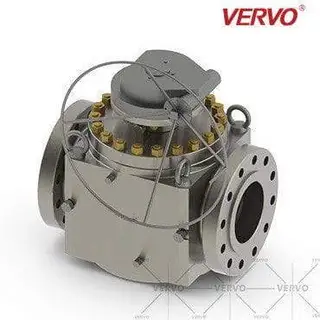
A top entry ball valve is a high-performance industrial valve designed with a unique structure that allows internal components to be accessed directly from the top of the valve body. This design makes it particularly suitable for demanding industries such as oil and gas, petrochemical processing, chemical engineering, power generation, and offshore platforms, where reliability, safety, and ease of maintenance are critical requirements.
Unlike side-entry ball valves, which require removal from the pipeline for internal servicing, top entry ball valves enable technicians to perform inspection, repair, or component replacement without dismantling the entire pipeline system. This feature significantly improves operational efficiency and reduces system downtime, especially in large-scale industrial installations where pipeline disassembly can be complex and costly.
At its core, a top entry ball valve operates using a spherical closure element (the ball) with a central bore. The ball is typically manufactured from high-strength stainless steel or alloy materials and is positioned inside the valve body. When the valve is open, the bore aligns with the pipeline, allowing fluid or gas to flow freely. When rotated 90 degrees by the actuator, the bore becomes perpendicular to the flow path, effectively blocking media movement and ensuring tight shutoff.
The structural design of a top entry ball valve closely resembles that of a traditional ball valve, but with one key distinction: the top-mounted bonnet assembly. This bonnet is bolted or flanged to the top of the valve body, allowing direct access to the internal components without removing the valve from the pipeline.
The main components include:
- Valve body
- Top-entry bonnet
- Ball element
- Valve stem
- Seats and sealing elements
- Actuator system
The ball is connected to the actuator through the valve stem. When the actuator is operated, the stem rotates the ball within the valve body. In the open position, the bore of the ball aligns with the pipeline, enabling smooth and unobstructed flow. In the closed position, the ball rotates so that the bore is perpendicular to the flow direction, creating a secure shutoff.
This simple yet highly effective quarter-turn mechanism ensures fast operation, precise control, and dependable sealing performance even under challenging operating conditions.
One of the most important advantages of a top entry ball valve is its maintenance-friendly design. Since the valve can be opened from the top, internal parts such as the ball, seats, and seals can be inspected or replaced without removing the valve from the pipeline.
This feature provides several operational benefits:
- Reduced downtime during maintenance
- Lower labor and installation costs
- Minimal disruption to pipeline systems
- Easier servicing in confined or hard-to-reach areas
In large industrial systems where valves are installed in dense piping networks or offshore environments, this advantage becomes particularly valuable.
Top entry ball valves are engineered for high-pressure and high-temperature applications. Their robust construction, often featuring forged or cast steel bodies with flanged or fully welded connections, ensures excellent mechanical strength and sealing integrity.
This makes them suitable for critical applications where failure is not an option, such as:
- Oil and gas transmission pipelines
- Refinery process systems
- Chemical reaction units
- High-pressure steam systems
The strong sealing system minimizes leakage risks and ensures stable long-term operation even under extreme working conditions.
Top entry ball valves are widely used in large-diameter pipeline systems due to their structural stability and ease of maintenance. In high-pressure environments, their reinforced design ensures that internal components remain stable and secure under heavy load conditions.
Unlike smaller valves that may require complete removal for servicing, top entry designs allow field maintenance even in large pipeline installations, making them highly efficient for infrastructure-heavy industries such as natural gas distribution and offshore oil production.
Top entry ball valves are commonly integrated into emergency shut-off systems because of their fast and reliable operation. The quarter-turn mechanism allows for rapid transition between open and closed positions, ensuring immediate response when flow interruption is required.
This makes them ideal for safety-critical applications where quick isolation of hazardous media is essential. Their dependable sealing performance also ensures zero leakage during emergency shutdown conditions.
In addition to their structural and operational features, top entry ball valves offer several long-term benefits:
- Reduced system downtime due to in-line maintenance capability
- High durability under extreme temperature and pressure conditions
- Excellent sealing performance with low leakage risk
- Extended service life with minimal maintenance requirements
- Suitable for automation with pneumatic or electric actuators
- Reliable performance in continuous industrial operations
These advantages make them a preferred solution for engineers seeking long-term reliability and operational efficiency.
Top entry ball valves are widely used in industries where performance, safety, and maintainability are essential. Common applications include:
- Oil and gas production and transportation systems
- Petrochemical refining and processing plants
- LNG (liquefied natural gas) facilities
- Offshore drilling platforms
- Power generation stations
- Industrial fluid control systems
Their ability to operate reliably in harsh environments makes them indispensable in critical infrastructure projects worldwide.
A top entry ball valve is a highly engineered flow control device designed for demanding industrial applications. Its unique top-access structure allows for easy maintenance without pipeline removal, significantly improving operational efficiency and reducing downtime.
With strong sealing performance, high pressure resistance, and suitability for large-diameter systems, it plays a vital role in industries such as oil and gas, petrochemicals, and power generation. Combined with its emergency shut-off capability and long service life, the top entry ball valve remains one of the most reliable and efficient solutions for modern industrial flow control systems.