Triple Offset Butterfly Valve
A Triple Offset Butterfly Valve (TOBV) is an advanced high-performance valve featuring three precise offsets that enable frictionless, cam-like disc movement and reliable sealing performance. Its unique design eliminates rubbing between the disc and seat, ensuring longer service life, lower operating torque, and excellent resistance to wear. With bi-directional, bubble-tight shutoff capability, triple offset butterfly valves are ideal for high-pressure, high-temperature, and critical industrial applications. They provide a lightweight, economical alternative to traditional gate and ball valves in industries such as oil and gas, power generation, chemical processing, and energy systems. As a leading triple offset butterfly valve manufacturer in China, VERVO delivers durable and customized valve solutions.
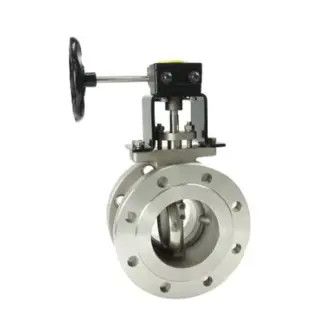
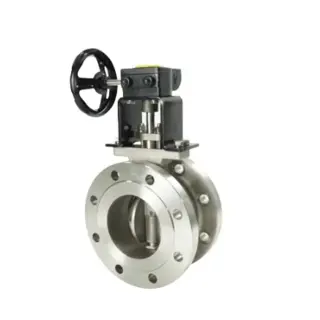
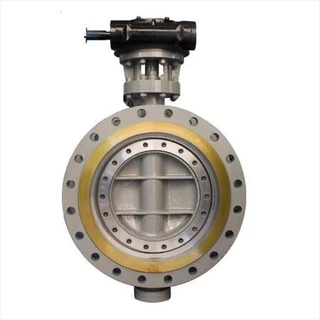
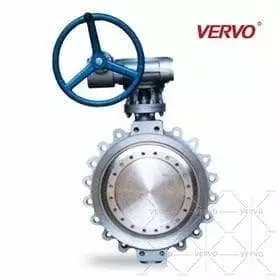
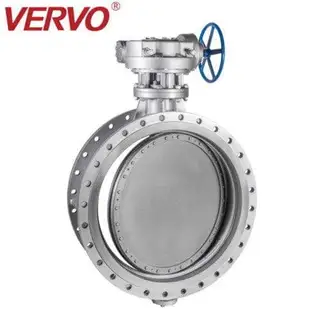
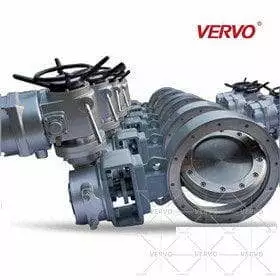
A Triple Offset Butterfly Valve (TOV or TOBV) is a high-performance rotary valve specifically engineered to provide bi-directional, bubble-tight shutoff in demanding industrial applications involving high pressures, high temperatures, and severe operating conditions. Unlike conventional concentric butterfly valves that rely on resilient elastomer seats, a triple offset butterfly valve uses a precision-engineered metal-to-metal sealing system combined with three carefully designed geometric offsets to eliminate friction during operation.
This innovative design allows the valve disc to move away from the seat immediately during opening and closing, preventing wear on the sealing surfaces and significantly extending valve service life. Because of these advantages, triple offset butterfly valves have become a preferred alternative to traditional gate valves, globe valves, and ball valves in critical services where reliability and durability are essential.
Triple offset butterfly valves are widely used in industries such as oil and gas, petrochemical processing, power generation, LNG facilities, refineries, chemical plants, offshore platforms, and steam systems where conventional soft-seated valves cannot withstand the operating conditions.
As a leading Triple Offset Butterfly Valve manufacturer in China, VERVO provides high-performance valve solutions designed to meet international standards and the demanding requirements of modern industrial processes.
The revolutionary performance of the triple offset butterfly valve comes from its unique three-offset geometry. Each offset serves a specific purpose in reducing friction, improving sealing performance, and increasing service life.
The first offset positions the valve shaft slightly behind the centerline of the sealing surface. This arrangement allows the disc to move away from the seat immediately when the valve starts to open.
Unlike concentric butterfly valves where the disc continuously rubs against the seat during operation, the first offset minimizes contact and reduces wear.
Benefits include:
- Reduced friction
- Lower operating torque
- Longer seat life
- Smoother operation
The second offset moves the shaft away from the centerline of the valve bore. This eccentric arrangement allows the disc to rotate with a cam-like motion and creates a more efficient opening path.
The second offset further minimizes contact between the disc and seat during operation and contributes to improved flow characteristics by reducing turbulence.
Advantages include:
- Reduced disc interference
- Lower pressure drop
- Improved flow efficiency
- Enhanced operational reliability
The third offset is the defining feature that distinguishes triple offset butterfly valves from double offset designs.
Instead of using a flat sealing surface, both the disc sealing ring and seat are machined into matching conical profiles. This geometry creates a true camming action during the final stages of closure.
The sealing surfaces do not make contact until the last few degrees of disc rotation. As the valve closes, the conical surfaces engage uniformly, creating a tight metal-to-metal seal without frictional sliding.
This design offers several major advantages:
- Zero rubbing between sealing surfaces
- Extended service life
- Excellent sealing reliability
- Minimal maintenance requirements
- Bubble-tight shutoff capability
The conical geometry allows the valve to maintain sealing performance even after years of operation in severe service conditions.
The working principle of a triple offset butterfly valve is based on controlled eccentric movement and precision sealing geometry.
When the valve is fully open, the disc rotates approximately 90 degrees until it becomes parallel to the fluid flow direction.
In this position:
- Flow restriction is minimized.
- Pressure drop remains low.
- Fluid turbulence is reduced.
- Energy efficiency is improved.
The streamlined disc design makes triple offset butterfly valves particularly suitable for large-diameter pipelines where minimizing pressure loss is important.
When the valve begins opening, the offset geometry immediately lifts the disc away from the seat without dragging or rubbing against it.
Because the sealing surfaces separate instantly:
- Friction is virtually eliminated.
- Operating torque remains low.
- Wear is minimized.
- Actuator loads are reduced.
This frictionless movement significantly increases the service life of both the seat and sealing ring.
As the valve closes, the disc approaches the seat through a controlled camming motion created by the three offsets.
The disc and seat do not contact one another until the final few degrees of rotation. During these last moments of closure, the conical sealing surfaces engage evenly around the entire circumference of the valve.
This creates:
- Uniform sealing pressure
- Bubble-tight shutoff
- Bi-directional sealing capability
- Reliable isolation performance
Small elastic deformation within the laminated sealing ring helps eliminate any microscopic gaps and ensures a complete seal.
Triple offset butterfly valves are specifically engineered to achieve zero visible leakage.
Many designs meet internationally recognized leakage standards, including:
- API 598
- ASME FCI 70-2
- ISO 5208
This makes them suitable for critical isolation services where leakage cannot be tolerated.
Since there is no continuous rubbing between the disc and seat, operating torque requirements are significantly lower than those of conventional valve designs.
Benefits include:
- Smaller actuators
- Reduced energy consumption
- Lower operating costs
- Easier automation integration
The metal-to-metal sealing structure makes triple offset butterfly valves inherently fire-safe.
Unlike resilient seats that can burn, melt, or degrade during fire exposure, metal seats continue to provide isolation under extreme temperatures.
This characteristic makes TOBV valves particularly valuable in:
- Refineries
- Petrochemical facilities
- Offshore platforms
- Gas processing plants
Many designs comply with international fire-safe standards.
Triple offset butterfly valves are designed for severe service conditions and can operate reliably for extended periods under extreme environments.
Typical applications include:
- High-cycle operation
- Abrasive media
- Corrosive fluids
- Thermal cycling
The elimination of friction dramatically increases seat life and reduces maintenance requirements.
Triple offset butterfly valves can operate across an extremely wide temperature range, including:
- Cryogenic LNG applications
- Refrigeration systems
- High-temperature steam systems
- Thermal oil processes
Depending on materials and design, operating temperatures can range from cryogenic conditions below -196°C to temperatures exceeding 600°C.
These valves are capable of handling higher pressure classes than traditional resilient seated butterfly valves.
Common pressure ratings include:
- ANSI Class 150
- ANSI Class 300
- ANSI Class 600
- ANSI Class 900
Specialized designs can support even higher pressure requirements.
Compared with gate valves and ball valves of similar sizes and pressure classes, triple offset butterfly valves offer substantial reductions in:
- Weight
- Installation space
- Structural support requirements
- Installation costs
This advantage becomes especially important in offshore platforms and large industrial plants where weight reduction is critical.
Because of their outstanding performance characteristics, triple offset butterfly valves are used in numerous demanding industries.
Applications include:
- Crude oil pipelines
- Refinery processes
- Gas transmission systems
- Offshore production facilities
Used in:
- Superheated steam systems
- Boiler feedwater lines
- Cooling water circuits
- Turbine systems
Suitable for:
- Corrosive chemicals
- High-temperature fluids
- Hazardous process media
Triple offset butterfly valves perform exceptionally well in cryogenic environments where soft seats may fail.
Typical applications include:
- LNG terminals
- Storage tanks
- Liquid gas transportation systems
The compact design and low weight make them ideal for:
- Shipbuilding
- Offshore platforms
- Floating production systems
Although triple offset butterfly valves provide numerous advantages, there are some factors to consider.
The advanced engineering, precision machining, and premium materials used in triple offset valves make them more expensive than conventional butterfly valves.
However, the lower maintenance requirements and longer service life often result in lower total ownership costs.
For low-pressure water systems or non-critical services, the advanced capabilities of a triple offset butterfly valve may not be necessary.
In such cases, concentric or double offset butterfly valves may provide a more economical solution.
Because of their advanced sealing geometry, proper installation and alignment are important to ensure optimal performance and sealing reliability.
A Triple Offset Butterfly Valve represents one of the most advanced butterfly valve technologies available today. Its innovative three-offset geometry eliminates friction during operation, provides bubble-tight bi-directional sealing, and delivers exceptional performance in severe service environments.
With metal-to-metal seating, fire-safe construction, low operating torque, and excellent durability, triple offset butterfly valves have become the preferred choice for critical applications in oil and gas, power generation, chemical processing, LNG, and many other industries.
By offering the sealing performance of traditional gate and ball valves while maintaining a lighter, more compact design, triple offset butterfly valves provide an efficient and cost-effective solution for modern industrial flow control systems.