T-Type Strainer
A T-Type Strainer is a reliable pipeline filtration device designed to remove solid particles, debris, and contaminants from liquid and gas systems. Featuring a durable T-shaped body design, it uses a removable mesh or perforated screen to capture impurities while allowing clean fluid to continue flowing through the pipeline. T-Type Strainers help protect pumps, valves, meters, and other downstream equipment from damage caused by unwanted particles, improving system efficiency and reducing maintenance costs. As a leading T-Type Strainer manufacturer in China, VERVO provides high-quality, customizable strainer solutions with various materials, sizes, pressure ratings, and connection options for industrial applications.
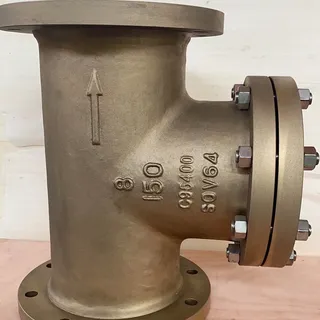
ANSI B16.34 T Strainer, Bronze B148 C95400, 8 IN, 150 LB, RF

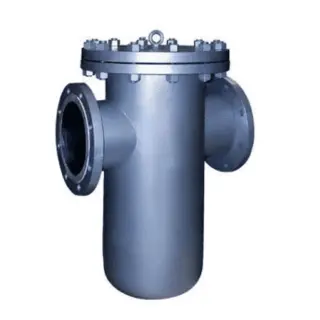
A T-Type Strainer is a mechanical filtration device designed with a distinctive “T” shaped body configuration to remove solid particles, debris, and contaminants from liquid and gas pipeline systems. It is widely used in industrial applications where clean fluid flow is essential for protecting sensitive downstream equipment, including pumps, valves, meters, compressors, and heat exchangers.
Unlike simple filters that may require frequent replacement, T-Type Strainers use a reusable mesh screen or perforated filter element to capture unwanted materials while allowing the filtered fluid to continue flowing through the pipeline. The collected contaminants remain inside the strainer housing until they are removed during routine maintenance.
The T-shaped design provides a larger filtration chamber and higher dirt-holding capacity compared with many compact strainer designs. This makes T-Type Strainers particularly suitable for applications involving high flow rates, large pipelines, and fluids containing a significant amount of solid particles.
During operation, the process fluid enters the strainer body through the inlet connection and passes through the internal filtration element. Solid impurities such as rust, scale, sand, welding debris, and other foreign materials are trapped by the screen, while clean fluid exits through the outlet. By preventing these contaminants from reaching critical equipment, T-Type Strainers improve system reliability, reduce maintenance requirements, and extend equipment service life.
T-Type Strainers are commonly installed in industries such as oil and gas, chemical processing, water treatment, power generation, marine, HVAC, and general industrial manufacturing systems.
The working principle of a T-Type Strainer is simple but highly effective. It relies on mechanical separation through a filtration screen installed inside a durable T-shaped housing.
The filtration process includes several key steps:
The contaminated fluid enters the T-Type Strainer through the inlet connection. The fluid can be liquid, gas, steam, or other industrial media depending on the application requirements.
As the fluid moves through the strainer chamber, it passes through a mesh or perforated screen. Particles larger than the openings in the screen are captured and retained inside the filtration element.
Typical contaminants removed by T-Type Strainers include:
- Sand and gravel
- Rust particles
- Pipe scale
- Welding debris
- Dirt and sediment
- Foreign materials from processing systems
After passing through the filtration screen, the clean fluid exits through the outlet and continues downstream to connected equipment.
The captured particles accumulate inside the strainer element until cleaning or replacement is required. A pressure differential between the inlet and outlet sides can be monitored to determine when the filter needs maintenance.
One of the most important advantages of a T-Type Strainer is its ability to protect valuable downstream equipment. Pumps, control valves, flow meters, heat exchangers, and other precision components can suffer serious damage when exposed to solid contaminants.
Particles traveling through pipelines may cause:
- Valve seat damage
- Pump abrasion
- Reduced equipment efficiency
- Blockages in narrow passages
- Increased repair costs
By capturing debris before it reaches sensitive equipment, T-Type Strainers help prevent unexpected failures and reduce overall maintenance expenses.
The unique T-shaped structure allows T-Type Strainers to provide efficient filtration while maintaining a compact installation footprint.
Compared with some traditional basket strainers, T-Type Strainers can be integrated into pipeline layouts where space is limited. Their straight-line flow configuration makes them suitable for systems requiring efficient filtration without significant changes to piping arrangements.
This space-saving design is especially beneficial in industrial plants, process skids, and customized pipeline systems where installation space is restricted.
T-Type Strainers provide excellent installation flexibility and can be installed in both horizontal and vertical pipeline configurations.
This adaptability allows engineers to design systems according to available space, process requirements, and maintenance accessibility.
Whether used in new pipeline installations or existing system upgrades, T-Type Strainers can be easily incorporated into various industrial applications.
T-Type Strainers are designed to handle large volumes of fluid while maintaining stable flow performance.
Their larger filtration chamber and high-capacity screen area allow them to collect significant amounts of debris without causing excessive pressure loss. When properly sized and equipped with the correct mesh specification, they provide efficient filtration while minimizing flow restrictions.
This makes them an ideal choice for high-flow applications such as:
- Cooling water systems
- Oil pipelines
- Chemical processing systems
- Industrial circulation loops
- Large-scale water treatment facilities
T-Type Strainers are manufactured from strong and corrosion-resistant materials to withstand demanding industrial environments.
Common construction materials include:
- Carbon steel
- Stainless steel
- Cast iron
- Duplex stainless steel
- Alloy materials
Material selection depends on factors such as fluid compatibility, operating temperature, pressure conditions, and corrosion requirements.
Stainless steel T-Type Strainers are often selected for chemical and corrosive applications due to their excellent resistance to oxidation and chemical attack. Carbon steel models are commonly used in general industrial services requiring high mechanical strength.
The T-shaped configuration provides a larger internal filtration area compared with many compact strainer designs. This allows T-Type Strainers to handle higher flow rates and larger quantities of contaminants.
The increased filtration capacity reduces the frequency of cleaning and improves system reliability, especially in applications where fluid contamination levels are high.
Both T-Type Strainers and Y-Type Strainers are widely used for industrial filtration, but they have different design advantages.
Advantages:
- Larger filtration capacity
- Suitable for high flow rates
- Handles large amounts of debris
- Ideal for larger pipeline systems
- Provides efficient filtration in demanding applications
Because of their larger filtering chamber, T-Type Strainers are often preferred where contamination levels are high and frequent cleaning should be minimized.
Advantages:
- Compact design
- Lower initial cost
- Suitable for general filtration applications
- Easy installation in limited spaces
Y-Type Strainers are commonly used in steam, gas, and liquid systems where moderate filtration requirements exist.
The choice between a T-Type and Y-Type Strainer depends on factors such as flow rate, available installation space, contamination level, maintenance requirements, and system design.
Proper maintenance is essential to ensure reliable operation and long service life.
During normal operation, contaminants gradually accumulate inside the filter element. As debris increases, the pressure drop across the strainer also increases. Monitoring differential pressure helps determine when cleaning is required.
Typical maintenance procedures include:
- Shut down or isolate the pipeline system.
- Remove the strainer cover or access plate.
- Extract the filter element.
- Clean accumulated debris from the screen.
- Inspect the filter element for damage.
- Reinstall the components and check sealing performance.
Compared with Y-Type Strainers, T-Type Strainers generally have a larger filtration chamber and can hold more contaminants before requiring cleaning. However, because of their larger basket-style filter elements, cleaning may require more time during maintenance.
Y-Type Strainers often include blow-down ports that allow easier flushing and faster cleaning. However, they may require more frequent maintenance in systems with heavy contamination.
Choosing the correct strainer type depends on balancing filtration capacity, maintenance frequency, and operational requirements.
T-Type Strainers are widely used across many industrial sectors, including:
Used to remove debris from fuel, crude oil, and process fluids while protecting pumps and valves.
Helps maintain fluid cleanliness and prevents contamination-related equipment failures.
Removes sediment and solid particles from water pipelines and protects treatment equipment.
Provides filtration for cooling systems, lubrication circuits, and process pipelines.
Protects pumps and equipment in seawater and shipboard piping systems.
Filters circulating fluids to improve system efficiency and reliability.
A T-Type Strainer is a reliable and efficient filtration solution designed to remove solid contaminants from industrial pipelines while protecting critical equipment. Its unique T-shaped design provides high filtration capacity, flexible installation options, durable performance, and excellent suitability for high-flow applications.
By selecting the correct material, mesh size, pressure rating, and configuration, companies can improve pipeline efficiency, reduce maintenance costs, and extend the operating life of downstream equipment. For demanding industrial environments requiring dependable filtration performance, T-Type Strainers provide a practical and long-lasting solution.