Cryogenic Check Valves
Cryogenic check valves are specially designed non-return valves engineered for dependable operation in ultra-low-temperature environments, often used in liquefied gas and cryogenic processing systems. These valves automatically allow flow in one direction while preventing reverse flow that could cause pressure fluctuations, contamination, equipment damage, or safety risks. Manufactured with cryogenic-grade materials and precision engineering, they ensure reliable sealing and long-term performance under extreme conditions. As a leading cryogenic check valve manufacturer in China, VERVO supplies high-quality cryogenic check valves for LNG, industrial gas, air separation, and petrochemical applications.
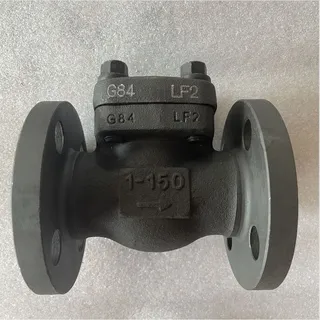
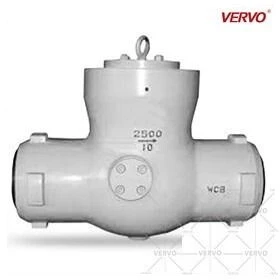
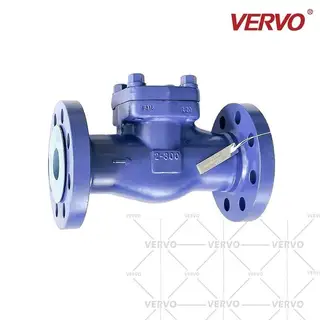
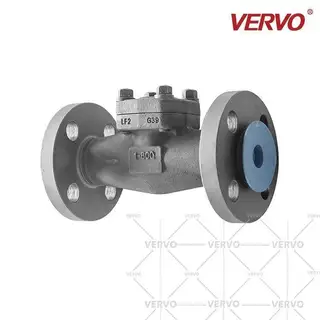
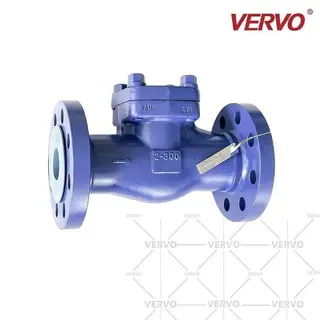
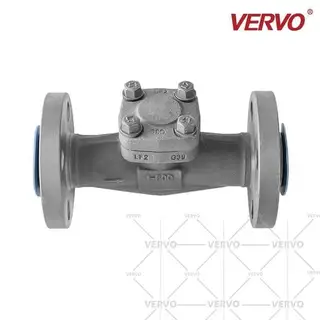
Cryogenic check valves are specially engineered non-return valves designed to operate safely and reliably in extremely low-temperature environments, often far below the freezing point. These valves play a critical role in cryogenic systems by allowing fluid or gas to flow in only one direction while automatically preventing reverse flow. In industries handling liquefied gases, even minor backflow can result in pressure instability, contamination, equipment damage, or serious safety hazards. Cryogenic check valves provide essential protection to ensure system integrity and operational safety.
Typically used in applications involving liquefied natural gas (LNG), liquid nitrogen, liquid oxygen, liquid hydrogen, and other cryogenic media, these valves are engineered to withstand temperatures ranging from –196°C to +120°C while maintaining dependable sealing and mechanical performance. Available in sizes from DN10 to DN200, cryogenic check valves can handle pressures of up to 50 bar, making them suitable for a wide range of industrial and energy-related applications.
Like all check valves, cryogenic check valves function automatically based on flow direction and pressure differential. When cryogenic fluid flows in the correct direction, the internal disc or poppet opens, allowing smooth passage through the valve. As soon as the flow slows, stops, or attempts to reverse, the disc immediately closes against the valve seat, blocking backflow.
What distinguishes cryogenic check valves from standard check valves is their specialized design and material selection. Cryogenic fluids can cause rapid thermal contraction, extreme embrittlement, and seal failure in conventional valves. Cryogenic check valves are therefore designed to maintain toughness, dimensional stability, and leak-tight performance under severe thermal stress and rapid temperature changes.
Cryogenic check valves incorporate several carefully engineered components to ensure reliable operation in ultra-low-temperature conditions.
The valve body forms the pressure-retaining shell and must tolerate extreme cold without cracking or deforming. Cryogenic check valve bodies are commonly manufactured from stainless steel, duplex stainless steel, bronze, or nickel-based alloys, all selected for their excellent low-temperature mechanical properties. These materials maintain strength and toughness even when exposed to cryogenic fluids.
The disc, also known as the poppet, is the moving component that opens and closes in response to flow direction. In cryogenic service, the disc must remain free-moving and resistant to sticking or seizure caused by ice formation or thermal contraction. Precision machining and low-temperature-compatible materials ensure smooth operation and rapid response.
The seat provides the sealing surface between the disc and the valve body. In cryogenic check valves, the seat is designed to remain leak-tight despite extreme temperature fluctuations. Special metal-to-metal or soft-seat designs are used depending on the application, ensuring reliable sealing performance even under repeated thermal cycling.
Many cryogenic check valves feature a spring-loaded design to ensure rapid closure when forward flow stops. The spring assists in closing the disc quickly and consistently, improving response time and reducing the risk of backflow. Springs used in cryogenic valves are made from materials that retain elasticity and strength at low temperatures.
In certain cryogenic applications, an extended bonnet is used to move sealing and packing components away from the cold zone. This prevents freezing of critical sealing elements and ensures long-term operational reliability. Extended bonnets also help reduce heat transfer into the cryogenic system, improving overall efficiency.
Cryogenic check valves are indispensable in low-temperature systems for several important reasons.
Reverse flow in cryogenic pipelines can cause serious system disturbances, including pressure surges, contamination, and mechanical damage. Cryogenic check valves act as an automatic safeguard, preventing unwanted reverse flow without the need for external controls.
Many cryogenic liquids rapidly expand when exposed to heat. Backflow can trap fluids in confined spaces, leading to dangerous pressure buildup. By ensuring unidirectional flow, cryogenic check valves significantly reduce the risk of leaks, ruptures, or violent phase changes.
In systems such as LNG liquefaction plants, air separation units, and cryogenic storage facilities, stable flow direction is essential for consistent process control. Cryogenic check valves help maintain steady operating conditions, improving system reliability and performance.
Cryogenic check valves often serve as a secondary safety measure alongside control valves. If a control valve fails to close completely due to ice formation or mechanical issues, the check valve provides backup protection against reverse flow.
Stable, one-directional flow reduces turbulence and thermal losses in cryogenic systems. This contributes to improved energy efficiency and lower operational costs, especially in large-scale industrial installations.
Material selection is one of the most critical factors in cryogenic check valve performance. Standard valve materials often become brittle at low temperatures, making them unsuitable for cryogenic service.
Stainless steel is the most commonly used material for cryogenic check valves due to its excellent balance of performance and cost. Grades such as 304L and 316L offer:
- Outstanding low-temperature toughness
- Excellent corrosion resistance
- Reduced risk of carbide precipitation
- Proven performance in cryogenic environments
316L stainless steel, with added molybdenum, provides enhanced corrosion resistance in chloride-rich or marine environments.
Nickel alloys are used in the most demanding cryogenic applications, including liquid hydrogen, liquid helium, and aerospace-grade LOX systems. These materials provide:
- Exceptional mechanical strength at ultra-low temperatures
- Superior resistance to thermal fatigue
- Minimal embrittlement under extreme conditions
Aluminum alloys are sometimes used in lightweight cryogenic systems, such as mobile LNG equipment or aerospace applications. Aluminum offers excellent thermal conductivity and low weight, though it has lower strength compared to stainless steel.
Bronze and copper alloys are suitable for moderate-pressure cryogenic applications where corrosion resistance and thermal conductivity are important. These materials are commonly used in smaller valves and auxiliary systems.
Cryogenic check valves are widely used across multiple industries, including:
- Liquefied Natural Gas (LNG): Production, storage, transport, and regasification
- Industrial Gases: Liquid nitrogen, oxygen, and argon systems
- Air Separation Units: Ensuring process stability and safety
- Petrochemical and Chemical Processing: Low-temperature reaction and storage systems
- Energy and Aerospace: Hydrogen, helium, and oxygen handling
Cryogenic check valves are essential components in systems handling ultra-low-temperature fluids. Engineered with specialized materials, precision-crafted components, and advanced sealing technologies, these valves deliver reliable backflow prevention, enhanced safety, and long-term durability under extreme cryogenic conditions.
Whether deployed in LNG plants, industrial gas facilities, or advanced energy systems, cryogenic check valves ensure stable operation, safeguard critical equipment, and support efficient, safe cryogenic processes worldwide. As a leading cryogenic check valve manufacturer in China, we are dedicated to providing high-quality valves that combine reliability, precision, and durability to meet the stringent demands of modern cryogenic applications.