Key Design Considerations and Selection Criteria for Cryogenic Valves
Abstract: Cryogenic valves are critical control components in low-temperature pipeline systems, serving as key interface elements within cryogenic process systems. Their safety and suitability significantly influence overall system performance, underscoring the importance of proper valve selection. To assist process designers in the proper selection of cryogenic valves, this paper analyzes key technical considerations from a theoretical perspective, including operating temperature, structural design, material selection, and processing methods. Using cryogenic ball valves as an example, this study conducts a comparative analysis of sealing performance and leakage characteristics, emphasizing their importance in industrial applications. Charts and graphs are used to illustrate the influence of sealing types and leakage modes on valve performance. Based on engineering applications and practical experience with a specific type of cryogenic valve, selection principles for similar valves in cryogenic systems are derived.
Through a systematic review of theoretical principles and practical experience related to cryogenic valves, this paper establishes key selection principles, providing guidance for domestic development and supporting the design and selection of cryogenic valves in applications such as liquefied natural gas and CO₂ capture, utilization, and storage. Driven by the proposal of dual-carbon goals, carbon dioxide capture, utilization, and storage (CCUS) technology has attracted growing academic and industrial interest. As a clean energy source, liquefied natural gas (LNG) plays a crucial role in promoting the development of carbon dioxide capture, utilization, and storage (CCUS) through its cold energy resources, particularly by utilizing LNG cold energy to capture CO₂ and produce liquid CO₂ and dry ice. Meanwhile, numerous natural gas liquefaction plants and LNG receiving terminals are currently under construction. The rapid development of the CCUS and LNG industries has resulted in the growing prevalence of cryogenic operating conditions in engineering design. With the continuous expansion of cryogenic installations, demand for cryogenic valves has increased significantly, giving rise to a series of challenges in their design, manufacturing, procurement, and construction. Because cryogenic valves differ significantly from conventional valves in terms of material selection, structural design, testing, and installation methods, their applicability and safety are of great importance to the industry.
At present, the primary domestic standard for cryogenic valves is GB/T 24925—2019, Technical Conditions for Cryogenic Valves, while various other technical standards and key technologies related to cryogenic valves remain under active research and discussion. Proper selection of cryogenic valves not only ensures the safe and reliable fulfillment of process requirements but also improves production efficiency, reduces equipment costs, and prevents process accidents and other adverse social impacts resulting from inappropriate valve selection. Therefore, a systematic selection analysis of cryogenic valves is required.
The operating temperature of a valve is a key parameter that plays a crucial role in its design, manufacturing, and selection. In China, valves suitable for media temperatures below −29 °C are generally classified as cryogenic valves (Type A). Jinghua Le conducted a systematic analysis of valve operating temperature ratings, classifying them into 11 levels from ultra-low to ultra-high temperatures, and examined material selection for valves under each temperature condition. Low-temperature valves operate within a temperature range of −100 to −30 °C. Within this range, the primary materials used for valves include austenitic stainless steel, as well as ferritic and martensitic low-temperature steels. The primary components in contact with the low-temperature medium do not require cryogenic treatment. Ultra-low-temperature valves are designed for operation in the range of −254 to −101 °C, where low-carbon or ultra-low-carbon austenitic stainless steels with excellent low-temperature impact toughness are commonly employed. The primary components of these valves that come into contact with the low-temperature medium must undergo adequate cryogenic treatment prior to final machining. The operating temperature of low-temperature valves is a key factor influencing material selection. Therefore, operating temperature should be the primary factor in the selection of low-temperature valves, with other factors considered comprehensively to ensure an appropriate selection and minimize material waste.
Compared with the previous version, GB/T 24925—2019 introduces new terms such as “isolation drip plate” and “cryogenic treatment,” and revises “neck elongation” to “extended bonnet.” In the design of cryogenic valves, the extended bonnet, isolation drip plate, and pressure relief port are key structural elements.
At low temperatures, valve packing is susceptible to embrittlement, which can compromise sealing performance. Furthermore, leakage of cryogenic media may lead to freezing at the packing and valve stem; the reciprocating motion of the valve stem can then damage the packing, thereby exacerbating leakage. Therefore, to prevent freezing and maintain the packing temperature above 0 °C, an extended bonnet structure should be adopted according to operating temperature requirements to ensure effective thermal insulation. The required length extension, from the bonnet sealing seat to the bottom of the stuffing box, effectively isolates the stuffing box and valve operating mechanism from the cryogenic medium within the valve body, thereby ensuring sufficient thermal isolation and heat dissipation distance. This prevents the low-temperature medium within the valve body from freezing the stuffing box packing, thereby avoiding deterioration in sealing performance and valve opening/closing performance.
Figure 1 shows a simulation of the temperature field distribution in a long-necked valve bonnet. The bonnet, manufactured by a well-known domestic valve manufacturer, was designed and produced based on three-dimensional finite element analysis and low-temperature testing. The bonnet neck length exceeds the standard specification. From a heat transfer perspective, several scholars have developed mathematical and physical models associated with bonnet neck length. Through heat transfer calculations, they have derived a formula for determining the minimum bonnet neck length that satisfies engineering design requirements, thereby providing a theoretical basis for engineering design. Other scholars have employed finite element analysis to numerically simulate the valve and obtain temperature distribution contour maps under both open and closed conditions. They found that the transition between open and closed states leads to a large temperature gradient within the valve, which may, in the long term, degrade its operational safety.
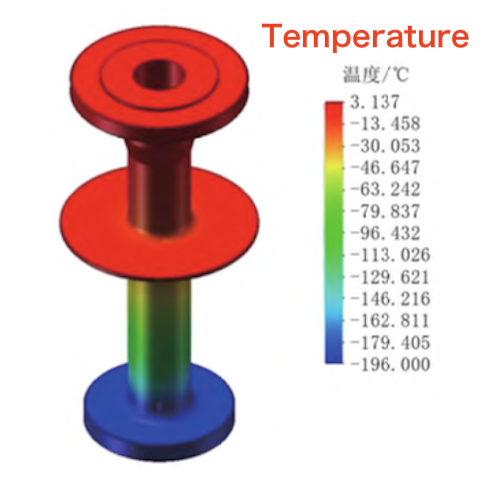
Figure 1 Temperature field distribution of long neck bonnet
To prevent condensate ingress into the insulation layer of the extended bonnet, an isolation drip plate is installed at the bonnet neck extension. The isolation drip plates are arranged at small intervals (see Fig. 2). They prevent the transfer of low-temperature energy from the pipeline to the packing and inhibit condensate from dripping from the upper part of the valve onto the valve body and insulation layer, thereby effectively mitigating valve icing.
Note:
a — minimum spacing of the isolation drip plates, mm
h — minimum extension length of the bonnet neck for non-cold-box valves, m
l — minimum extension length of the bonnet neck for cold-box valves, m
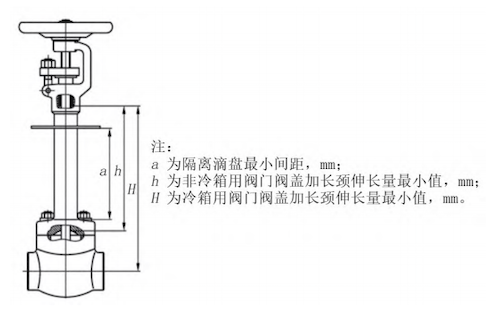
Figure 2 Minimum spacing of isolation drip plate
GB/T 24925—2019 specifies that double-seat valves shall be provided with pressure relief holes. When closed, cryogenic valves such as gate valves and ball valves create a sealed cavity within the valve body. Over time, the cryogenic medium within the valve absorbs heat from the surroundings and undergoes vaporization, resulting in expansion and the buildup of extremely high pressure. Therefore, pressure relief holes are incorporated to ensure that the internal pressure remains within a safe range, thereby preventing valve damage due to abnormal pressure buildup. When a pressure relief hole is provided in the obturator or valve seat, its diameter shall not be less than 3 mm, and the relief direction should be oriented toward the upstream high-pressure side (see Figure 3). This is a typical structural type of cryogenic gate valve, in which the opening and closing element is a gate. In general, gate valves and ball valves have no installation direction requirements. However, when installing cryogenic ball valves or cryogenic gate valves with pressure relief holes, the installation direction should be determined based on the sealing direction or correctly aligned with the medium flow direction to meet process system requirements.
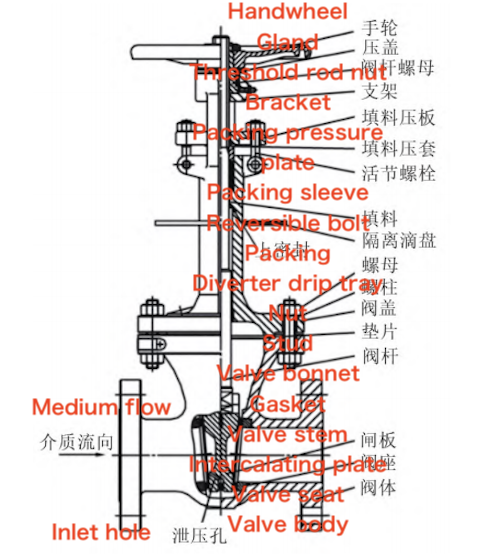
Figure 3 Typical structure of cryogenic gate valves
For cryogenic valves, austenitic stainless steel is typically selected as the preferred material for the valve body. Multiple cryogenic treatment cycles are applied to mitigate non-uniform deformation across different components.
Valve materials consist of body materials, internal components, and fasteners. In general, material selection is determined by operating temperature and material properties. GB/T 24925—2019 also specifies clear technical requirements for valve material selection. ASME B16.34—2020 (Table 1) classifies valve body materials into four groups for selection. Internal component materials include not only the valve seat sealing surface material but also all components in contact with the process fluid, as defined in API 600 (Steel Gate Valves) and API 602 (Steel Gate, Globe, and Check Valves for Sizes DN100 and Smaller), which specify the scope of internal valve components. The selection of internal component materials is determined by a comprehensive evaluation of the valve body material, service medium characteristics, structural configuration, and the functional roles and stress conditions of the components.
Table 1 Valve Leakage Types, Locations, Causes, and Standards
Leakage Type | Leakage Location | Leakage Cause | Standard Specification |
Internal leakage | Seal ring–ball sealing interface | At low temperatures, reduced spring stiffness leads to insufficient sealing preload and contact pressure | API 598—2023 Inspection and Testing of Valves |
Internal leakage | Seal ring–ball sealing interface | Seal ring does not fully conform to the ball surface | ANSI/FCI 70-2—2013 Control Valve Seat Leakage |
Internal leakage | Seal ring–valve seat mating surface | Thermal expansion and contraction cause dimensional changes in the two materials | ISO 5208—2015 Industrial Valves—Pressure Testing of Metallic Valves |
External leakage (fugitive emission) | Valve body–bonnet joint | Loose bolted connection; reduced bolt tightening torque at low temperatures | ISO 15848-2—2006 Fugitive Emissions Testing of Valves |
External leakage (fugitive emission) | Valve stem packing area | Single packing configuration with insufficient sealing redundancy | ISO 15848-2—2006 Fugitive Emissions Testing of Valves |
In recent years, the widespread application of cryogenic valves has driven increasingly in-depth research into sealing materials for cryogenic service. According to engineering practice, the performance of sealing materials plays a crucial role in valve sealing integrity, especially under cryogenic conditions, where material properties differ markedly from those at room temperature. In their investigation of cryogenic valve sealing materials, Liang Yi et al. conducted cryogenic tests on several candidate materials and obtained key performance data, thereby providing reliable experimental evidence and selection criteria for further material selection in cryogenic valve applications.
Cryogenic treatment involves immersing components in liquid nitrogen for cooling. After the component temperature stabilizes at −196 °C, it is maintained for 2–4 hours depending on the part thickness, followed by removal from the cryogenic chamber and natural warming to room temperature. The main objective of cryogenic treatment is to improve dimensional stability and eliminate residual stresses associated with microstructural transformations. This is attributed to the fact that most metallic materials experience permanent and irreversible microstructural transformations when initially cooled below 0 °C, resulting in volumetric expansion or contraction. Following cryogenic treatment, when the component is cooled below 0 °C for a second time, the degree of irreversible metallographic change becomes very small, and the associated volumetric expansion or contraction is also negligible.
In general, cryogenic gate valves, ball valves, and globe valves can satisfy process system requirements to different extents. However, under ultra-low-temperature conditions, triple-offset butterfly valves are often selected as substitutes for ball and gate valves. Currently, domestically developed cryogenic valves primarily consist of ball valves, butterfly valves, and axial-flow check valves.
Cryogenic gate valves are extensively used in engineering, mainly for media isolation in pipeline systems. These valves adopt a double-seat configuration with an extended bonnet structure and are generally provided with a drip tray. When the valve is in the closed position, a sealed cavity is formed within the valve body. To prevent overpressure in the cavity, a pressure-relief hole is required in the gate.
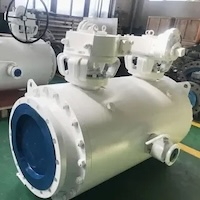
For systems with high process requirements, cryogenic ball valves generally employ a top-entry fixed-ball configuration, primarily consisting of eccentric hemispherical structures and solid ball structures. Eccentric hemispherical ball valves are suitable for frequent operation. As they do not contain a central cavity, the risk of valve failure due to pressure accumulation in the cavity during closure is eliminated. Fixed-ball valve seats are divided into two categories: single piston effect (SPE) and double piston effect (DPE). The SPE seat provides unidirectional sealing, while the DPE seat is capable of bidirectional sealing. Accordingly, fixed-ball valves can be designed in two structural configurations and four functional types, including DBB (double block and bleed, also known as a self-relieving seat, which achieves sealing in both flow directions at one end while providing pressure relief at the opposite end) and DIB (double isolation and bleed, which provides bidirectional sealing at both ends).
The four configurations are DBB (SPE), DIB-1 (DPE), DIB-2 (SPE + DPE), and DIB-2 (DPE + SPE). As DIB-1 valves are incapable of self-relieving pressure, a cavity pressure-relief system is required to prevent hazards due to abnormal pressure accumulation. Consequently, leakage issues associated with the pressure-relief system must also be taken into account. Currently, domestic technical specifications for cryogenic valves require cryogenic ball valves to be designed with a DIB-2 configuration, and their theoretical basis and applicability are still under active research and development.
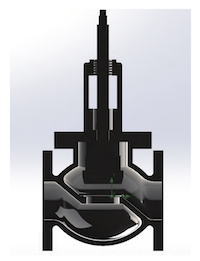
Cryogenic shut-off valves are single-seat sealing valves. In the closed position, no sealed cavity is formed within the valve body. The valve stem operates with a short stroke, ensuring reliable shut-off capability. These valves are primarily used for media isolation and can also be applied to pipeline regulation and throttling. A DN25 cryogenic liquid hydrogen shut-off valve has been analyzed using ANSYS finite element analysis software. Finite element modeling and stress analysis indicate that significant stress concentrations occur at the inlet and outlet connections of the valve body as a result of fixed boundary constraints.
In addition, notable stress concentrations are observed on the valve body surface at regions associated with pipe deformation. Accordingly, during installation, a longer buffer section may be provided at the inlet and outlet connections of the cryogenic shut-off valve. At geometric transition regions, stress concentration can be mitigated by introducing chamfers or filleted (rounded) corners.
Butterfly valves are characterized by compact face-to-face dimensions, low overall height, rapid opening and closing response, and good flow control performance. These valves are well suited for flow regulation and are typically used in large-diameter pipelines where tight sealing is not a critical requirement. In the closed position, cryogenic butterfly valves do not create a sealed-off cavity inside the valve body. Scholars have compared and analyzed data on the sealing structure, leakage characteristics, online maintainability, and procurement of cryogenic top‑mounted butterfly valves (including both top‑entry and side‑entry types). They have provided a detailed analysis of the problems encountered during service and offered guidance for the domestic R&D of cryogenic butterfly valves.
Axial flow check valves can be categorized by their disc design into sleeve‑type, disc‑type, and ring‑disc configurations. The disc opens and closes in response to the pressure differential between the valve inlet and outlet. Research on axial flow check valves has mainly focused on structural optimization and sealing performance analysis. To address internal leakage, optimization measures are applied to both the overall valve configuration and the sealing structure. For example, double-sealing, triple-loop, and anti-rotation designs can further enhance the sealing reliability between the valve body and the seat. Research shows that gaseous media become compressed under pressure, generating swirling flow that wears the sealing surface of the valve seat and leads to leakage. Therefore, axial flow check valves for conveying gaseous media must be fitted with an anti-rotation design.
When selecting cryogenic valves, in addition to choosing the right type for the application, factors such as operating temperature, structural design, and materials must also be considered. This will better equip cryogenic valves to meet the needs of diverse complex process systems. The following principles should be considered:
(1) Continuously improve valve body design by including extended bonnet necks, drip trays, and pressure relief holes to effectively prevent freezing, abnormal pressure buildup, and leakage in cryogenic valves.
(2) Valve materials, sealing elements, and packing should be selected rationally. Beyond inherent material properties, engineers must also thoroughly consider the valve's operating conditions and stress levels.
(3) Based on the valve's operating temperature, necessary process treatments should be applied to the valve materials in accordance with relevant standards or actual site conditions.
(4) Conduct valve tests in accordance with relevant standards, including performance tests and type tests.
In summary, the selection of cryogenic valves should be based on the service medium and operating conditions, with due consideration to valve type, materials, and sealing performance.