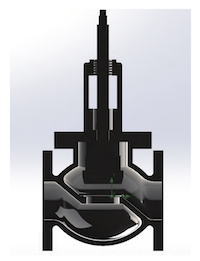
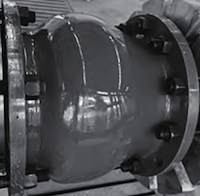
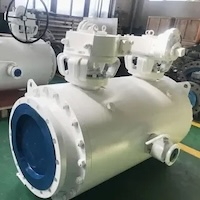
Industrial Swing Check Valve Guide: Performance, Maintenance, and Selection
Swing check valves are among the most widely used one-way flow control devices in modern piping systems. Their primary role is simple but critical: to prevent reverse flow in pipelines, protecting equipment such as pumps, compressors, and meters from damage caused by backflow or pressure surges. Despite their straightforward construction, swing check valves play a vital role across multiple industries, including water treatment, oil and gas, power generation, chemical processing, HVAC systems, and fire protection networks.
In industrial pipeline design, reverse flow is not merely an operational inconvenience—it can lead to severe system inefficiencies, equipment failure, contamination risks, and safety hazards. Swing check valves address this challenge by providing an automatic, mechanically driven sealing action that requires no external power or operator control. Their reliability, low pressure drop, and suitability for both low and high flow conditions make them a preferred choice in many engineering applications.
This article provides a comprehensive overview of swing check valves, including their structure, working principle, types, materials, industrial applications, installation guidelines, maintenance practices, and performance considerations.
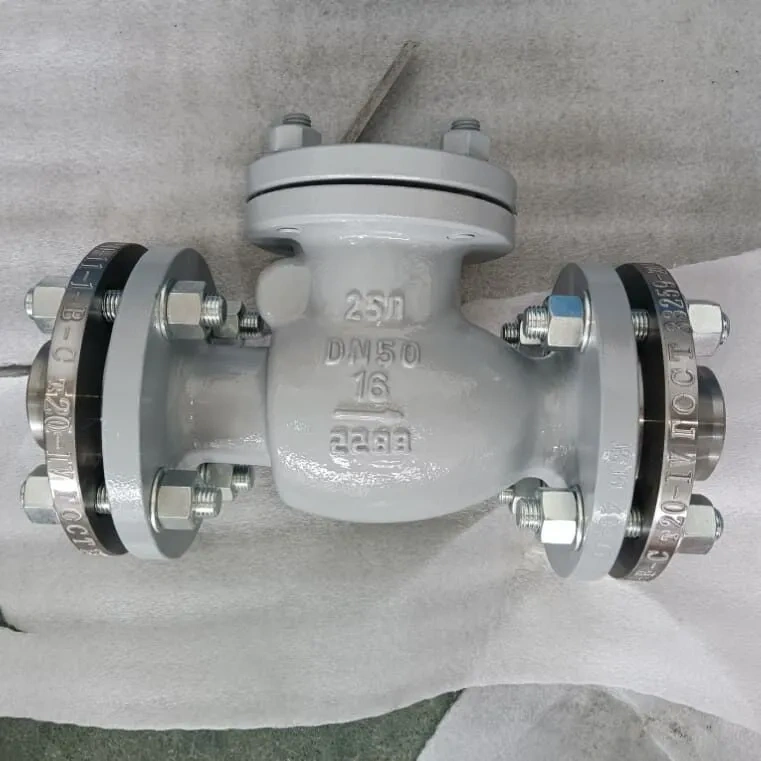
A swing check valve is a type of non-return valve designed to allow fluid flow in only one direction. It operates using a hinged disc or flap mounted inside the valve body. The disc swings freely on a hinge pin, responding directly to fluid flow conditions.
When fluid moves in the forward direction, the pressure pushes the disc away from the seat, allowing unobstructed passage through the valve. When flow slows down or reverses, the disc swings back to its closed position, sealing against the valve seat and preventing backflow.
The simplicity of this mechanism is one of its greatest strengths. Unlike motorized or actuated valves, swing check valves rely purely on hydraulic forces and gravity, making them highly dependable and cost-effective for long-term use in industrial environments.
The operation of a swing check valve is governed entirely by flow dynamics within the pipeline. Its behavior can be divided into two key operating states:
During normal system operation, fluid enters the valve body under pressure. This pressure exerts a force on the disc, pushing it open and allowing the medium—such as water, oil, gas, or steam—to pass through the pipeline with minimal resistance.
The disc swings freely on its hinge, moving out of the flow path. Because of this design, swing check valves typically generate a relatively low pressure drop compared to other types of check valves.
When flow decreases or attempts to reverse direction, the hydraulic force supporting the disc weakens. At this point, gravity and reverse pressure act on the disc, causing it to swing back toward the valve seat.
Once the disc contacts the seat, it forms a tight seal that blocks reverse flow. This prevents backflow-related problems such as pump reverse rotation, water hammer effects, contamination of clean fluids, and system pressure instability.
The closing speed of the disc is influenced by pipeline velocity, installation orientation, and valve size. In high-energy systems, additional design features such as damping mechanisms or spring assistance may be incorporated to reduce slamming effects.
A swing check valve typically consists of the following main components:
- Valve Body: The external shell that houses internal components and connects to the pipeline.
- Disc (Flap): The movable element that opens and closes based on flow direction.
- Hinge Pin: Supports the disc and enables its swinging motion.
- Seat Ring: Provides a sealing surface for the disc when closed.
- Cover or Bonnet: Allows access for maintenance and inspection.
- Gasket System: Ensures leak-proof sealing between components.
Each component must be engineered with precision to ensure durability, especially in high-pressure or corrosive environments.
Material selection is critical for performance, safety, and longevity. Different industries require different material properties based on temperature, pressure, and fluid type.
Widely used in water distribution and HVAC systems due to its affordability and adequate strength for low-pressure applications.
Suitable for oil, gas, and industrial steam systems where higher pressure and temperature resistance is required.
Preferred in corrosive environments such as chemical processing, desalination, and food-grade applications due to its excellent corrosion resistance.
Used in high-temperature and high-pressure applications such as power plants and refineries.
Common in marine and potable water systems where moderate corrosion resistance is required.
Swing check valves are available in several configurations designed for different industrial requirements.
The most common type, suitable for general-purpose applications with moderate flow conditions.
Although not a swing type, lift check valves are often compared due to similar functions but use a vertical disc movement instead of swinging action.
An improved design that reduces slamming by using a pivoting disc that closes more gradually.
Uses two semi-circular plates instead of a single disc, offering faster closing response and reduced water hammer effects.
Compact and lightweight, designed for installation between flanges in space-restricted systems.
Swing check valves are used in a wide range of industries due to their versatility and reliability.
Water Supply and Distribution Systems
They prevent backflow in municipal water pipelines and ensure directional flow stability.
Wastewater Treatment Plants
Used to prevent contamination of treated water by preventing reverse flow from downstream systems.
Oil and Gas Industry
Installed in pipelines, refineries, and offshore platforms to protect equipment and maintain process integrity.
Power Generation
Used in cooling water systems, boiler feed lines, and steam circuits to ensure safe operation.
Fire Protection Systems
Essential in sprinkler systems and fire pumps where reverse flow could compromise emergency response systems.
Chemical Processing Plants
Provide protection against hazardous backflow of corrosive or reactive chemicals.
Swing check valves offer several operational and economic advantages:
- Low pressure drop due to unobstructed flow path
- Simple mechanical structure with high reliability
- No external power or control system required
- Suitable for large diameter pipelines
- Easy maintenance and inspection access
- Cost-effective compared to more complex valve types
These advantages make them a long-standing preferred solution in industrial pipeline design.
Despite their benefits, swing check valves have some limitations:
- Susceptible to water hammer in high-velocity systems
- Not ideal for pulsating flow conditions
- Slower closing action compared to spring-assisted designs
- Requires proper installation orientation for optimal performance
- Disc may chatter under low-flow conditions
Understanding these limitations is essential for selecting the correct valve type for each application.
Proper installation is crucial to ensure long-term performance and reliability.
The hinge pin should be positioned at the top to allow gravity-assisted closure. This ensures smoother operation and reduces wear on internal components.
Horizontal installation is generally preferred, as it minimizes disc oscillation and mechanical stress. Vertical installation is possible but must be evaluated based on flow direction.
Selecting the correct valve size is essential. Oversized valves may cause unstable disc movement, while undersized valves can lead to excessive pressure loss.
The pipeline must be free from debris, welding slag, or foreign particles that could interfere with disc movement or seating.
Proper gasket selection ensures leak-free operation. Materials must be compatible with system pressure, temperature, and fluid type.
Valves must be selected based on system operating limits to prevent deformation, leakage, or failure.
Regular maintenance ensures long service life and reliable performance.
Key maintenance practices include:
- Periodic inspection of disc and seat condition
- Checking hinge pin wear and lubrication levels
- Cleaning internal components to remove debris buildup
- Monitoring for corrosion or erosion damage
- Replacing worn gaskets and seals promptly
Preventive maintenance significantly reduces the risk of unexpected system failure.
Water Hammer Effect
Caused by sudden valve closure in high-flow systems. Mitigation includes installing dampening devices or using alternative valve types.
Disc Chattering
Occurs under low flow conditions, leading to vibration and wear. Proper sizing and flow stabilization can reduce this issue.
Leakage
Often caused by seat wear, debris accumulation, or improper sealing. Regular inspection and cleaning are essential.
Slow Response
Can result from hinge friction or sediment buildup, requiring lubrication or cleaning.
When selecting a swing check valve, engineers should consider:
- Flow rate and velocity
- Pipe size and system layout
- Pressure and temperature conditions
- Fluid type and corrosiveness
- Installation orientation
- Maintenance accessibility
- Industry standards compliance
Standards such as API, ANSI, and ISO provide important guidance for selection and performance requirements.
Swing check valves remain a foundational component in pipeline engineering due to their simplicity, reliability, and adaptability. Their ability to function without external energy input makes them especially valuable in remote or high-risk environments.
In modern industrial systems, efficiency, safety, and operational stability are key priorities. Swing check valves contribute directly to these goals by ensuring controlled flow direction and preventing costly backflow incidents.
Swing check valves are essential components in fluid control systems, offering reliable one-way flow protection across a wide range of industrial applications. Their simple yet effective design enables them to operate efficiently under varying flow conditions while maintaining system integrity.
From water distribution networks to complex petrochemical pipelines, these valves continue to serve as a dependable solution for preventing reverse flow and protecting critical equipment. Proper selection, installation, and maintenance are key factors that determine their long-term performance and operational efficiency.
As industries continue to evolve, swing check valves remain a proven and indispensable technology in modern pipeline engineering.