Selecting the Right Cryogenic Globe Valve for Extreme Temperature Operations
Apr 11, 2026
In modern industrial operations, precise flow control under extreme conditions is a critical requirement. Among the most challenging environments are those involving cryogenic liquids—substances cooled to extremely low temperatures, often far below the freezing point of water. Managing these fluids safely and efficiently demands specialized equipment, and cryogenic globe valves have emerged as a cornerstone technology in this field.
These valves are designed to regulate or shut off flow paths for cryogenic liquids and gases, enabling safe transport, storage, and utilization in industries ranging from oil and gas to aerospace. Understanding the functionality, applications, and selection criteria of cryogenic globe valves is essential for engineers, plant operators, and procurement specialists tasked with handling ultra-low temperature processes.
A cryogenic globe valve is a type of shut-off valve engineered specifically to handle extremely cold fluids, typically at temperatures below -150°C (-238°F). Unlike conventional valves, cryogenic globe valves incorporate materials, design tolerances, and sealing technologies that prevent leakage, thermal contraction issues, and operational failures caused by the extreme cold.
The term "globe valve" refers to the internal structure of the valve. Inside the valve body, a movable disk or plug sits atop a stationary seat, allowing the valve to regulate flow by adjusting the distance between the disk and seat. This design offers excellent throttling capabilities compared to gate or ball valves, making globe valves ideal for applications where precise flow control is crucial.
Cryogenic globe valves are employed in applications involving:
- Liquid nitrogen (LIN) for industrial refrigeration and inerting systems.
- Liquid oxygen (LOX) in chemical and aerospace applications.
- Liquid hydrogen (LH2) in fuel cells and aerospace fuel systems.
- Liquid helium (LHe) for superconducting magnet cooling, MRI systems, and low-temperature research.
These valves are engineered not only to control flow but also to ensure minimal heat ingress into cryogenic systems, preserving the fluid in its ultra-cold state.
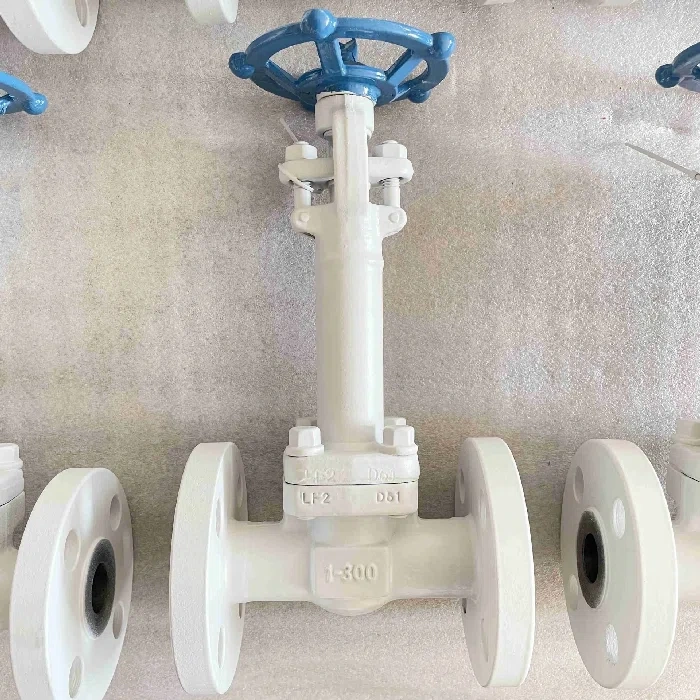
Cryogenic globe valves operate on the same basic principles as standard globe valves but incorporate specialized features to address the challenges of extreme low temperatures:
- Manual, Electric, or Pneumatic Operation: Depending on system requirements, cryogenic globe valves can be actuated manually via a handwheel, electrically through a motor, or pneumatically using air or gas pressure. Some systems also employ magnetic drives to eliminate direct mechanical linkages, reducing heat transfer.
- Sealing Mechanisms: Cryogenic globe valves often use soft or metal-to-metal seats, depending on the fluid type and operating conditions. The sealing surfaces are precision-machined to maintain integrity despite thermal contraction, preventing leaks that could compromise safety or system efficiency.
- Pressure Management: When a cryogenic valve is opened, the rapid expansion of the ultra-cold liquid into the warmer ambient environment can create extreme pressures. The valve's design accommodates these pressure changes to ensure consistent performance and safety.
- Thermal Isolation: Many cryogenic globe valves incorporate extended bonnets or insulation jackets to prevent heat from the environment or actuator from warming the cryogenic fluid. This ensures the liquid remains in a stable state, avoiding vaporization or pressure surges.
"Cryogenic" refers to extremely low temperatures, typically below -150°C (-238°F). Fluids in this range exhibit unique behaviors that necessitate specialized handling:
- Liquid Nitrogen (LIN): Boiling point -196°C (-320°F). Commonly used as a coolant, inerting agent, and in medical applications such as cryopreservation.
- Liquid Oxygen (LOX): Boiling point -183°C (-297°F). Widely used in chemical manufacturing and aerospace propulsion systems.
- Liquid Hydrogen (LH2): Boiling point -253°C (-423°F). Essential in fuel cell technologies and aerospace applications.
- Liquid Helium (LHe): Boiling point -269°C (-452°F). Crucial for superconducting magnets, MRI machines, and scientific research requiring ultra-low temperatures.
These cryogenic fluids must be stored in insulated containers under pressure to remain stable. Even minor temperature fluctuations can cause rapid expansion, vaporization, or pressure spikes, potentially leading to operational hazards.
Cryogenic globe valves are indispensable in industries where ultra-low temperature fluids are handled. Some key sectors include:
The oil and gas industry frequently employs cryogenic liquids for processes such as liquefied natural gas (LNG) production and transport. Cryogenic globe valves ensure safe and reliable control of LNG, maintaining precise flow rates during transfer and storage. They also prevent leakage and minimize energy loss due to vaporization.
Many chemical reactions require inert or cryogenic cooling conditions. For example, the production of specialty chemicals or plastics often involves liquid nitrogen quenching to control reaction rates. Cryogenic globe valves regulate these flows safely, even under fluctuating pressure and temperature conditions.
In spacecraft, cryogenic liquids like liquid hydrogen and oxygen are used as propellants for rockets and fuel cells. Cryogenic globe valves control these highly reactive fluids, ensuring safe storage, precise metering, and minimal heat ingress—critical factors for mission success.
Cryogenic liquids are used extensively in cryopreservation, MRI cooling, and scientific research. Globe valves provide accurate flow control, maintaining consistent temperatures in laboratory and medical systems, ensuring safety, and preserving sensitive materials.
Cryogenic globe valves differ from standard globe valves in several important ways:
- Extended Bonnet Design: Prevents heat transfer from the actuator or environment into the cryogenic fluid.
- Low-Temperature Materials: Commonly stainless steel, bronze, or specialized alloys that maintain strength at ultra-low temperatures.
- Precision Seats and Discs: Machined to tight tolerances to prevent leakage, even during repeated thermal cycling.
- Insulated Actuation: Some valves feature actuator isolation to prevent heat from affecting the cryogenic medium.
- Fail-Safe Operation: Many cryogenic globe valves are designed to close automatically in case of power loss, pressure changes, or emergency shutdown.
Choosing an appropriate cryogenic globe valve requires careful consideration of several critical factors:
The valve must be rated for the specific cryogenic fluid temperature, accounting for potential temperature fluctuations during operation.
Cryogenic liquids can generate high vapor pressures upon warming. The valve's pressure rating must exceed expected operating conditions to prevent catastrophic failure.
The valve body, bonnet, seat, and stem must be compatible with the cryogenic fluid to avoid embrittlement, corrosion, or other material degradation.
Depending on the application, the valve may need precise throttling or full shut-off capabilities. Globe valves are particularly effective for fine flow adjustments.
Cryogenic systems present significant hazards, including frostbite, asphyxiation, and explosion risks. Proper valve selection, installation, and maintenance protocols are critical to safe operation.
Proper installation and maintenance of cryogenic globe valves are crucial to ensure reliable, long-term performance:
- Orientation: Many cryogenic globe valves require vertical installation to prevent pooling of liquids or vapor lock.
- Insulation: Insulated jackets or bonnets are often necessary to minimize heat ingress.
- Leak Testing: Periodic testing is recommended to detect seal degradation, especially in applications with frequent thermal cycling.
- Actuator Inspection: Check manual, electric, or pneumatic actuators for smooth operation and insulation integrity.
- Corrosion Monitoring: Even stainless steel components can experience stress corrosion cracking at cryogenic temperatures; periodic inspection is essential.
Cryogenic globe valves are subject to rigorous industry standards to ensure operational safety:
- ASME B31.3: Process piping standards.
- API 622 & API 623: Standards for metal valve tightness and cryogenic service.
- ISO 21011: Industrial valves for cryogenic applications.
- Pressure Equipment Directive (PED): European standard for pressurized vessels and components.
Compliance with these standards ensures valves perform reliably, reduce operational risks, and meet regulatory requirements for handling hazardous fluids.
The demand for advanced cryogenic technologies is growing across energy, aerospace, and medical sectors, driving innovation in globe valve design:
- Smart Actuation: Integration of electric actuators with IoT-enabled sensors allows remote monitoring and predictive maintenance.
- Advanced Materials: Research into nickel alloys, duplex stainless steels, and specialized polymers increases valve durability under extreme thermal cycling.
- Compact Designs: Industry seeks smaller, lighter valves for aerospace and transport applications, where space and weight constraints are critical.
- Energy Efficiency: Improved insulation and reduced heat ingress help maintain cryogenic fluid efficiency, lowering operational costs.
Cryogenic globe valves are critical components in any system handling ultra-low temperature fluids. Their precise flow control, robust sealing, and thermal isolation capabilities ensure safe and efficient operation in demanding environments, from LNG processing and chemical plants to aerospace applications and medical research facilities. Selecting the right valve—considering factors such as temperature rating, pressure capacity, material compatibility, and safety requirements—is essential to maintaining system reliability and protecting personnel. With advancements in materials, actuator technology, and smart monitoring, cryogenic globe valves continue to evolve, offering enhanced performance, durability, and operational efficiency for industries where precision and safety cannot be compromised.
Previous: Design of an Ultra-Large-Diameter Axial Flow Check Valve for Propylene Plants
Next: Industrial Swing Check Valve Guide: Performance, Maintenance, and Selection