Design of an Ultra-Large-Diameter Axial Flow Check Valve for Propylene Plants
Mar 30, 2026
Abstract: Based on the operating conditions of propylene plants, this paper proposes design requirements for axial flow check valves. By establishing a mathematical model and combining it with actual operating parameters, dynamic mesh technology is used to optimize the design and simulation analysis of the valve's dynamic opening process. The strength and stiffness of the valve body are verified through thermo-mechanical coupling analysis. Thin-walled valve body casting is achieved through casting process optimization, and the overall valve design is completed by combining other design elements. The research results are verified by pressure testing, providing a reference for the design and manufacture of ultra-large diameter axial flow check valves.
Compressor units are the core equipment in ethylene production plants. The main compressors used in ethylene plants include cracked-gas compressors, propylene compressors, and ethylene compressors. The propylene compressor, used as a refrigeration unit in the cryogenic separation system, supplies refrigerant to the process by utilizing the endothermic effect of propylene liquid vaporization. As a key component of the ternary cascade refrigeration system, the stable operation of the propylene compressor is essential for the safe and reliable operation of the ethylene plant. Propylene compressor units are typically configured as single-cylinder, three-stage or four-stage compressors. Axial flow check valves, which prevent propylene backflow and protect the propylene compressor, are typically installed at the compressor inlet or outlet. This study developed a DN 2000 Class 150 axial flow check valve for installation at the inlet of the first stage of a propylene compressor. The operating pressure is 0.035 MPa, the operating temperature is −40.4 °C, the working medium is propylene, and the process flow rate ranges from 0 to 772,171.05 kg/h. Based on the operating conditions, the ultra-large-diameter axial flow check valve developed in this study must satisfy the following requirements: reliable opening and closing performance, stable operation under low flow rates and low pressure drop, and low opening pressure while ensuring zero-leakage sealing. This study focuses primarily on the structural design of the valve, aiming to provide a reference for the design and manufacture of large-diameter axial flow check valves.
Axial flow check valves generally adopt two typical structural configurations: disc-type and ring-type. The ring-type axial flow check valve has two flow passages, which results in lower flow capacity. Under high-flow conditions, its flow capability becomes significantly insufficient. In a ring-type axial flow check valve, the valve disc is in a floating state. As the valve diameter and pressure increase, the weight of the valve disc increases geometrically. The large mass of the valve disc increases the load on the guide vanes. In addition, due to the compressibility of the gas, the oscillation frequency of the valve disc increases, which can easily lead to fatigue or even fracture of the guide vanes. The axial flow check valve is installed at the outlet of the propylene compressor. As a key compressor protection device in the ternary cascade refrigeration system, the valve must operate stably, provide large flow capacity with low flow resistance, withstand temperature and medium fluctuations, and ensure high reliability. Therefore, a single-disc axial flow check valve with a disc-type structure is selected.
The purpose of studying the opening and closing characteristics of the valve is to determine the optimal operating range of the axial flow check valve and avoid a sharp reduction in service life caused by wear of the internal components due to reciprocating motion. Baojiang Zhang analyzed the opening mechanism of the axial flow check valve from the perspective of energy conversion and proposed that the valve opens under the combined action of the static pressure difference acting on the valve disc and the impact force of the fluid on the disc. Xiheng Zhang et al. established the force equation of the valve disc and used the FLUENT dynamic mesh technique to simulate the closing process of the axial flow check valve. Duan Fengbo et al. analyzed the opening principle of axial flow check valves using fluid-structure interaction (FSI) and dynamic mesh techniques, established a mathematical model, and incorporated actual operating parameters.
They subsequently optimized the valve design and simulated its dynamic opening process using FSI coupled with dynamic mesh technology. Analysis of the pressure-drop versus flow and displacement versus flow curves showed that flow conditions are the key factor controlling the axial flow check valve’s opening. These studies offer a reference design methodology for the opening and closing performance of axial flow check valves. However, research on the structural characteristics of ultra-large diameter valves, particularly DN 2000 valves, is still limited, and since the working medium in this study is gas—less susceptible to water hammer—the analysis focuses solely on the valve’s opening performance. It is important to note that for liquid media, the closing process must be carefully simulated to verify whether the valve initiates closure under forward flow conditions. The authors applied finite element and dynamic mesh techniques to simulate the original geometry and, through multiple design optimizations, established a mathematical and geometric model suitable for both experiments and actual operating conditions.
Propylene, as the working medium, is a compressible Newtonian fluid that obeys the three fundamental conservation laws, described by the compressible continuity equation, the Navier–Stokes equation for viscous flow, and the energy conservation equation:
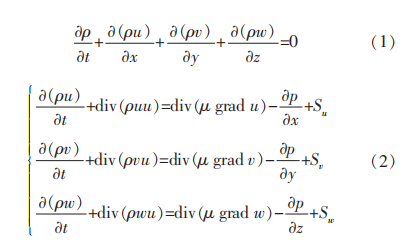

Where Cp is the specific heat capacity at constant pressure (J/kg·K), hhh is the fluid heat transfer coefficient, and Si represents the internal heat source of the fluid, including the portion of mechanical energy converted to heat due to viscosity.
Si — generalized source terms in the momentum conservation equation; t — time, in seconds (s).
T — temperature (K); u,v,w — velocity components along the x, y, and z axes, respectively. Treating propylene as an ideal gas, the ideal gas law is substituted into the Equation, giving:
Where R is the molar gas constant, and P is the pressure (MPa).
Based on the check valve’s working principle, considering the combined effects of fluid force, spring force, and friction on the valve disc, the motion equation is established using Newton’s second law:

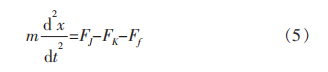
Ff — friction force
F — fluid force acting on the valve disc
Fk — spring force
m — mass of the valve disc
t — time
x — valve disc displacement (stroke)
The equation (5) also forms the basis for implementing user-defined functions (UDFs) in subsequent software analyses.
Based on the 3D model of the axial flow check valve and in accordance with GB/T 30832—2014 "Test Methods for Flow Coefficient and Flow Resistance Coefficient of Valves," the upstream and downstream pipe lengths are set to 5×Dnₙ and 10×Dnₙ, respectively, ensuring fully developed flow fields. The 3D valve model is then reverse-engineered to create a 3D internal flow-channel model. The flow-channel mesh of the axial flow check valve is generated using a mixed tetrahedral–hexahedral approach, with hexahedral elements for the inlet and outlet pipes and tetrahedral elements for the valve body. Partial mesh refinement is applied to the valve’s fluid-contact regions to enhance calculation accuracy. The working medium is propylene, with a density of 3.08 kg/m³ and a viscosity of 6.9 Pa·s, and the flow rate increases linearly. The simulation applies a velocity inlet and a pressure outlet as boundary conditions, with a user-defined C function specifying the valve core movement velocity and boundary conditions throughout the check valve’s opening and closing process. It is assumed that the medium’s flow rate increases linearly from 0 to its maximum over 1.2 s, with the governing equations comprising the continuity equation, the three-dimensional Reynolds-averaged Navier-Stokes equations, and the k-ε two-equation turbulence model.
The simulation results provide the characteristic curve of the valve opening process. Figure 1 shows the relationship between valve disc displacement and time during the opening of the axial flow check valve. Within 0–0.0157 s, the fluid force acting on the valve disc is small and insufficient to overcome the spring force and friction. During this period, the valve disc remains stationary, with a velocity of 0 m/s. As the inlet flow rate continues to increase, the fluid force acting on the valve disc rises after 0.0157 s, causing the disc to move at a certain velocity. At 0.6034 s, the axial flow check valve reaches the fully open position.
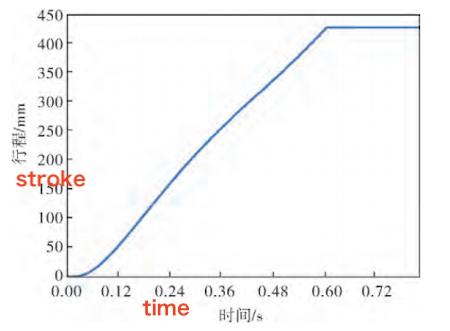
Figure 1. Relationship between valve disc displacement and time during the opening of the axial flow check valve
Figure 2 shows the relationship between valve disc displacement and flow rate during the opening of the axial flow check valve. Initially, the valve disc remains stationary, with a velocity of 0 m/s. As the inlet flow rate continues to increase, the fluid force acting on the valve disc gradually increases and becomes sufficient to overcome the spring force and friction. When the flow rate reaches 9,558 kg/h, the valve disc begins to move. The mass flow rate then increases approximately linearly with the valve disc stroke. As the fluid force continues to increase, the valve disc is pushed to move until the stroke reaches its maximum value, at which point the axial flow check valve is fully open and the flow rate reaches 438,010 kg/h. When the process flow rate exceeds 438,010 kg/h and increases up to the maximum process flow rate, the valve remains fully open.
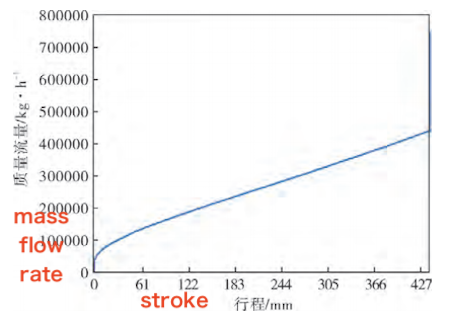
Figure 2: Relationship between valve disc displacement and flow rate during the opening process of the axial flow check valve
After determining the opening characteristics, the flow-channel structure is established, followed by the design of the valve body structure. The structural design of the ultra-large-diameter axial flow check valve must consider both the strength and rigidity of the valve body. To achieve a streamlined flow channel, the valve body is typically manufactured by casting. Based on the operating conditions, an integral valve body with a streamlined flow-channel structure was designed. The valve body wall thickness was calculated in accordance with the relevant provisions of ASME B16.34. To ensure adequate rigidity of the valve body and control deformation under different temperature conditions, a thermo-mechanical coupling method was employed to simulate the stress and deformation of the valve body. A three-dimensional structural model of the NPS 80 Class 150 axial flow check valve was established and meshed. Considering the combined effects of temperature and pressure under low-temperature conditions, ICB low-temperature carbon steel was selected as the main material for the valve body and sealing ring, while CF8M and F316 were used for the valve core. The specific properties of these materials are summarized in Table 1.
Table 1 Mechanical Properties of Main Metallic Materials
Component | Material | Yield Strength (MPa) | Tensile Strength (MPa) | Allowable Stress (MPa) |
Valve Body & Sealing Ring | LCB | 240 | 450 | 128 |
Valve Disc | CF8M | 206 | 485 | 138 |
Valve Shaft | F316 | 205 | 485 | 138 |
Based on the principles of mechanics of materials and ASME II Part D, the ultimate load that the pipeline connected to the valve body can withstand was calculated. A medium force is applied to the inner surface of the valve body, while ultimate compressive and bending loads are applied at both ends of the valve body. The stress distribution and maximum deformation of the valve body were calculated, and the simulation results are presented in Figures 3 and 4.
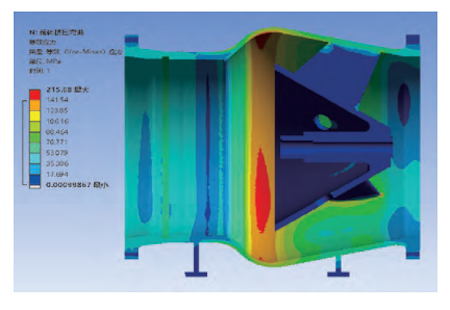
Figure 3: Equivalent stress distribution cloud map inside the valve body
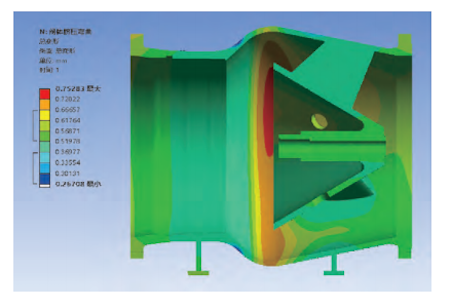
Figure 4 Cloud map of deformation distribution inside the valve body
Materials undergo deformation under temperature variations and are constrained by external displacement. Thermal stresses are generated in each structural component under thermal loading. Differences in the coefficients of thermal expansion, elastic modulus, and Poisson’s ratio among materials also lead to variations in thermal stress. Thermal stress may cause the structure to exceed its strength limit and fail; therefore, it cannot be ignored. Using the sequential coupling method, the thermal state of the check valve under low-temperature conditions is first simulated, and the thermal analysis results are then applied to the static model as temperature loads. The temperature field of the axial flow check valve is analyzed, and the load and constraint conditions are defined as follows: a medium temperature of −45 °C is applied to the inner wall of the valve cavity. The insulated area of the valve’s outer surface is assigned adiabatic boundary conditions, while the non-flow regions of the valve exchange heat with the environment through convection. The convective heat transfer coefficient is taken as 10 W/(m²·°C). The temperature field distribution contours of the axial flow check valve under test conditions (fully open and fully closed) were obtained through finite element analysis, as shown in Figure 5.
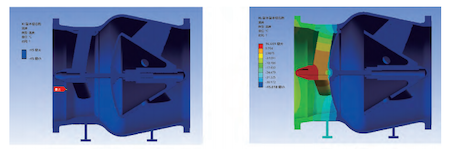
Figure 5 Temperature Field Distribution Diagram under Test Conditions
Considering that, during steady operation, parameters such as the internal medium temperature remain constant over time, the stress distribution and deformation of the valve under low-temperature conditions were calculated using finite element simulation. The loads and constraints were defined as follows: the temperature field information for both the fully open and fully closed conditions was imported, and a gravity load was applied to the assembly. A pressure of 2 MPa was applied to the valve–medium contact surface, and a maximum compressive load of 12,867,864.93 N was applied at both ends of the valve body. A maximum bending load of 9,653,254,499 N·m was applied to both ends of the valve body. The far-end displacement constraint was set with the z-component fixed, while rotations around the x- and y-axes were left free.
After applying these parameters, the analysis was performed. The simulation produced the thermo-mechanical coupled stress distribution cloud diagram of the check valve under low-temperature conditions, as shown in Figure 6. Finite element analysis of the temperature field for the low-temperature axial flow check valve indicates that, when fully open, the temperature throughout the entire assembly is -45°C. When fully closed, the low-temperature region of the valve is primarily concentrated in the downstream section in contact with the medium, with a temperature of -45°C. The transverse temperature along the valve axis decreases, showing a clear gradient, with the rectifier reaching the maximum temperature of 16.6 °C.
Temperature simulation tests and thermo-mechanical coupled finite element analysis of the assembly under ultimate compressive and bending loads indicate that, at full opening, the valve body experiences the maximum stress. The stresses in the valve body, sealing ring, and front and rear bushings are 208.50 MPa, 121.73 MPa, and 115.00 MPa, respectively. These stresses are concentrated at the inlet and outlet ends of the valve body, the transition zone of the central cavity, the discontinuities in the sealing ring support ribs, and the discontinuities in the front bushing structure. Stress evaluation at locations where the allowable stress is exceeded, according to the analysis standards, indicates that the strength requirements are satisfied. The maximum deformations of the valve body, sealing ring, and bushings are 3.250 mm, 1.040 mm, and 2.069 mm, respectively, which are relatively small and meet operational requirements.
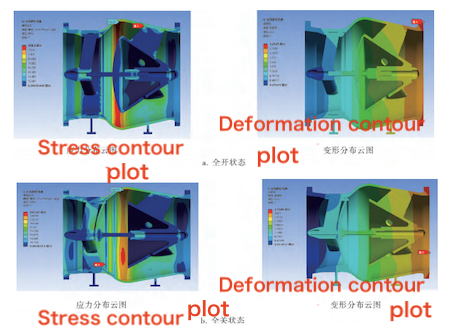
Figure 6: Stress and Deformation Distribution Cloud Maps of the Assembly
(a) Fully open condition (b) Fully closed condition
The valve body of the NPS80-CL150 axial flow check valve has a nominal diameter of 2000 mm. Design calculations and analyses indicate that a wall thickness of just 35 mm is sufficient to meet the required strength and stiffness. However, casting thin-walled parts presents challenges, as the narrow wall thickness can easily result in incomplete mold filling. Therefore, it is necessary to optimize the wall thickness and reinforce the gating system. The fluidity of casting alloys refers to the ability of molten metal to flow and completely fill the mold. It is a critical process property, directly affecting the dimensional accuracy, shape integrity, and surface definition of the final casting. It is also essential for controlling casting defects, with the fluidity of liquid metals mainly determined by the metal’s intrinsic properties.
Variations in smelting composition cause cast steel alloys to differ in thermophysical and hydrodynamic properties—such as crystallization temperature range, latent heat of crystallization, specific heat, density, thermal conductivity, viscosity, and surface tension—leading to differences in fluidity. Because molten steel has limited fluidity, the wall thickness of cast steel parts must follow specific guidelines to prevent cold shuts and incomplete mold filling. Since molten steel has a high superheat and stays liquid for an extended period, fluidity can generally be improved by appropriately raising the pouring temperature. However, pouring at excessively high temperatures can lead to defects such as coarse grains, hot cracking, porosity, and sand inclusions. Therefore, for this type of ultra-large casting, the pouring temperature should be controlled at about 100 °C above the melting point, considering the casting geometry and wall thickness. For thin-walled parts, the design of the gating system is also critical. In addition to adhering to conventional casting process principles, the following factors should be considered when designing the risers and gating system:
a. The riser size should exceed the casting modulus, and risers are generally placed in the thicker sections of the casting walls. For ultra-large diameter axial flow check valves with extremely thin walls, solidification occurs rapidly, and the casting tends to solidify almost simultaneously. Consequently, the riser feeding distance must be much greater than that used for ordinary castings, typically 10–15 times the wall thickness.
b. The inchgate should be positioned away from areas of concentrated heat. It is advisable to place a riser at the gating point, with the inchgate feeding through the riser into the casting. This approach helps prevent sand erosion during pouring, ensures proper feeding, and reduces the risk of shrinkage porosity, surface sand adhesion, and cracks.
c. The gating system should be designed to open sequentially from the sprue to the gating gate and then to the inchgate, without making the channels too wide. Increasing the filling pressure appropriately should also be considered to prevent incomplete mold filling.
In summary, when determining the wall thickness of the casting, it is essential to ensure adequate strength, rigidity, and other mechanical properties. For ultra-large diameter axial flow check valve bodies, simply meeting the minimum design wall thickness often results in incomplete filling and cold shut defects, and in severe cases, can cause tearing at weak points in the valve body. However, excessively thick walls can lead to shrinkage cavities and porosity defects, and may also complicate the selection of radiographic testing patterns and methods. Therefore, based on the specific geometry and dimensions of the valve body, and taking into account casting process analysis and evaluation, a design wall thickness of 55 mm was selected. This ensures casting quality while satisfying requirements for strength, rigidity, and radiographic inspection.
The propylene compressor operates at low pressure with a small pressure drop and a large flow rate; therefore, a valve disc with a sufficiently large diameter is required. At the same time, to minimize the pressure drop, the valve disc must be designed as a thin-walled component. This significantly increases the casting difficulty and can result in porosity and other defects near the gating and riser regions of the valve disc. Using the same approach as in the valve body design described above, the wall thickness of the valve disc was increased to ensure casting quality. The issue was then addressed by thinning the disc during machining. The thinned valve disc was analyzed using finite element simulations to evaluate its strength and deformation, aiming to achieve a balance between weight reduction and sufficient strength and rigidity, and to determine the optimal combination of structural rigidity and post-opening performance. At the same time, the equal-strength line-source and parallel-flow superposition method was employed to design a streamlined valve core structure by controlling the length and strength of the line sources and line-source assemblies.
The design of other components must consider not only structural reliability and casting feasibility but also the operational reliability of the valve disc after machining and assembly. Using the aforementioned thermo-mechanical coupling method, simulation analyses and optimization were conducted to determine the valve structure. Furthermore, based on the stress conditions of the valve disc and the actual operating requirements for opening and closing, a model was established to determine the optimal combination of structural configuration and performance characteristics, which is also a key aspect in achieving the design of this ultra-large-diameter axial flow valve.
After structural design, theoretical calculations, and thermo-mechanical coupling simulations, the manufactured valve body underwent pressure testing and low-temperature operational testing. The valve body exhibited no significant deformation, and the maximum deformation at the center of the valve disc under sealed conditions was consistent with the simulation results. Under low-temperature conditions, the valve operated smoothly, and the valve disc did not experience jamming due to insufficient clearance. The experimental results are listed in Table 2, demonstrating the reliability of the large-diameter valve design.
Table 2. Test Verification Results
No. | Test Item | Test Pressure (MPa) | Test Time (min) | Leakage | Valve Body Axial Deformation (mm) | Valve Disc Deformation (mm) |
1 | Strength Test | 3.0 | 30 | None | 0.49 | 0.00 |
2 | High-Pressure Sealing Test | 2.2 | 15 | None | 0.31 | 0.12 |
- The opening process of an ultra-large-diameter axial flow check valve was simulated using fluid–structure interaction (FSI) analysis and dynamic mesh technology. The critical point for full opening of the valve disc was determined. Combined with actual operating conditions, this ensures that the valve operates in a stable state.
- The deformation and stress of the valve body and valve components at different temperatures were analyzed using thermo-mechanical coupling simulation. The valve deformation remained within the allowable range, and experimental tests verified the reliability of the designed valve body and valve disc structures.
- Through casting process analysis and evaluation, the casting challenges associated with ultra-large-diameter thin-walled components were addressed by increasing the valve body wall thickness, optimizing the gating and riser system, and adjusting the pouring temperature. The cast valve body underwent pressure testing, which verified its reliability and ensured both casting quality and compliance with strength, rigidity, and non-destructive testing requirements.
Previous: Austenitic High-Manganese Steel for Cryogenic Valves
Next: Selecting the Right Cryogenic Globe Valve for Extreme Temperature Operations