Selecting The Right Cryogenic Ball Valve: Features, Materials, And Installation Tips
As global industries accelerate toward cleaner energy, advanced manufacturing, and high-efficiency process systems, the demand for reliable flow control under extreme conditions continues to rise. Among the most critical components supporting these developments are cryogenic ball valves—engineered to operate at ultra-low temperatures reaching as low as -425°F (-254°C). These valves are essential for handling liquefied gases and other cryogenic media safely and efficiently.
Cryogenic environments present unique engineering challenges. Materials behave differently at extremely low temperatures, often becoming brittle or losing elasticity. Sealing systems must maintain tight shutoff despite thermal contraction, and operational reliability must be ensured across repeated temperature cycles. In such demanding conditions, standard valve designs are insufficient. Cryogenic ball valves are therefore purpose-built with specialized structures, materials, and safety features.
Widely used in applications involving oxygen, hydrogen, methane, ammonia, nitrogen, fluorine, LNG, and deuterium, these valves are foundational to industries such as energy, chemicals, aerospace, and industrial gas production. This article provides a comprehensive, in-depth analysis of cryogenic ball valves, covering their design principles, structural components, performance characteristics, manufacturing considerations, testing requirements, and future industry trends.
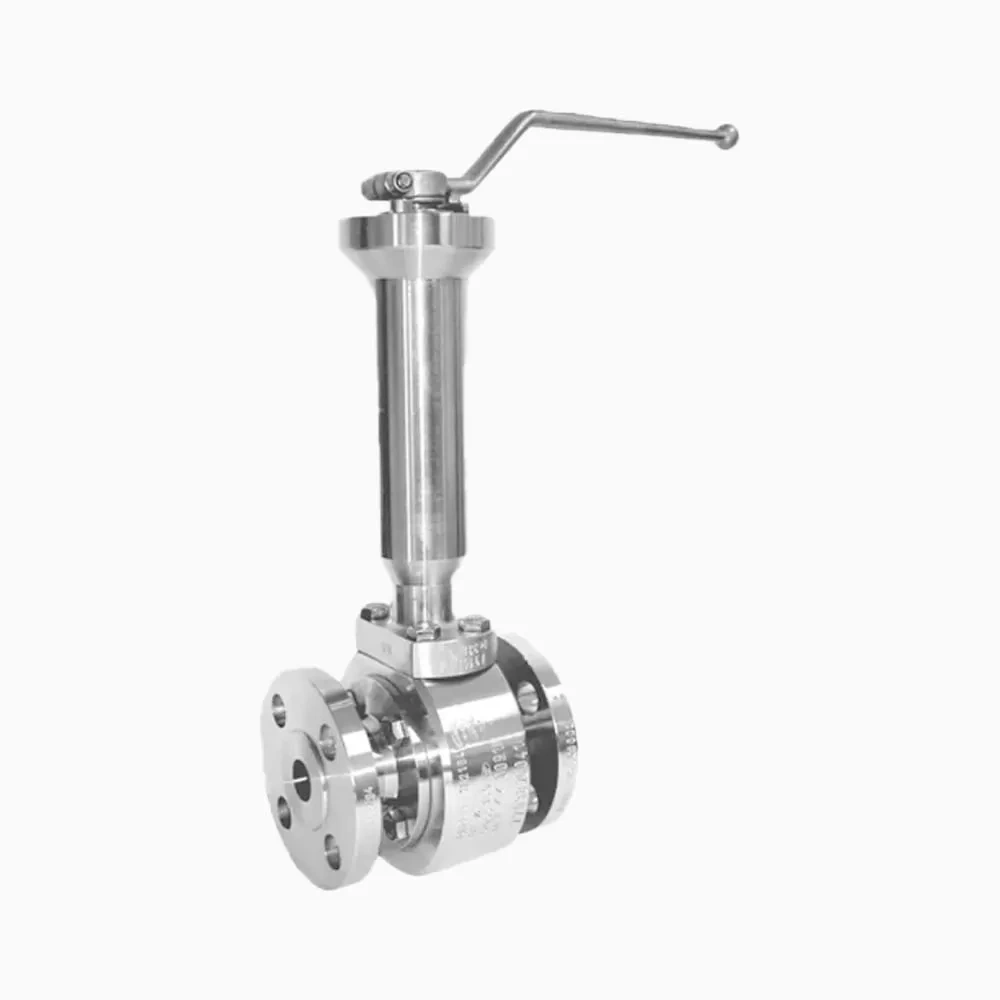
In practical terms, a cryogenic ball valve is a quarter-turn valve designed specifically for ultra-low temperature service. Like conventional ball valves, it uses a rotating spherical ball with a bore to control fluid flow. However, its design is significantly enhanced to withstand cryogenic conditions.
A defining feature is the extended bonnet (long neck), which separates the stem packing area from the cryogenic fluid. This ensures that the sealing components remain at a higher, more stable temperature, preventing freezing and maintaining elasticity.
Additionally, cryogenic ball valves incorporate low-temperature sealing strategies, precision-machined components, and materials with high impact resistance at sub-zero temperatures. These design elements allow the valve to function reliably through repeated cooling and warming cycles without leakage or mechanical failure.
The design philosophy behind cryogenic ball valves revolves around three key principles:
- Leak Prevention – Ensuring zero or minimal leakage in systems where even small losses can be hazardous.
- Material Integrity – Maintaining structural strength and flexibility at extremely low temperatures.
- Operational Stability – Providing consistent performance across temperature fluctuations and pressure variations.
To achieve these goals, manufacturers integrate advanced engineering solutions into every component of the valve.
The ball is the heart of the valve. It features a highly polished spherical surface with a full or reduced bore, allowing smooth fluid flow with minimal turbulence. This is especially important in cryogenic systems, where maintaining stable pressure and temperature is critical.
Many cryogenic ball designs include an upstream pressure relief hole. This small but crucial feature prevents pressure buildup inside the valve cavity caused by thermal expansion of trapped cryogenic fluids, thereby avoiding potential damage or failure.
Seats are responsible for sealing the valve and preventing leakage. In cryogenic applications, they must remain flexible and resilient at extremely low temperatures.
Common seat materials include:
- Reinforced PTFE (RPTFE)
- PCTFE
- Other specialized cryogenic polymers
These materials are selected for their ability to maintain sealing performance while accommodating thermal contraction. Some designs allow the seat to slightly expand or adjust under cold conditions, enhancing the tightness of the seal.
The valve stem connects the actuator or handle to the ball, transmitting motion to open or close the valve. In cryogenic ball valves, the stem is typically:
- Blowout-proof for enhanced safety
- One-piece forged for strength and durability
- Equipped with low-temperature thrust bearings to reduce friction
Materials such as Polyfill or similar composites are often used in bearings to ensure smooth operation and low torque even under cryogenic conditions.
The extended bonnet is a hallmark of cryogenic valve design. By physically distancing the packing area from the cold fluid, it protects sealing components from extreme temperatures.
This design:
- Prevents freezing of packing materials
- Reduces the risk of leakage
- Enhances maintenance accessibility
- Improves overall valve lifespan
The length of the bonnet is carefully calculated based on operating temperature and application requirements.
The valve body must withstand both mechanical stress and thermal contraction. Common materials include:
- Austenitic stainless steels (e.g., CF8, CF8M)
- Low-temperature carbon steels
- Nickel alloys for extreme conditions
End connections vary depending on system requirements and may include flanged, butt-weld, socket-weld, or threaded configurations.
Cryogenic ball valves incorporate several advanced features to enhance safety and efficiency:
- Fire-safe construction to maintain sealing during fire exposure
- Anti-static devices to prevent electrostatic discharge
- Low-emission packing systems to minimize fugitive emissions
- Cavity pressure relief mechanisms for overpressure protection
- Precision alignment systems for consistent operation
These features are essential in high-risk environments where safety is paramount.
Material selection is one of the most critical aspects of cryogenic valve manufacturing. At ultra-low temperatures, many conventional materials become brittle and prone to fracture.
To address this, manufacturers use materials with proven cryogenic toughness, including:
- Austenitic stainless steels with high nickel content
- Special alloys designed for low-temperature resilience
- Advanced polymers for sealing applications
All materials undergo rigorous impact testing and quality control to ensure they meet strict performance standards.
The production of cryogenic ball valves involves advanced manufacturing processes, including:
- Precision casting or forging
- CNC machining for tight tolerances
- Surface polishing for improved sealing
- Assembly in controlled environments
Quality control measures include dimensional inspection, material verification, and functional testing to ensure every valve meets design specifications.
Cryogenic ball valves must comply with international standards to ensure reliability and safety. Key standards include:
- API 6D and API 608 for design and performance
- BS 6364 for cryogenic testing
- ISO 28921 for low-temperature applications
- Fire-safe standards such as API 607
Testing procedures typically involve:
- Cryogenic temperature exposure
- Pressure and leakage testing
- Operational torque measurement
- Thermal cycling tests
These tests simulate real-world conditions to verify valve performance.
LNG and Natural Gas
Cryogenic ball valves are widely used in LNG liquefaction, storage, and transport systems, where maintaining ultra-low temperatures is essential.
Industrial Gas Production
Facilities producing oxygen, nitrogen, and argon rely on cryogenic valves for safe and efficient gas handling.
Hydrogen Energy Sector
As hydrogen gains traction as a clean energy source, cryogenic valves are increasingly used in liquid hydrogen storage and distribution.
Aerospace and Space Exploration
Cryogenic systems are critical in rocket propulsion and fuel management, requiring highly reliable valve solutions.
Chemical and Petrochemical Industries
Low-temperature chemical processes depend on cryogenic valves for precise flow control and safety.
Proper installation is crucial for optimal performance. Key guidelines include:
- Installing the valve in the correct orientation
- Ensuring proper insulation to reduce heat transfer
- Allowing for thermal expansion and contraction
- Maintaining clean system conditions
Professional installation ensures compliance with safety standards and extends valve life.
Cryogenic ball valves are designed for durability and low maintenance. However, regular inspection is recommended to:
- Check for leakage
- Verify smooth operation
- Ensure packing integrity
Preventive maintenance helps avoid unexpected failures and prolongs service life.
- Reliable tight shutoff performance
- Low operating torque
- High resistance to thermal cycling
- Minimal pressure drop
- Enhanced safety features
These benefits make them ideal for critical cryogenic applications.
Cryogenic environments present challenges such as:
- Material brittleness
- Seal shrinkage
- Thermal stress
Modern engineering solutions—including advanced materials, improved sealing technologies, and optimized designs—have effectively addressed these issues.
The global cryogenic valve market is expanding rapidly due to:
- Growing LNG demand
- Expansion of hydrogen energy infrastructure
- Increased industrial gas production
- Technological advancements in valve design
Future developments include:
- Smart valves with real-time monitoring
- Improved sealing materials
- Integration with digital control systems
- Enhanced automation capabilities
These innovations are expected to drive further growth and improve system efficiency.
Cryogenic ball valves are essential components in modern industrial systems operating under extreme low-temperature conditions. Their specialized design, advanced materials, and safety-focused features ensure reliable performance in critical applications across multiple industries.
As global demand for clean energy and advanced industrial processes continues to grow, the importance of high-quality cryogenic valve solutions will only increase. Ongoing innovation, strict adherence to international standards, and continuous improvement in materials and design will shape the future of this vital technology.
As a leading valve manufacturer in China, we are committed to delivering high-performance cryogenic ball valves that meet the highest global standards, providing safe, reliable, and efficient solutions for industries worldwide.