Slab Gate Valve
A slab gate valve is a type of gate valve featuring a parallel sliding gate used to control the opening and closing of pipeline flow. Its closing element may be a single slab or a double slab design with a spreading mechanism between them. The sealing force is generated by medium pressure acting on the floating gate or floating seat, ensuring reliable shut-off performance. Designed primarily for on/off service rather than flow regulation, slab gate valves are widely used in oil, gas, and industrial pipeline systems. As a leading slab gate valve manufacturer from China, VERVO delivers durable and high-performance valve solutions.
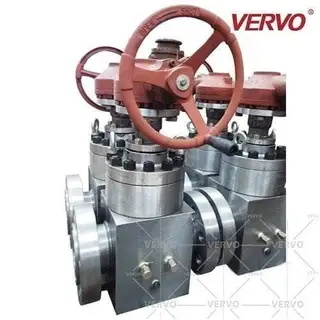
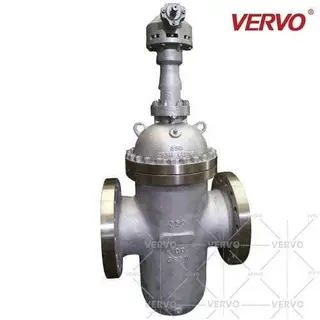
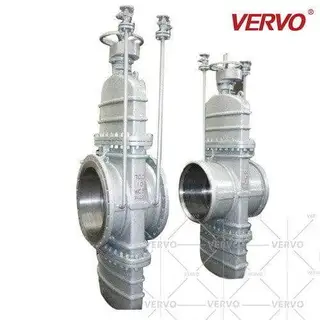
A slab gate valve is a specialized type of gate valve designed with a full-bore, parallel sliding gate structure that provides reliable shut-off performance in demanding pipeline systems. Unlike knife gate valves, the slab gate valve is engineered for high-pressure, large-diameter, and long-distance transmission pipelines where minimal flow resistance and zero leakage sealing are critical.
Its defining feature is the solid slab-shaped gate that moves vertically to open or close the flow passage completely. When fully open, the valve provides an unobstructed flow channel, ensuring that the medium passes through without turbulence, restriction, or pressure drop. This makes slab gate valves especially suitable for critical applications such as oil pipelines, natural gas transmission systems, and industrial fluid transport networks.
A slab gate valve is a full-bore isolation valve that uses a flat, rectangular gate (or slab) to control fluid flow. The gate moves perpendicular to the pipeline flow direction, either fully opening or fully blocking the passage.
Unlike throttling valves, slab gate valves are not designed for flow regulation. Instead, they serve as dependable on/off isolation devices that ensure safe pipeline segmentation and maintenance operations.
Because of their full-bore design, slab gate valves maintain consistent internal diameter throughout the valve body. This eliminates flow restriction and helps preserve system pressure, making them highly efficient for long-distance transport pipelines.
These valves are widely used in:
- Oil transmission pipelines
- Natural gas distribution systems
- Petrochemical facilities
- Large industrial fluid networks
- Slurry and process pipelines
The working principle of a slab gate valve is based on simple vertical linear motion combined with precision sealing surfaces.
When the valve is in the open position, the slab gate is fully retracted into the valve bonnet. This creates a straight, uninterrupted flow path through the valve body. The medium flows freely with almost no resistance, resulting in negligible pressure drop across the valve.
When closing the valve, the slab gate moves downward between two seat rings. The gate presses tightly against the sealing surfaces of the seats, forming a strong mechanical barrier that stops fluid flow completely.
The sealing force is enhanced by line pressure acting on the floating seat or gate structure. This self-energizing sealing design improves tightness as system pressure increases, ensuring reliable leak-proof performance even in high-pressure conditions.
This simple yet highly effective mechanism makes slab gate valves suitable for critical isolation duties where safety and reliability are essential.
The slab gate valve incorporates multiple advanced structural designs to improve sealing performance, operational efficiency, and service life.
The valve seat adopts an O-ring sealed floating structure with preload design. This allows the inlet and outlet sides to maintain bidirectional sealing, ensuring tight shut-off performance regardless of flow direction.
This structure also reduces opening and closing torque, making valve operation smoother and more efficient.
The sealing surfaces of the valve seat are typically surfaced or inlaid with high-performance materials such as stainless steel or cobalt-chromium-tungsten alloys.
This provides:
- Excellent wear resistance
- Strong anti-corrosion performance
- Reliable metal-to-metal sealing
- Extended service life under harsh conditions
In addition, the metal sealing surface helps remove debris and prevents buildup that could affect sealing performance.
For metal-seated slab gate valves, an external grease injection system is often integrated.
This system allows sealing grease to be injected directly into the sealing interface between the gate and seat. The grease fills microscopic gaps, improving sealing performance and achieving near-zero leakage under high-pressure conditions.
The gate may feature diversion holes that help protect the sealing surfaces from direct erosion caused by high-velocity media.
This design:
- Reduces wear on sealing surfaces
- Extends valve service life
- Ensures stable sealing in open and closed positions
- Improves overall flow stability
When fully open, the valve provides a smooth and unobstructed passage. The flow resistance coefficient is extremely low, resulting in virtually no pressure loss across the valve.
This full-bore structure also allows pipeline cleaning tools, such as pigs or scrapers, to pass through easily, supporting pipeline maintenance operations.
The valve uses low-friction packing materials designed to minimize leakage and reduce maintenance requirements.
Benefits include:
- Stable sealing performance
- Reduced adjustment frequency
- Lower operational friction
- Improved long-term reliability
This resolves common leakage issues found in conventional packing systems.
When the valve is closed, the internal cavity is designed to automatically release excessive pressure buildup.
This safety feature prevents over-pressurization and ensures safe operation in high-pressure pipeline environments.
The slab gate valve features a fully enclosed body design that provides strong protection against environmental factors such as dust, moisture, and temperature variations.
This makes it suitable for:
- Outdoor installations
- Harsh weather conditions
- Remote pipeline systems
- Underground or buried pipelines
The valve is equipped with an indicator rod or observation window that clearly shows whether the valve is open or closed.
This improves operational safety and allows operators to monitor valve status at a glance.
Slab gate valves offer several important advantages in industrial pipeline systems:
The straight-through design ensures no obstruction when fully open, minimizing energy loss and maintaining pipeline efficiency.
Designed for demanding environments, slab gate valves perform reliably under extreme pressure and temperature conditions.
The floating seat and pressure-assisted sealing system ensure tight sealing from both directions.
Wear-resistant sealing materials and protective structural features significantly extend operational lifespan.
Advanced packing systems and grease injection sealing reduce maintenance frequency and downtime.
Automatic pressure relief and robust construction enhance operational safety in critical applications.
Slab gate valves are widely used in industries requiring reliable shut-off and high-performance flow isolation.
Used in long-distance transmission pipelines, storage facilities, and refinery systems.
Ideal for gas distribution networks requiring tight sealing and high reliability.
Suitable for handling hydrocarbon media under high pressure and temperature conditions.
Used in large-scale fluid transport systems requiring full-bore flow capability.
Capable of handling abrasive media due to robust sealing and structural design.
A slab gate valve is a high-performance full-bore isolation valve engineered for critical pipeline applications where zero leakage, low pressure loss, and reliable shut-off are essential. Its advanced structural features—including floating seat design, metal-to-metal sealing, grease injection systems, and full-bore flow channels—make it a trusted solution for oil, gas, petrochemical, and industrial pipeline systems.
With strong durability, excellent sealing performance, and minimal maintenance requirements, slab gate valves remain a key component in modern high-pressure pipeline infrastructure, ensuring safe, efficient, and long-term operation in demanding environments.