Dual Plate Check Valve
As a leading dual plate check valve manufacturer from China, VERVO provides high-quality dual plate check valves designed for efficient flow control, reliable backflow prevention, and long-term pipeline protection. Featuring a compact design with two symmetrical hinged plates, these valves ensure fast response, tight sealing, and reduced pressure loss during operation. Dual plate check valves are widely used in water treatment, oil and gas, chemical processing, power generation, and industrial piping systems. Manufactured with advanced technology and strict quality control, VERVO delivers durable and cost-effective dual plate check valve solutions to meet various pressure, temperature, and application requirements worldwide.
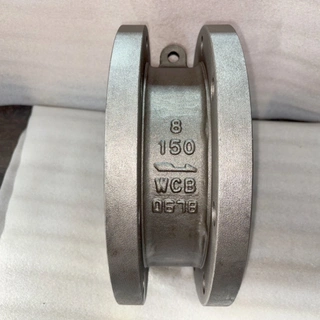
Dual Plate Check Valves, API 594, WCB, 8 Inch, 150 LB, Wafer
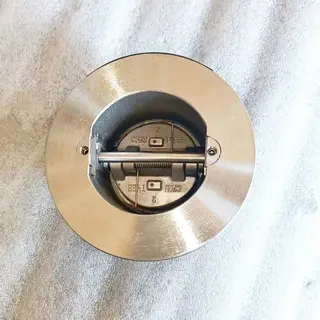
API 594 Dual Plate Check Valve, CF3M, 2 Inch, 150 LB, Wafer
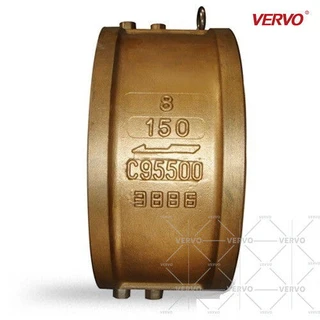
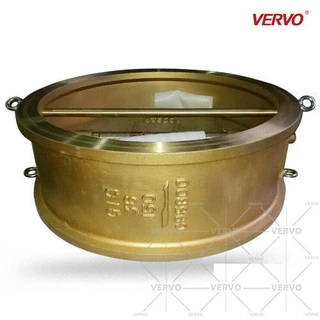
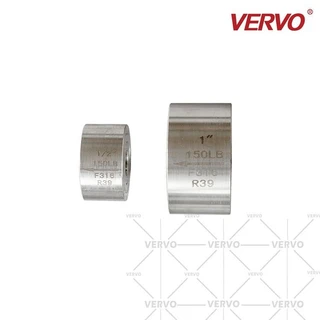
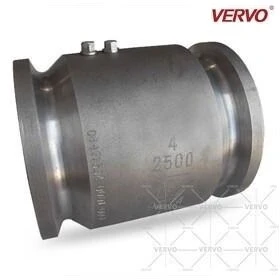
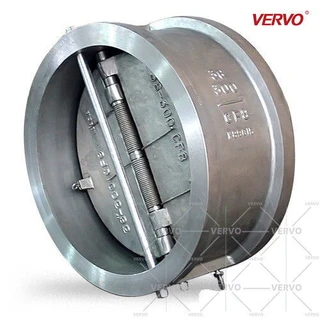
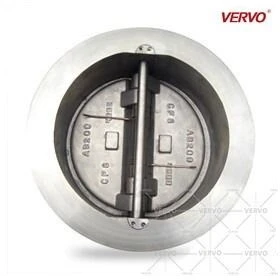
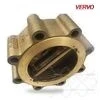
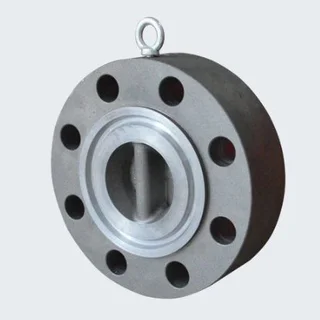
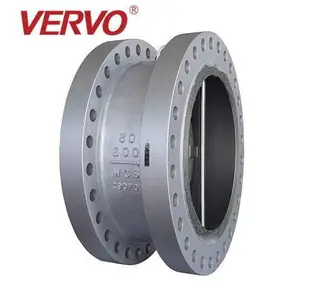
A dual plate check valve, also known as a double plate check valve or two-plate check valve, is an automatic non-return valve designed to prevent reverse flow and maintain unidirectional fluid movement in pipeline systems. It is widely used for controlling the flow of liquids, gases, and steam in industrial applications where reliable backflow prevention is required.
Unlike traditional swing check valves that use a single hinged disc, dual plate check valves feature two symmetrical plates installed on a central hinge pin. These two plates work together to open during forward flow and close automatically when the flow direction changes.
The compact and lightweight design of dual plate check valves makes them an excellent alternative to larger check valve designs. They require less installation space, reduce pipeline stress, and provide efficient flow performance with minimal pressure loss.
Dual plate check valves are commonly installed in:
- HVAC and refrigeration systems
- Water supply pipelines
- Oil and natural gas systems
- Steam and condensate pipelines
- Chemical processing plants
- Power generation facilities
- Industrial process systems
Designed according to international standards such as API 594, dual plate check valves provide reliable operation, quick response, and long service life in demanding environments.
The working principle of a dual plate check valve is based on differential pressure between the upstream and downstream sides of the valve.
The valve contains two spring-loaded plates positioned inside the body. These plates act as the main flow control components.
When fluid enters the valve in the correct direction, the upstream pressure becomes greater than the downstream pressure.
This pressure difference pushes the two plates away from the valve seat, allowing the fluid to pass through the valve.
As the flow rate increases, the plates open further according to the force generated by the fluid. During normal operation:
- The plates remain open
- Fluid passes through smoothly
- Pressure loss is minimized
The streamlined internal design allows efficient flow while maintaining reliable operation.
When the forward flow decreases, stops, or begins to reverse, the pressure conditions inside the valve change.
The downstream pressure becomes higher than the upstream pressure, causing the plates to move back toward the valve seat.
The closing action is assisted by:
- Reverse flow pressure
- Plate weight
- Spring force (depending on design)
The two plates quickly return to the closed position, preventing reverse fluid movement.
This automatic closing mechanism protects:
- Pumps
- Compressors
- Pipelines
- Processing equipment
from potential damage caused by backflow.
One of the most important advantages of dual plate check valves is their fast closing capability.
Water hammer occurs when flowing fluid suddenly stops or changes direction, creating a pressure surge inside the pipeline. This sudden pressure increase can result in:
- Pipeline vibration
- Pipe damage
- Valve failure
- Equipment breakdown
Dual plate check valves help reduce water hammer because the plates travel a short distance before reaching the closed position. The spring-assisted design enables faster response compared with conventional swing check valves.
By closing quickly before reverse flow develops, dual plate check valves improve system safety and extend pipeline service life.
The two-plate design is the defining feature of this valve type.
Each plate operates independently while sharing the same hinge mechanism. This allows:
- Balanced movement
- Faster closing
- Lower operating force
- Improved sealing performance
Most dual plate check valves feature a wafer-style body that fits between two pipeline flanges.
Benefits include:
- Lightweight construction
- Reduced installation space
- Lower transportation costs
- Easier maintenance
The compact structure makes them especially suitable for systems where space is limited.
Many modern dual plate check valves use a retainer-less design.
This eliminates the need for additional retaining components inside the valve body, providing:
- Reduced flow resistance
- Easier maintenance
- Improved reliability
- Lower risk of internal failure
Retainer-less designs are commonly selected for demanding industrial applications.
Springs help the plates return to the seat quickly when flow conditions change.
Advantages include:
- Improved low-pressure sealing
- Faster valve response
- Reduced reverse flow
- Lower risk of water hammer
Dual plate check valves provide several advantages compared with traditional check valve designs.
The primary function of a dual plate check valve is preventing reverse flow. The quick closing action ensures reliable protection for downstream equipment.
The streamlined internal structure allows fluid to flow efficiently through the valve.
Compared with some conventional check valves, dual plate designs provide:
- Lower flow resistance
- Reduced energy consumption
- Improved system efficiency
Dual plate check valves are significantly smaller and lighter than many traditional check valve designs.
This provides benefits such as:
- Easier installation
- Reduced pipeline support requirements
- Lower handling costs
The short travel distance of the plates allows rapid closure, minimizing pressure surges and protecting pipeline systems.
Dual plate check valves are suitable for various fluids, including:
- Water
- Steam
- Gas
- Oil
- Chemical fluids
Their flexible design allows use in many industries.
Although dual plate check valves offer many benefits, several factors should be considered before selection.
Particles or debris inside the fluid may interfere with plate movement or sealing performance.
For applications involving dirty media, filtration or special valve designs may be required.
Dual plate check valves are automatic valves and normally do not include manual operation mechanisms.
They are designed specifically for preventing reverse flow rather than regulating flow.
Incorrect installation may affect valve performance.
Important considerations include:
- Correct flow direction
- Proper flange alignment
- Suitable pressure rating
- Appropriate installation position
Following manufacturer installation instructions ensures reliable operation.
Dual plate check valves are commonly used in heating, ventilation, air conditioning, and refrigeration systems.
They help maintain proper flow direction and protect pumps and compressors.
Applications include:
- Heat pump systems
- Cooling water circuits
- Condenser systems
Municipal and industrial water systems use dual plate check valves to prevent reverse flow and maintain pipeline efficiency.
Common applications include:
- Water treatment plants
- Pump stations
- Distribution networks
Oil and gas facilities require reliable check valves to protect expensive equipment and maintain safe operation.
Dual plate check valves are used in:
- Pipeline systems
- Processing units
- Pump discharge lines
- Gas transportation systems
Chemical plants require valves that can provide dependable flow control under challenging conditions.
Dual plate check valves offer:
- Fast response
- Reliable sealing
- Compatibility with various fluids
Power plants use dual plate check valves in:
- Cooling systems
- Feedwater pipelines
- Steam systems
- Condensate systems
Their ability to handle pressure fluctuations makes them suitable for critical energy applications.
High-quality dual plate check valves are commonly designed according to international standards, including:
- API 594
- API 598
- ASME B16.34
- ANSI standards
- DIN standards
Manufacturers typically perform inspections such as:
- Hydrostatic pressure testing
- Leakage testing
- Material inspection
- Dimensional verification
These quality procedures ensure reliable performance in industrial applications.
A dual plate check valve is an advanced automatic flow control solution designed to prevent reverse flow while maintaining efficient pipeline operation. With its two-plate structure, compact wafer design, fast closing performance, and low pressure drop, it has become a preferred choice for many industrial applications.
Compared with traditional check valve designs, dual plate check valves provide improved response speed, reduced water hammer risk, and easier installation. They are widely used in HVAC systems, water supply networks, oil and gas pipelines, chemical plants, and power generation facilities.
When selecting a dual plate check valve, users should consider factors such as pressure rating, temperature requirements, fluid characteristics, installation conditions, and applicable standards. Choosing a reliable dual plate check valve manufacturer ensures long-term performance, safety, and efficiency for critical pipeline systems.