Wafer Check Valve
VERVO manufactures high-quality wafer check valves engineered for automatic backflow prevention, efficient fluid control, and reliable equipment protection. Designed for installation between pipeline flanges, these compact valves open smoothly during forward flow and automatically close when flow slows or reverses, minimizing reverse flow and reducing water hammer risks. Unlike butterfly valves that require manual or actuator control for isolation and regulation, wafer check valves operate independently based on fluid pressure conditions. As a leading wafer check valve manufacturer in China, VERVO supplies durable and cost-effective wafer check valves for pump outlets, compressor systems, pipeline branches, and critical industrial piping applications worldwide.
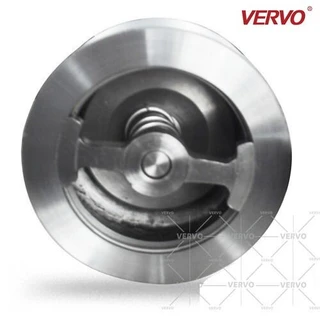
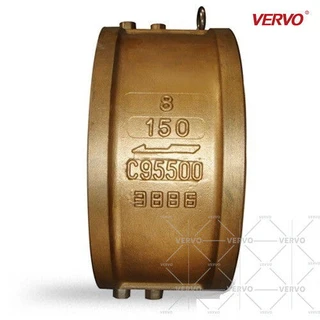
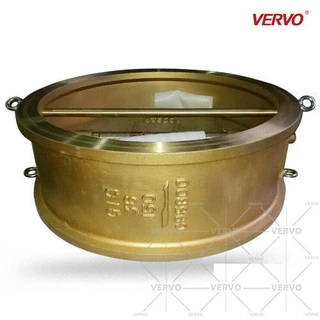
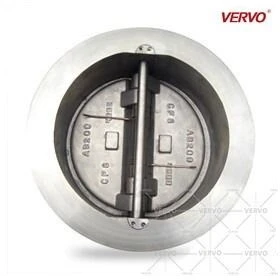
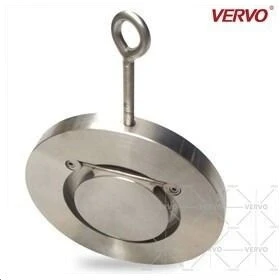
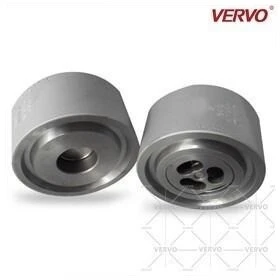
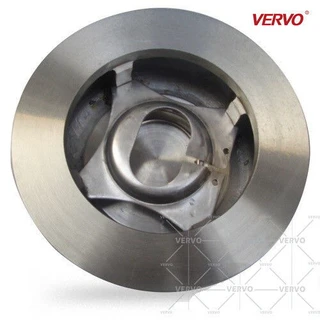
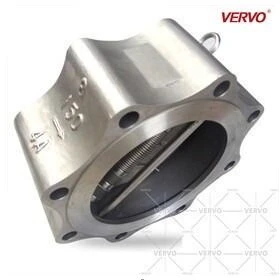
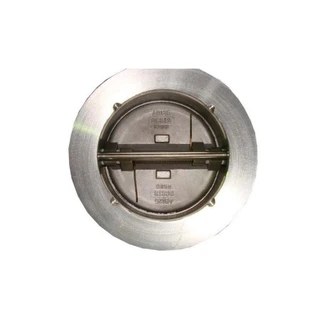
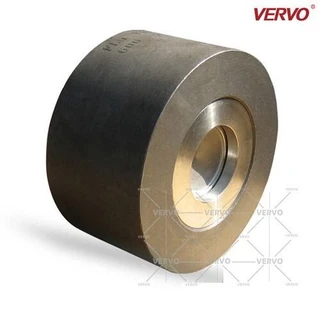
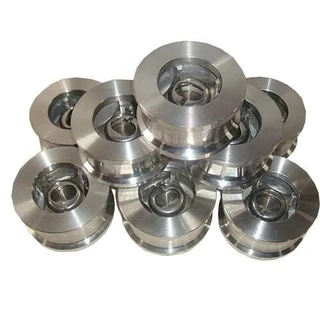
A wafer check valve is a compact and lightweight non-return valve designed to prevent reverse flow in pipeline systems. Unlike traditional check valves that may require larger installation spaces, wafer check valves are manufactured with a slim, wafer-style body that fits directly between two pipe flanges. This space-saving design makes them an ideal solution for applications where installation space, weight, and efficiency are important considerations.
The primary function of a wafer check valve is to allow fluid, including liquids and gases, to flow in only one direction while automatically stopping reverse flow. When the medium flows in the correct direction, the internal valve disc opens under the force of fluid pressure, allowing smooth passage through the pipeline. When the flow decreases, stops, or reverses, the disc quickly returns to the closed position, preventing backflow and protecting connected equipment.
Unlike isolation valves such as butterfly valves or gate valves, wafer check valves operate automatically without requiring manual operation during normal service. They rely on the pressure difference and flow direction of the medium to control opening and closing. This makes them highly reliable for continuous operation in industrial systems.
Wafer check valves are widely used in:
- Water treatment systems
- Oil and gas pipelines
- Chemical processing plants
- Power generation facilities
- HVAC systems
- Pump discharge lines
- Compressor systems
- Industrial process piping
With their compact structure, low weight, and efficient performance, wafer check valves have become a popular choice for modern fluid control applications.
The working principle of a wafer check valve is simple and highly efficient. The valve typically consists of a valve body, disc, shaft, spring mechanism, and sealing components.
During normal forward flow, fluid pressure acts on the valve disc and pushes it away from the seat. This creates an open flow passage, allowing the medium to move through the pipeline with minimal restriction.
The disc remains open as long as the upstream pressure remains higher than the downstream pressure. The valve automatically adjusts according to changing flow conditions.
When the flow slows down or begins to reverse, the pressure balance changes. The disc moves back toward the seat and closes the valve opening. This prevents reverse flow from moving back through the pipeline.
Some wafer check valves are equipped with spring-assisted discs. The spring helps accelerate closing, improving sealing performance and reducing the possibility of pressure surges caused by sudden flow reversal.
The automatic operation provides several benefits:
- Prevents backflow without external power
- Protects pumps and compressors
- Reduces system damage
- Improves pipeline safety
- Requires minimal maintenance
The main function of a wafer check valve is to prevent the reverse movement of fluid within a piping system. This protection is especially important in systems where backflow could damage equipment, contaminate processes, or reduce operational efficiency.
Inside the valve body, one or two rotating discs control the flow path. When fluid moves in the designed direction, the pressure pushes the disc open. Once the flow direction changes, the disc quickly closes against the valve seat.
This automatic closing mechanism requires no external control and operates entirely through:
- Fluid pressure
- Flow direction
- Gravity
- Spring assistance (depending on design)
Because of this simple operating principle, wafer check valves provide dependable performance in many industrial environments.
A wafer check valve consists of several important components that work together to achieve reliable flow control.
The valve body provides structural support and contains the internal operating components.
Common materials include:
- Cast iron
- Ductile iron
- Carbon steel
- Stainless steel
- Aluminum bronze
Material selection depends on the application, pressure rating, temperature, and fluid characteristics.
The disc is the primary moving component responsible for opening and closing the valve.
When forward pressure is applied, the disc rotates or lifts away from the seat. When reverse flow occurs, the disc returns to the closed position.
Different disc designs provide different performance characteristics.
The seat provides the sealing surface when the disc closes.
A properly designed sealing system ensures:
- Minimal leakage
- Reliable shut-off
- Long service life
Seat materials may include:
- EPDM
- NBR
- PTFE
- Metal sealing alloys
The selected material must match the operating medium and environmental conditions.
Wafer check valves are available in several disc configurations to meet different operating requirements.
A single-disc wafer check valve uses one circular disc mounted inside the valve body.
When fluid flows forward, the disc opens. When flow reverses, the disc closes against the seat.
Advantages include:
- Simple structure
- Easy maintenance
- Cost-effective operation
Single-disc designs are suitable for:
- Low-flow systems
- Moderate pressure applications
- General industrial pipelines
A double-disc wafer check valve uses two semi-circular discs supported by a central shaft.
When forward flow occurs, both discs open toward the pipeline wall. When flow reverses, springs or pressure forces close the discs quickly.
Advantages include:
- Reduced pressure drop
- Faster closing response
- Lower water hammer risk
- Better stability
Double-disc wafer check valves are commonly used in:
- Large pipelines
- Pump systems
- High-flow applications
Spring-loaded wafer check valves use spring force to improve closing performance.
The spring helps the disc return to the seat quickly when flow conditions change.
Benefits include:
- Improved sealing at low flow rates
- Faster response
- Reduced reverse flow risk
- Better protection against leakage
These valves are suitable for systems requiring precise flow control and rapid shut-off.
Wafer check valves provide many benefits compared with traditional check valve designs.
The thin wafer-style structure requires less installation space and reduces overall pipeline weight.
This makes them suitable for:
- Limited-space installations
- Modern industrial systems
- Compact equipment layouts
Wafer check valves are installed between standard pipe flanges, making installation simple and convenient.
Benefits include:
- Reduced installation time
- Lower labor costs
- Easy replacement
Wafer check valves operate automatically without the need for external actuators or manual control.
They respond immediately to changes in flow direction, improving system safety.
The simple internal design includes fewer moving parts compared with other valve types.
This results in:
- Lower maintenance costs
- Longer service life
- Improved reliability
Although wafer check valves are primarily automatic devices, certain applications may require additional control mechanisms.
Some wafer check valves can be equipped with manual adjustment systems for special operating conditions.
These mechanisms allow operators to control the valve position when required.
Certain wafer check valves use a screw-driven mechanism that allows manual adjustment of the disc position.
By turning a handle or screw device, operators can:
- Adjust disc position
- Open or close the valve
- Perform maintenance operations
This design can be useful in systems where manual intervention is occasionally required.
For automated industrial systems, wafer check valves may be equipped with electric or pneumatic actuators.
Actuated wafer check valves are suitable for:
- Remote operation
- Difficult-access locations
- Automated process control systems
Actuators provide greater control flexibility and allow operators to adjust valve operation without direct physical access.
Wafer check valves are commonly installed at pump outlets to prevent reverse flow and protect pumps from damage.
In gas applications, wafer check valves help maintain pressure stability and prevent reverse gas movement.
Water plants use wafer check valves to maintain correct flow direction in filtration and distribution systems.
Wafer check valves provide reliable backflow protection in oil and gas processing facilities where continuous operation is critical.
Wafer check valves are essential components for modern pipeline systems requiring reliable backflow prevention, compact installation, and efficient fluid control. Their automatic operating principle, lightweight design, and versatile disc configurations make them suitable for a wide range of industrial applications.
Whether using single-disc, double-disc, or spring-loaded designs, wafer check valves provide dependable protection against reverse flow while reducing maintenance requirements and installation costs.
When selecting a wafer check valve, users should consider factors such as pressure rating, temperature range, fluid compatibility, flow conditions, and installation requirements. Choosing a high-quality wafer check valve manufacturer ensures long-term performance, safety, and reliability in critical industrial piping systems.