A Complete Guide to Lift Check Valves for Efficient Fluid Flow Control Systems
In every industrial piping system, maintaining the correct flow direction is critical for safety, efficiency, and equipment protection. Whether transporting water, steam, oil, chemicals, gases, or process fluids, reverse flow can cause severe operational problems, including equipment damage, contamination, pressure surges, and costly downtime. To prevent these issues, engineers rely on check valves as an essential component of flow control systems.
Among the various types of check valves available today, the lift check valve remains one of the most trusted and widely used solutions for high-pressure and high-temperature applications. Known for its simple operating principle, excellent sealing capabilities, and long-term reliability, the lift check valve plays a vital role in industries such as oil and gas, power generation, petrochemicals, water treatment, pharmaceuticals, and manufacturing.
As industrial systems continue to become more automated and efficient, the demand for reliable backflow prevention devices continues to grow. Industry analysts estimate that check valves represent a significant portion of the global industrial valve market, with lift check valves accounting for a considerable share due to their suitability for demanding service conditions.
This article explores the design, working principle, components, advantages, limitations, applications, maintenance requirements, and future trends of lift check valves in modern fluid handling systems.

A lift check valve is an automatic non-return valve designed to allow fluid to flow in only one direction while preventing reverse flow. Unlike manually operated valves, lift check valves require no external power source, actuator, or operator intervention. They rely entirely on pressure differences generated by the flowing medium.
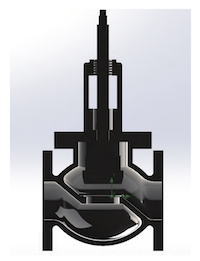
The valve operates using a movable disc or piston positioned above a valve seat. When fluid pressure in the desired flow direction becomes greater than the downstream pressure and the weight of the disc, the disc lifts off the seat, allowing fluid to pass through the valve body. If the flow decreases or reverses, gravity and reverse pressure force the disc back onto the seat, creating a tight seal that prevents backflow.
The operating principle is similar to that of a globe valve, except that the lift check valve functions automatically without manual adjustment. This simple yet effective mechanism makes lift check valves particularly suitable for systems where flow reversal could damage pumps, compressors, turbines, heat exchangers, or other sensitive equipment.
Because of their excellent sealing performance, lift check valves are frequently selected for critical applications involving steam, condensate, hydrocarbons, high-pressure water, and industrial gases.
The operating cycle of a lift check valve can be divided into three stages:
When fluid enters the valve inlet with sufficient pressure, the force exerted by the flowing medium lifts the disc vertically away from the seat. This creates an open passage that allows fluid to move through the valve body.
The amount of lift depends on flow velocity and pressure differential. Higher flow rates generate greater lifting forces, ensuring smooth operation under normal conditions.
During normal operation, the disc remains suspended above the seat while fluid continues to flow in the correct direction. The valve offers a relatively unrestricted flow path, although some turbulence and pressure loss occur due to the internal geometry.
The disc position continuously adjusts according to flow conditions, maintaining stable operation across varying process demands.
When the upstream pressure drops below downstream pressure or the flow stops entirely, the disc returns to the seat under the influence of gravity, reverse pressure, or spring force in spring-assisted designs.
This rapid closure prevents fluid from flowing backward through the system and protects downstream equipment from damage caused by reverse flow or pressure surges.
The automatic response time of lift check valves makes them particularly valuable in high-pressure systems where flow reversal can occur suddenly.
The reliability and performance of a lift check valve depend largely on the quality and design of its internal components.
The valve body forms the main pressure-retaining structure and houses all internal components. It is typically manufactured from materials such as carbon steel, stainless steel, alloy steel, duplex stainless steel, bronze, or cast iron depending on service conditions.
The body design determines flow characteristics, pressure rating, and installation requirements.
The disc is the moving element responsible for opening and closing the flow passage. It may be designed as a piston, ball, or guided plug depending on the application.
Precision machining of the disc ensures smooth movement and reliable sealing performance throughout the valve's service life.
The seat provides the sealing surface against which the disc closes. A properly machined seat minimizes leakage and ensures long-term operational reliability.
Seat materials may include hardened stainless steel, Stellite overlays, or specialized alloys for abrasive and corrosive applications.
Many lift check valves incorporate internal guides that maintain proper disc alignment during operation. Accurate guidance minimizes wear, vibration, and uneven seating.
Guided designs are particularly important in high-pressure systems where fluid velocities can become significant.
Some lift check valves include springs to assist disc closure. Spring-assisted designs reduce response time and improve performance in low-flow applications or horizontal installations.
Springs also help minimize valve chatter and reduce the risk of water hammer.
The bonnet provides access to internal components for maintenance and inspection purposes. Depending on the valve design, the bonnet may be bolted, threaded, or pressure-sealed.
Several lift check valve variations are available to accommodate different operating conditions.
This traditional design uses gravity and reverse pressure to return the disc to its closed position. It is commonly used in horizontal pipelines carrying clean fluids.
Piston lift check valves utilize a piston-shaped disc that moves vertically inside a guide cylinder. These valves provide excellent sealing performance and are widely used in steam systems.
Spring-loaded designs incorporate compression springs that accelerate valve closure and improve responsiveness during changing flow conditions.
These valves are suitable for systems requiring rapid shutoff and reduced water hammer risk.
Angle-pattern lift check valves redirect fluid flow through a ninety-degree angle while simultaneously preventing reverse flow.
They are often installed where piping layouts require directional changes.
Designed for extreme pressure conditions, these valves use reinforced bodies, hardened trim materials, and advanced sealing technologies to ensure safe operation.
Lift check valves offer numerous advantages that contribute to their popularity across industries.
One of the most important benefits is their superior sealing capability. The vertical seating arrangement allows the disc to achieve tight shutoff with minimal leakage.
This makes lift check valves ideal for applications involving hazardous, expensive, or sensitive fluids.
Lift check valves perform exceptionally well under high-pressure conditions. Their robust construction allows them to withstand demanding industrial environments.
Power plants, refineries, and chemical processing facilities frequently rely on lift check valves for this reason.
Because lift check valves operate automatically, they eliminate the need for manual intervention or external power supplies.
This improves system reliability and reduces operational complexity.
With proper material selection and maintenance, lift check valves can operate effectively for decades.
Their simple mechanical design contributes to exceptional durability.
Backflow prevention is particularly important in pharmaceutical, food processing, and water treatment systems where contamination must be avoided.
Lift check valves provide an effective barrier against reverse flow contamination.
Manufacturers offer lift check valves in numerous material combinations suitable for corrosive, abrasive, high-temperature, and cryogenic environments.
Despite their advantages, lift check valves also have certain limitations.
The internal flow path of a lift check valve creates greater resistance compared to swing check valves or axial flow check valves.
This results in a higher pressure drop across the valve.
Low flow conditions may not generate enough lifting force to fully open the disc, causing unstable operation or valve chatter.
Applications involving variable flow rates may require spring-assisted designs.
Solid particles, sludge, or debris can interfere with disc movement and seating performance.
For this reason, lift check valves are generally recommended for clean fluid services.
The presence of internal moving components means periodic inspection and maintenance are necessary to ensure continued reliability.
Ignoring maintenance can lead to leakage or valve failure.
Many lift check valves are designed primarily for horizontal installation. Incorrect orientation may affect disc movement and sealing performance.
Lift check valves are widely used in various industries.
In upstream, midstream, and downstream operations, lift check valves protect pumps, compressors, and pipelines from reverse flow damage.
They are commonly installed in crude oil transfer lines, gas processing facilities, and refinery systems.
Steam systems in thermal and nuclear power plants rely heavily on lift check valves for condensate return lines, feedwater systems, and boiler protection.
Their ability to withstand high temperatures and pressures makes them particularly valuable in power applications.
Chemical plants require reliable backflow prevention to protect process integrity and prevent contamination between production stages.
Corrosion-resistant lift check valves are widely used for acids, solvents, and specialty chemicals.
Lift check valves prevent reverse flow in pumping stations, filtration systems, and treatment facilities.
They contribute to safe and efficient water management operations.
Pharmaceutical production requires strict hygiene and contamination control standards.
Stainless steel lift check valves help maintain product purity and process integrity.
Shipboard piping systems use lift check valves to protect cooling systems, fuel transfer systems, and ballast operations.
Choosing the appropriate valve material is essential for reliable operation.
Carbon steel valves provide excellent strength and cost effectiveness for general industrial services.
Stainless steel valves offer superior corrosion resistance for chemical and food applications.
Duplex stainless steels combine high strength with outstanding resistance to chloride corrosion.
Alloy steels are often selected for elevated temperature and pressure conditions.
Bronze and brass valves remain popular in marine and water distribution systems due to their resistance to seawater corrosion.
Proper material selection extends service life and reduces maintenance costs.
Correct installation significantly influences valve performance.
Engineers should ensure that the flow direction matches the arrow marked on the valve body.
Adequate straight pipe lengths upstream and downstream help reduce turbulence and improve operation.
The valve should be installed in the orientation recommended by the manufacturer.
Supporting heavy valves properly prevents excessive stress on connected piping.
Pre-installation cleaning removes debris that could interfere with disc movement.
Following these practices minimizes operational problems and extends service life.
Preventive maintenance remains essential for maximizing valve reliability.
Routine inspections should verify disc movement, seat condition, and sealing performance.
Operators should monitor for unusual noises, vibrations, and pressure fluctuations.
Internal components should be cleaned periodically to remove deposits and debris.
Worn seats, springs, and guides should be replaced promptly to avoid larger failures.
Industry studies suggest that a significant percentage of pipeline failures are related to preventable maintenance issues, highlighting the importance of regular valve inspection programs.
Modern predictive maintenance technologies now allow facilities to monitor valve condition using vibration analysis, pressure sensors, and digital diagnostics.
Water hammer is a major concern in industrial piping systems. Sudden flow reversals can generate pressure spikes capable of damaging pipelines, pumps, and instrumentation.
While lift check valves help reduce reverse flow, closure speed is critical for minimizing water hammer effects.
Spring-assisted lift check valves often provide superior performance by shortening closing times and reducing pressure surges.
Engineers frequently combine lift check valves with surge suppression equipment for additional protection.
The valve industry continues to evolve as manufacturers introduce new technologies and materials.
Advanced computational fluid dynamics simulations are improving flow efficiency and reducing pressure losses.
Hard-facing technologies are extending valve life in abrasive services.
Smart valves equipped with sensors and monitoring systems are enabling predictive maintenance and digital asset management.
Additive manufacturing technologies are also opening new possibilities for customized valve geometries and rapid prototyping.
Sustainability initiatives are encouraging manufacturers to develop more energy-efficient valve designs that minimize pumping losses and reduce emissions.
These innovations are expected to drive continued growth in the global check valve market over the coming years.
Lift check valves remain one of the most dependable solutions for preventing reverse flow in industrial fluid systems. Their simple design, automatic operation, excellent sealing capability, and suitability for high-pressure applications make them indispensable across numerous industries.
Although they present certain limitations, including higher pressure drops and sensitivity to dirty fluids, proper selection, installation, and maintenance can significantly enhance their performance and service life.
As industries continue to demand greater reliability, efficiency, and automation, lift check valves will remain a fundamental component of modern flow control systems. Ongoing technological advancements, improved materials, and smart monitoring capabilities will further strengthen their role in protecting critical infrastructure and ensuring safe, uninterrupted industrial operations worldwide.