Swing Check Valve
VERVO provides high-quality swing check valves engineered for reliable backflow prevention and efficient fluid control in a wide range of industrial applications. With a hinged disc design, these valves enable smooth forward flow and automatically close to stop reverse flow when system pressure changes. Available with optional levers, weights, or springs, VERVO swing check valves offer excellent shut-off performance, convenient inspection, and long-lasting service reliability. As a leading swing check valve manufacturer in China, VERVO manufactures valves under strict quality control standards, delivering dependable solutions for oil and gas, chemical processing, power generation, water treatment, and industrial pipeline systems worldwide.
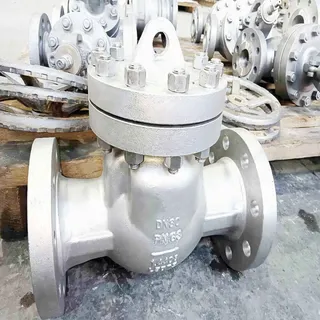
DIN 3356 Swing Check Valve, EN 10283/1.4408, DN80, PN63, RF
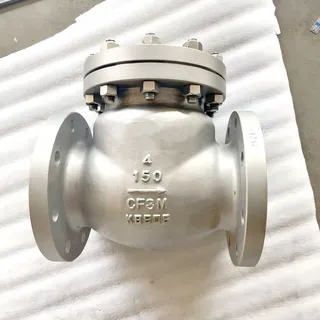
BS 1868 Swing Check Valves, ASTM A351 CF3M, 4 IN, CL150, RF
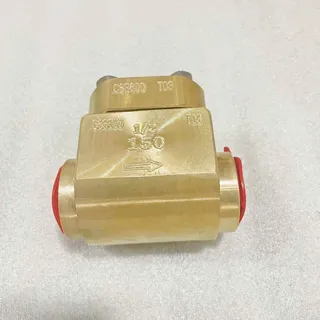
ASME B16.34 Swing Check Valve, C83600 Bronze, 1/2 IN, 150 LB
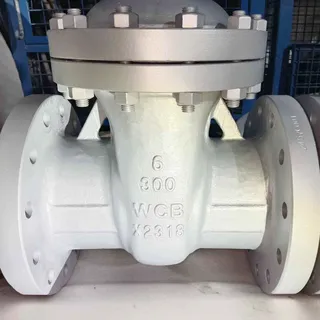
ASME B16.34 Swing Check Valves, A216 WCB, 6 IN, 300 LB, RF
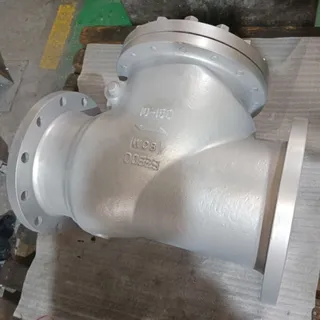
ASTM A216 WCB Swing Check Valve, BS 1868, 10 Inch, CL 150 LB
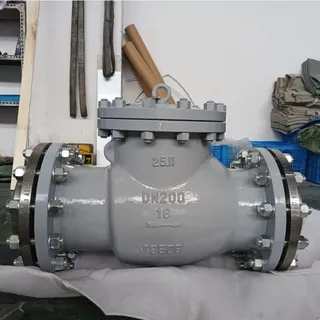
BS EN 13709 Check Valve, 25Л, DN200, PN16, GOST 33259-2005
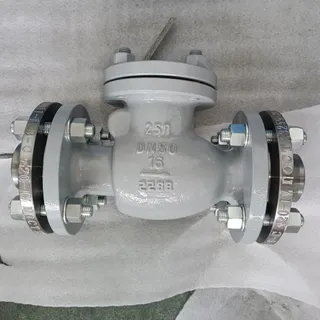
Swing Check Valve, BS EN 13709, 25Л, PN16, DN50
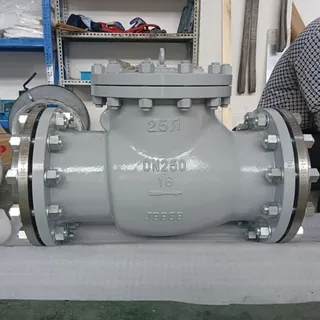
BS EN 13709 Swing Check Valves, 25Л, DN250, PN16
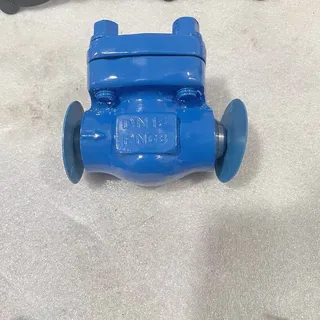
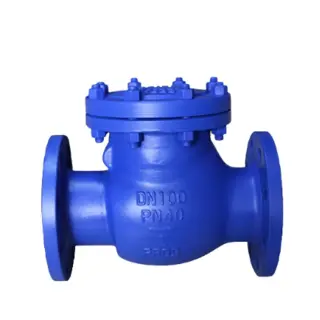
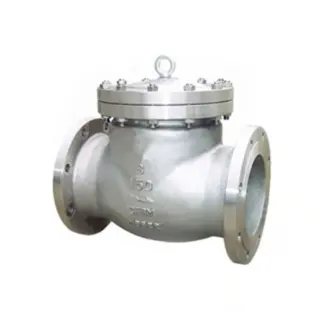
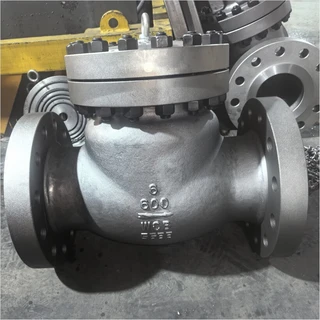
A swing check valve is a type of automatic check valve designed to prevent reverse flow in piping systems. It uses a hinged disc or flap that swings freely on a shaft or hinge mechanism. When fluid flows in the correct direction, the disc moves away from the valve seat, allowing the medium to pass through with minimal resistance. When the flow stops or begins to reverse, the disc automatically returns to the seat, creating a tight shut-off and preventing backflow.
Unlike manually operated valves, swing check valves do not require external control or actuation. Their operation depends entirely on the movement of the fluid and the pressure difference across the valve. The disc weight, hinge design, and return flow characteristics determine the closing speed and sealing performance.
Swing check valves are widely recognized for their simple construction, reliable operation, and ability to handle both low-flow and high-flow applications. They are commonly installed in water supply networks, wastewater treatment systems, fire protection systems, power plants, oil and gas facilities, chemical processing plants, and industrial pipeline systems.
The operating principle of a swing check valve is straightforward. The valve body contains a hinged disc mounted on a shaft. During normal forward flow, fluid pressure pushes the disc away from the seat, creating an open flow passage. The disc remains open as long as the flow direction and pressure conditions remain stable.
When the upstream flow decreases, stops, or reverses, the pressure difference changes. The disc then swings back toward the seat under gravity, return flow pressure, or assistance from a spring or weighted lever. Once the disc contacts the seat, it blocks reverse flow and protects the piping system from damage.
The automatic closing action helps prevent:
- Reverse fluid movement
- Pump damage
- System contamination
- Pressure instability
- Water hammer effects
Because of their simple movement mechanism and minimal internal components, swing check valves offer excellent durability and require relatively low maintenance compared with more complex valve designs.
For applications requiring improved control over closing speed and visual monitoring, swing check valves can be equipped with additional accessories such as levers, weights, or springs.
A swing check valve with a lever and weight provides enhanced closing control by using an adjustable external weight mounted on the lever arm. The position of the weight can be adjusted to optimize the closing speed of the disc.
This design offers several advantages:
- Adjustable closing performance
- Reduced risk of water hammer
- Easy visual inspection
- Improved operational reliability
Lever and weight swing check valves are particularly suitable for systems where sudden flow changes may create pressure surges. By controlling the disc movement, the adjustable weight allows the valve to close smoothly against the seat instead of slamming shut.
Typical applications include:
- Water distribution pipelines
- Pump discharge systems
- Fire protection systems
- Industrial water systems
A lever and spring configuration uses a spring mechanism to assist the disc during closing. The spring force helps the valve respond quickly when flow conditions change.
This design is useful for:
- Vertical installation applications
- Systems requiring faster response
- Pipelines with fluctuating flow conditions
The spring-assisted closing action improves valve stability and reduces the possibility of reverse flow.
Swing check valves are among the most commonly used check valves worldwide because of their versatility and dependable performance.
In municipal and industrial water networks, swing check valves help maintain proper flow direction and protect pumps, pipelines, and storage equipment.
They are widely used in:
- Water treatment plants
- Drinking water systems
- Irrigation pipelines
- Water transmission systems
Fire suppression systems require reliable valves that can prevent reverse flow and maintain system pressure. Swing check valves provide automatic operation without requiring manual intervention.
They are commonly installed in:
- Fire pump discharge lines
- Sprinkler systems
- Fire water pipelines
Oil and gas processing facilities rely on swing check valves for safe fluid transportation and process control.
Applications include:
- Crude oil pipelines
- Natural gas systems
- Refinery units
- Storage facilities
Carbon steel and alloy steel swing check valves are often selected for these demanding environments due to their strength and durability.
Chemical plants require valves capable of handling aggressive fluids and challenging operating conditions. Material selection is critical to ensure corrosion resistance and long service life.
Stainless steel swing check valves are commonly used for chemical applications involving corrosive media.
Swing check valves offer several important benefits for industrial piping systems.
The basic structure includes only a few moving components:
- Valve body
- Hinged disc
- Shaft
- Seat
This simple design reduces maintenance requirements and improves operational reliability.
Because the disc swings completely away from the flow path, swing check valves provide relatively low resistance compared with some other check valve designs.
This makes them suitable for systems requiring efficient fluid transportation.
Swing check valves are available in large sizes and are commonly used in pipelines where high flow capacity is required.
Typical applications include:
- Large water pipelines
- Industrial process lines
- Power plant systems
Swing check valves operate automatically according to flow conditions. No external power source, actuator, or operator control is required.
This makes them reliable safety components in critical piping systems.
Selecting the correct material is essential for ensuring valve performance and service life. The valve material must be compatible with the operating fluid, temperature, pressure, and environmental conditions.
Stainless steel provides excellent corrosion resistance and is suitable for:
- Chemical processing
- Seawater systems
- Food and beverage applications
- Pharmaceutical industries
Common stainless steel materials include:
- ASTM CF8
- ASTM CF8M
- 304 stainless steel
- 316 stainless steel
Carbon steel offers high mechanical strength and excellent durability for general industrial applications.
It is widely used in:
- Oil pipelines
- Gas transmission systems
- Power plants
- Industrial process systems
Bronze and brass materials are commonly used in freshwater applications due to their corrosion resistance and cost efficiency.
Typical applications include:
- Residential water systems
- Small piping networks
- Marine applications
Swing check valves are available in different designs depending on system requirements.
Standard swing check valves feature a conventional hinged disc design.
Advantages include:
- Simple structure
- Reliable operation
- Easy maintenance
- Cost-effective performance
They are ideal for systems with stable flow conditions and moderate operating requirements.
Tilting disc swing check valves use an eccentric pivot design that allows the disc to move more efficiently.
Benefits include:
- Faster closing response
- Reduced pressure loss
- Lower water hammer risk
- Improved performance under changing flow conditions
These valves are often selected for systems with rapid flow changes, such as high-rise buildings, pumping stations, and large industrial pipelines.
Choosing the correct swing check valve requires evaluating several important system factors.
Valve sizing must match the pipeline flow requirements.
An undersized valve may create excessive pressure loss and restrict system capacity. An oversized valve may close too slowly, increasing the risk of water hammer.
The valve pressure rating must exceed the maximum operating pressure of the system.
Common pressure classes include:
- Class 150
- Class 300
- Class 600
- PN10
- PN16
- PN25
- PN40
The valve material and sealing components must withstand operating temperatures.
High-temperature applications may require:
- Alloy steel bodies
- Metal seats
- High-temperature gaskets
Swing check valves are typically installed horizontally, but some designs can accommodate vertical installation depending on flow direction and manufacturer specifications.
Proper installation ensures smooth disc movement and reliable sealing.
Proper valve sizing helps maintain efficient system performance. Pressure loss can be evaluated using hydraulic calculations, including the relationship between pressure loss coefficient and flow velocity.
A properly selected swing check valve minimizes unnecessary energy consumption while maintaining effective backflow prevention.
Engineers should consider:
- Flow velocity
- Valve coefficient
- Pipeline size
- Pressure conditions
- Operating environment
Swing check valves are essential components for preventing reverse flow and protecting industrial piping systems. Their simple hinged disc design provides automatic operation, reliable sealing, low maintenance requirements, and excellent versatility across numerous industries.
From water distribution and fire protection to oil and gas processing and chemical manufacturing, swing check valves deliver dependable performance in demanding applications.
When selecting a swing check valve, users should carefully evaluate valve design, material compatibility, pressure rating, temperature requirements, flow conditions, and installation environment. Choosing the right valve configuration ensures smooth operation, reduced maintenance costs, and long-term system reliability.
As a trusted swing check valve manufacturer, VERVO provides high-quality swing check valves engineered according to international standards, offering durable solutions for global industrial flow control applications.