Tilting Disc Check Valve
VERVO provides high-performance tilting disc check valves engineered for reliable flow management in industrial piping systems. With an advanced tilting disc design, these valves quickly respond to pressure variations, ensuring smooth fluid flow, minimal pressure drop, and effective prevention of reverse flow. Designed for both liquid and gas applications, VERVO tilting disc check valves deliver superior sealing performance, stable operation, and extended service life in industries including oil and gas, chemical processing, power generation, and water treatment. As a professional tilting disc check valve manufacturer in China, VERVO delivers durable, efficient, and customized valve solutions for demanding industrial environments.
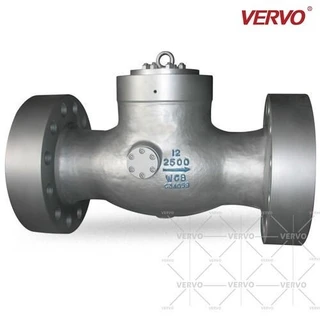
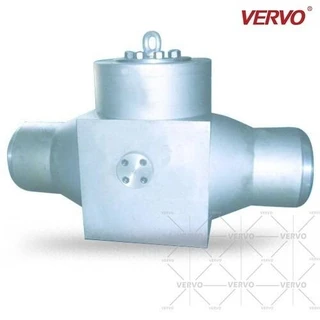
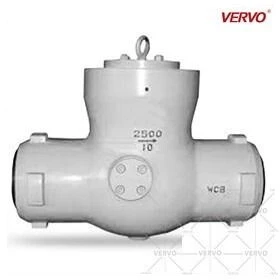
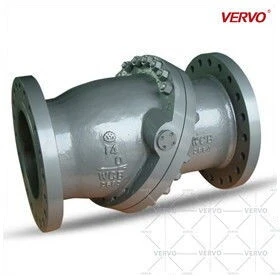
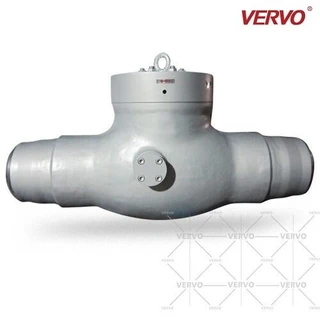
A tilting disc check valve is a high-performance non-return valve designed to control the flow of liquids and gases while preventing reverse flow in piping systems. It is widely used in industrial applications where reliable backflow protection, fast response, and efficient fluid control are required.
Unlike traditional swing check valves that use a disc hinged at the top and rotate through a large arc, a tilting disc check valve uses a specially designed disc that pivots around a point near its center. The disc is positioned at an angle to the flow path and tilts open or closed according to the pressure difference across the valve.
When the upstream pressure becomes higher than the downstream pressure, the disc tilts away from the valve seat, allowing fluid or gas to pass through. When the flow rate decreases or reverse pressure begins to develop, the disc quickly returns to the closed position, creating a tight seal and preventing backflow.
The unique tilting disc design provides faster closing action, lower pressure loss, and improved operational stability compared with many conventional check valve designs.
Tilting disc check valves are commonly installed in industries such as:
- Oil and gas pipelines
- Water supply systems
- Wastewater treatment facilities
- Chemical processing plants
- Power generation systems
- HVAC and cooling water networks
- Air compressor systems
- Industrial process pipelines
With excellent flow efficiency and reliable sealing performance, tilting disc check valves have become an important solution for modern fluid handling systems.
The operating principle of a tilting disc check valve is based on the balance between fluid pressure and the movement of the valve disc.
When there is no pressure difference between the inlet and outlet sides of the valve, the disc remains in the closed position. The disc rests against the valve seat, preventing any fluid or gas from passing through.
When upstream pressure increases, the force generated by the flowing medium pushes against the disc. Once the pressure exceeds the resistance created by the disc weight and sealing forces, the disc begins to tilt away from the seat.
As the disc tilts, the opening area gradually increases, allowing the medium to flow through the valve. The greater the pressure difference, the wider the disc opens, creating a larger flow passage and reducing flow resistance.
When the upstream flow decreases or the downstream pressure becomes higher, the pressure force acting on the disc is reduced. The disc then moves back toward the seat due to gravity, reverse pressure, and the valve’s design characteristics.
The disc closes before significant reverse flow occurs, preventing unwanted fluid movement and minimizing pressure surges.
This automatic operation allows the tilting disc check valve to:
- Permit flow in one direction
- Prevent reverse flow
- Respond quickly to changing pressure conditions
- Protect pumps, compressors, and pipelines from damage
Because the disc movement is controlled and balanced, tilting disc check valves provide smoother operation than many traditional check valve designs.
Tilting disc check valves incorporate several design characteristics that improve performance and reliability.
The main feature of this valve is the centrally positioned disc that tilts around a pivot point.
This design reduces the travel distance required for opening and closing compared with conventional swing check valves. As a result, the valve can respond faster to changes in flow conditions.
The streamlined internal structure allows fluid to pass through with minimal resistance.
Compared with some other check valve types, tilting disc designs provide a larger effective flow area, reducing turbulence and improving energy efficiency.
One of the biggest advantages of a tilting disc check valve is its ability to close quickly.
Because the disc requires only a small rotational movement, it can return to the seat rapidly when flow conditions change. This helps reduce the risk of water hammer and pressure fluctuations.
The disc and seat are designed to provide a tight shut-off when reverse flow occurs.
High-quality sealing materials and precision machining help ensure long-term leakage prevention, even under demanding operating conditions.
Tilting disc check valves are commonly available in large sizes, making them suitable for high-capacity pipeline systems where efficient flow control is essential.
A tilting disc check valve is primarily selected for applications where faster closure, improved flow performance, and better stability are required compared with conventional swing check valves.
Although all check valves serve the basic purpose of preventing reverse flow, different designs provide different levels of performance depending on system requirements.
The main reasons for choosing a tilting disc check valve include:
In pump discharge systems, sudden pump stopping can cause fluid to reverse direction. A slow-closing valve may allow reverse flow to develop before sealing completely.
The faster response of a tilting disc check valve helps reduce reverse flow distance and protects pumps from reverse rotation.
Valve slam occurs when a check valve closes too late and the disc impacts the seat due to reverse flow velocity.
The tilting disc design reduces disc travel distance and improves closing timing, helping minimize mechanical impact and pressure shock.
Cooling water systems and industrial circulation loops often operate continuously with changing flow conditions.
Tilting disc check valves provide stable operation by responding quickly to pressure variations and maintaining reliable one-way flow control.
Energy efficiency is an important consideration in industrial piping systems.
The efficient flow path of a tilting disc check valve reduces unnecessary pressure losses, helping improve overall system performance.
In systems where traditional swing check valves experience repeated seat damage, vibration, or operational problems, tilting disc check valves can provide improved durability and service life.
Oil and gas pipelines require dependable backflow prevention to maintain safe and efficient transportation of fluids.
Tilting disc check valves are used in pump stations, transmission pipelines, and processing facilities where rapid response and reliable sealing are critical.
Water distribution and wastewater treatment facilities depend on check valves to maintain proper flow direction.
Tilting disc check valves help protect pumps and maintain system stability while reducing water hammer effects.
Chemical plants often handle corrosive or high-value fluids where leakage prevention is essential.
The reliable sealing performance of tilting disc check valves makes them suitable for various chemical process applications.
Power plants use check valves in cooling systems, feedwater systems, and process piping.
Tilting disc check valves provide efficient operation and help protect critical equipment from reverse flow damage.
Compressed air systems require effective flow control to prevent pressure loss and equipment damage.
Tilting disc check valves provide fast response and reliable operation in compressed gas applications.
Tilting disc check valves offer several important benefits for industrial fluid control systems:
- Fast opening and closing response
- Reduced risk of water hammer
- Lower pressure loss
- Improved flow efficiency
- Reliable backflow prevention
- Tight shut-off performance
- Reduced seat damage
- Long service life
- Suitable for high-flow applications
- Stable operation under changing conditions
However, a tilting disc check valve is not a universal solution for every water hammer or pipeline protection problem. Proper valve selection requires consideration of factors such as flow velocity, pressure conditions, installation position, fluid characteristics, and system design.
When correctly specified and installed, a tilting disc check valve provides an effective balance between flow efficiency, rapid response, and reliable protection.
A tilting disc check valve is an advanced flow control solution designed to provide efficient one-way fluid movement while preventing reverse flow in industrial piping systems. Its unique disc tilting mechanism allows faster closing, lower pressure loss, and improved stability compared with many traditional check valve designs.
From oil and gas pipelines to water treatment facilities, chemical plants, and power generation systems, tilting disc check valves deliver dependable performance in demanding environments.
By reducing reverse flow, minimizing pressure surges, and improving system reliability, tilting disc check valves continue to play an important role in modern industrial fluid management applications.