Key Features and Benefits of Cryogenic Gate Valves for Industrial Applications
As global industries continue to expand their use of liquefied gases and cryogenic technologies, the demand for reliable low-temperature flow control equipment has grown significantly. Among the various valves used in cryogenic systems, cryogenic gate valves remain one of the most important components due to their excellent sealing capability, low flow resistance, and dependable shut-off performance.
Cryogenic gate valves are specifically engineered to operate in environments where temperatures fall below -40°C and often reach as low as -196°C. These valves are widely utilized in liquefied natural gas (LNG) facilities, industrial gas production plants, air separation units, petrochemical complexes, medical gas systems, aerospace applications, and scientific research facilities.
Unlike conventional gate valves, cryogenic gate valves feature specialized materials, extended bonnet designs, advanced sealing systems, and strict manufacturing processes that allow them to maintain functionality under extreme temperature conditions. Their ability to ensure safe and leak-free operation is vital for protecting personnel, preserving valuable cryogenic fluids, and maintaining system efficiency.
As investments in LNG infrastructure, hydrogen energy, and industrial gas production continue to rise worldwide, cryogenic valve technology is becoming increasingly important. Understanding the design, characteristics, applications, and future development trends of cryogenic gate valves helps industries make informed decisions when selecting equipment for demanding low-temperature environments.

Cryogenic applications involve the handling, storage, transportation, and processing of substances at extremely low temperatures. These temperatures generally range from -150°C to -273°C, where many gases become liquids.
Common cryogenic fluids include:
- Liquefied Natural Gas (LNG)
- Liquid Nitrogen (LN2)
- Liquid Oxygen (LOX)
- Liquid Hydrogen (LH2)
- Liquid Helium (LHe)
- Liquid Argon
- Liquid Carbon Dioxide
Operating equipment under such conditions presents unique engineering challenges. At cryogenic temperatures, conventional materials may lose toughness, become brittle, shrink significantly, or experience seal failure. Thermal contraction can affect valve alignment, while frost formation and ice buildup may impair operational reliability.
To overcome these challenges, cryogenic valves are manufactured using carefully selected materials and specialized designs capable of maintaining structural integrity and sealing performance under extreme conditions.
The operating principle of a cryogenic gate valve is similar to that of a standard gate valve. The valve uses a gate or wedge-shaped disc that moves vertically to either block or permit fluid flow through the pipeline.
When the gate is fully raised:
- The flow passage becomes completely open.
- Fluid experiences minimal resistance.
- Pressure loss across the valve is very low.
When the gate is fully lowered:
- The flow path is blocked.
- Tight shut-off is achieved.
- Leakage is minimized or eliminated.
The simple linear motion design makes gate valves ideal for on-off applications rather than flow regulation. In cryogenic systems, they are primarily used as isolation valves to securely stop or permit fluid movement.
The challenge lies not in the operating mechanism itself but in ensuring that all moving and sealing components continue to function reliably despite exposure to extremely low temperatures.
Cryogenic gate valves incorporate several design modifications that distinguish them from conventional valves.
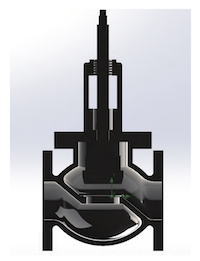
One of the most recognizable features of a cryogenic gate valve is its extended bonnet.
The extended bonnet serves several important functions:
- Separates the stem packing from the cryogenic fluid.
- Maintains the packing area at a higher temperature.
- Prevents freezing of sealing components.
- Reduces heat transfer into the cryogenic medium.
- Improves energy efficiency.
By creating sufficient distance between the cryogenic fluid and the packing system, the valve can maintain effective stem sealing while minimizing the risk of leakage.
The extended bonnet also creates a vapor column that acts as a thermal barrier. This vapor space helps reduce conductive heat transfer from the ambient environment into the cryogenic liquid.
As a result:
- Product losses are minimized.
- System efficiency improves.
- Operating costs are reduced.
- Specialized Stem Design
Cryogenic gate valves often use precision-machined stems designed to accommodate thermal contraction while maintaining smooth operation.
The stem materials are selected to provide:
- High strength
- Excellent corrosion resistance
- Low-temperature toughness
- Dimensional stability
Thermal contraction can cause sealing surfaces to lose contact if not properly designed.
To compensate, cryogenic gate valves may include:
- Flexible wedges
- Spring-loaded seats
- Self-adjusting sealing mechanisms
- Resilient seat designs
These features help maintain sealing integrity across varying temperatures.
Material selection is perhaps the most critical aspect of cryogenic valve design.
Many metals that perform well at room temperature become brittle and susceptible to cracking when exposed to cryogenic conditions. Therefore, cryogenic valve materials must exhibit exceptional toughness and ductility at extremely low temperatures.
Austenitic stainless steels are among the most widely used materials for cryogenic valves.
Popular grades include:
- ASTM A351 CF8
- ASTM A351 CF8M
- ASTM A182 F304L
- ASTM A182 F316L
These materials offer:
- Excellent toughness
- Good corrosion resistance
- Reliable mechanical properties
- Resistance to thermal shock
Certain low-temperature carbon steels are suitable for moderately cryogenic applications.
Advantages include:
- Good impact resistance
- Cost effectiveness
- Adequate low-temperature performance
These materials are often used in LNG applications where operating temperatures are less severe than those involving liquid hydrogen or helium.
For extremely demanding cryogenic conditions, nickel-based alloys may be employed.
Benefits include:
- Outstanding low-temperature toughness
- Superior corrosion resistance
- Excellent mechanical strength
These materials are commonly found in aerospace and advanced industrial gas applications.
Seat materials and sealing elements must also withstand cryogenic temperatures.
Common options include:
- PTFE
- Reinforced PTFE
- PCTFE
- Graphite-based materials
- Specialized cryogenic polymers
These materials maintain flexibility and sealing effectiveness under extreme cold conditions.
Cryogenic service introduces several operational challenges that must be addressed through careful engineering.
As temperature decreases, metals contract.
This contraction can lead to:
- Misalignment
- Increased stress concentrations
- Distorted sealing surfaces
- Reduced operational efficiency
Cryogenic valves are designed with sufficient tolerances and flexibility to accommodate dimensional changes.
Brittle fracture is one of the most serious risks in cryogenic environments.
A material that loses ductility can fail suddenly without warning.
Manufacturers therefore conduct extensive impact testing and material qualification procedures to ensure safe operation.
Even small leaks can become significant safety hazards in cryogenic systems.
Potential consequences include:
- Product loss
- Environmental concerns
- Fire risks
- Explosion hazards
- Oxygen deficiency hazards
Advanced sealing technologies and rigorous testing help minimize leakage risks.
Moisture in the surrounding atmosphere may freeze on valve surfaces.
Excessive ice buildup can:
- Restrict movement
- Obscure valve indicators
- Complicate maintenance procedures
Proper insulation and extended bonnet designs help reduce these issues.
Cryogenic gate valves provide several benefits that make them highly suitable for low-temperature systems.
The gate valve design creates a highly effective seal when closed.
This capability is particularly important in cryogenic applications where fluid containment is critical.
When fully open, the gate moves completely out of the flow path.
This allows:
- Full-bore flow
- Reduced turbulence
- Lower energy consumption
- Improved system efficiency
Properly designed cryogenic gate valves offer exceptional durability.
High-quality materials and precision manufacturing contribute to:
- Reduced maintenance requirements
- Lower operating costs
- Extended service intervals
Cryogenic gate valves are engineered to perform consistently despite extreme temperature fluctuations and demanding operating conditions.
The LNG industry represents one of the largest users of cryogenic gate valves.
Applications include:
- LNG liquefaction plants
- Storage terminals
- Marine transportation
- Regasification facilities
- Distribution networks
These valves ensure safe handling of natural gas at approximately -162°C.
Air separation facilities produce industrial gases through cryogenic distillation.
Cryogenic gate valves are used in systems handling:
- Liquid oxygen
- Liquid nitrogen
- Liquid argon
Reliable valve performance is essential for maintaining process efficiency and product purity.
Many petrochemical processes involve low-temperature fluids.
Cryogenic valves support:
- Ethylene production
- Propylene processing
- Hydrocarbon separation
- Refrigeration systems
Hospitals and healthcare facilities rely on liquid oxygen storage systems.
Cryogenic gate valves help ensure:
- Reliable gas supply
- Safe storage operations
- Leak-free performance
The aerospace sector uses cryogenic fluids as rocket propellants and cooling agents.
Applications include:
- Liquid hydrogen systems
- Liquid oxygen handling
- Space launch infrastructure
Valve reliability is essential for mission success and operational safety.
Research laboratories frequently use cryogenic fluids in experimental and testing environments.
Cryogenic gate valves contribute to:
- Particle accelerators
- Superconducting systems
- Advanced physics research
- Cryogenic preservation facilities
Because cryogenic systems involve potentially hazardous conditions, strict standards govern valve design and testing.
Common standards include:
- API 600
- API 602
- API 6D
- BS 6364
- ISO 28921
- ASME B16.34
- MSS SP-134
Cryogenic testing typically evaluates:
- Seat leakage
- Stem sealing performance
- Structural integrity
- Operational torque
- Pressure containment
Valves are subjected to actual cryogenic temperatures to verify performance under real-world conditions.
Although cryogenic gate valves are designed for long-term reliability, regular maintenance remains important.
Recommended maintenance practices include:
Operators should periodically inspect:
- Stem packing
- External surfaces
- Fasteners
- Actuation systems
Early identification of wear helps prevent unexpected failures.
Leak monitoring is critical in cryogenic systems.
Advanced detection methods include:
- Helium leak testing
- Gas sensors
- Thermal imaging
- Pressure monitoring
Regular cycling of valves helps verify proper function and prevents sticking caused by prolonged inactivity.
Sealing elements and packing materials should be replaced according to manufacturer recommendations.
Using approved replacement parts helps maintain valve performance and certification compliance.
As energy markets evolve, cryogenic valve technology continues to advance.
Global demand for cleaner-burning fuels is driving investment in LNG facilities worldwide.
This trend is increasing the demand for high-performance cryogenic valves capable of supporting larger and more efficient facilities.
Hydrogen is gaining attention as a future clean energy source.
Liquid hydrogen systems operate at approximately -253°C, creating even greater demands on valve materials and design.
Manufacturers are developing specialized cryogenic valves to support hydrogen production, storage, transportation, and fueling infrastructure.
Digital monitoring systems are increasingly being integrated into cryogenic valves.
These technologies provide:
- Real-time diagnostics
- Predictive maintenance
- Remote monitoring
- Enhanced safety management
Smart valves help reduce downtime and improve operational efficiency.
Research into new alloys and composite materials continues to improve cryogenic valve performance.
Future materials may offer:
- Higher strength
- Improved corrosion resistance
- Better thermal stability
- Longer service life
Reducing fugitive emissions and improving energy efficiency are major priorities across industrial sectors.
Modern cryogenic valve designs focus on:
- Enhanced sealing performance
- Reduced product losses
- Lower energy consumption
- Improved environmental compliance
Cryogenic gate valves are indispensable components in industries that handle liquefied gases and ultra-low-temperature fluids. Their specialized construction, extended bonnet designs, advanced sealing systems, and carefully selected materials enable them to operate safely and reliably in some of the most demanding environments on earth.
From LNG terminals and air separation plants to hydrogen energy facilities and aerospace applications, cryogenic gate valves ensure secure fluid isolation while maintaining system efficiency and operational safety. As global investments in clean energy, industrial gas production, and advanced cryogenic technologies continue to grow, the importance of high-performance cryogenic valves will only increase.
Ongoing innovations in materials science, digital monitoring, and sealing technology are expected to further enhance valve reliability, safety, and efficiency. These developments will support the next generation of cryogenic infrastructure and help industries meet evolving operational and environmental requirements for years to come.