Durability Testing of Soft-Seated Gate Valves for Water Supply and Drainage
This study evaluates the durability of soft-seated gate valves used in water supply and drainage systems through comprehensive testing and analysis. Long-term pressure cycling tests, consisting of repeated opening and closing cycles, were conducted on multiple valves to evaluate shell strength, sealing performance, and operational reliability. After testing, the valves were disassembled, and their components were inspected for signs of wear or damage. The data and analysis results identify potential weaknesses in the design and manufacturing processes, providing actionable insights to enhance performance and extend service life. These findings are instrumental in optimizing design and maintenance strategies for soft-seated gate valves, ensuring their reliability and safety in critical applications.
As urbanization accelerates in China, the construction of water supply and drainage systems has received increasing attention. Soft-seated gate valves, as critical components of these systems, play a pivotal role in maintaining operational efficiency. Durability testing serves as a key method for evaluating the long-term stability of these valves, assessing metrics such as the number of opening and closing cycles, sealing performance, and stability under continuous pressure. By simulating real-world operating conditions, durability testing verifies the valve's ability to withstand expected service life and operational frequency, ensuring optimal sealing and performance throughout its service.
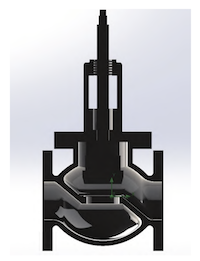
This study investigates performance changes and component wear during cyclic operations through durability testing of soft-seated gate valves. Analysis of the test results identifies weaknesses in design and manufacturing processes, offering insights for product optimization and performance enhancement. Soft-seated gate valves are categorized into four structural types: non-rising stem split type, non-rising stem integral type, rising stem split type, and rising stem integral type. Among these, the non-rising stem split type is the most widely used due to its simplicity in manufacturing. Figure 1 illustrates its cross-sectional structure. The widely adopted product standard for these valves is CJ/T 216-2013. Key components include the valve body, valve bonnet, valve stem, plate, valve stem nut, gland, sealing gasket, thrust washer, and others, with material selection and requirements detailed in Table 1.

Figure 1 Structure diagram of concealed stem split soft-seated gate valve
Table 1 Main components and material selection of soft-seated gate valve
Parts | Functions | Material Selection |
Valve body, and bonnet | Main structural components of the valve, providing strength, toughness, wear resistance, heat resistance, and corrosion resistance | Ductile iron (CJ/T 216) |
Valve stem | Connecting actuator and plate, enabling plate movement, and resisting corrosion and wear for long-term stability | Stainless steel |
Gate | Cutting off or allows media flow, and providing good sealing performance | Ductile iron with EPDM or nitrile rubber coating |
Valve stem nut | Working with valve stem to raise and lower the plate, and offering good mechanical properties and corrosion resistance | Cast aluminum brass or cast aluminum bronze |
Gland | Fixing and sealing the valve stem to prevent media leakage | Ductile iron |
Sealing gasket | Providing a seal between valve body and bonnet to preventing media leakage | EPDM rubber or nitrile rubber |
Thrust washer (anti-wear pad) | Bearing thrust and friction from valve stem during operation, and offering good load-bearing and wear resistance | Bronze, stainless steel, or similar materials |
The durability test included six soft-seated gate valves from different brands, all specified as Z45X-10Q DN100, with valve bodies made of QT450-10 ductile iron.
A specialized valve durability test bench was used, consisting of a standard hydraulic valve test bench, a valve actuation device, a touchscreen interface, and a PLC-based automatic control system. The test bench performs strength tests, sealing tests, and pressurized open-close cycles, while continuously recording valve pressure, position, torque, cycle count, and other parameters to ensure accurate and reliable results.
Before testing, the valve body strength, sealing performance, and operational functions were inspected to ensure the sample met the test requirements.
The valve was mounted on the durability test bench. In accordance with CJ/T 216-2013, clean water at room temperature was used as the test medium. The test bench's drive mechanism actuated the gate valve handwheel throughout the test.
- Testing began with the valve fully closed.
- Each opening cycle achieved at least 90% of the valve's full opening.
- During each closing cycle, the internal pressure was maintained between 90% and 100% of the valve’s nominal pressure.
- Once fully closed, the downstream side was depressurized.
- The closing torque was set to 100 N·m.
- Sealing performance and operating torque were assessed every 100 cycles.
- If the valve passed the sealing test, testing continued. If it failed, the test was restarted from the beginning.
During the test, the valve's cycle count, test duration, pressure, position, torque, and other parameters were continuously monitored and recorded to evaluate the valve's durability.
After 500 pressurized cycles, the valve body strength, sealing performance, and operational functions were re-inspected. The acceptance criteria required that no permanent deformation occurred in any pressure-bearing components, and no visible leakage was detected in any sealing areas. If these conditions were not met, the valve was considered unqualified.
After testing, each valve was disassembled for material inspection and to assess wear on the stem, stem nut, thrust washer, internal rubber lining, and other components. The test data were then compiled and analyzed.
Durability tests were performed on six soft-seated gate valves for water supply and drainage systems, according to the test conditions described above. Following testing, each valve was disassembled and inspected. The results are summarized in Table 2.
Table 2 Durability Test Results of Soft-Seated Gate Valves
Valve Number | Test Results | Disassembly Inspection Results |
1 | After 500 opening and closing cycles, no permanent deformation was observed in the pressure-bearing components, no visible leakage occurred at the sealing parts, and the valve could still operate normally. | The anti-wear gasket, made of PTFE, exhibited severe wear (Figure 2). |
2 | After 414 opening and closing cycles, the valve could no longer operate or seal properly. | The threads on the valve stem nut were nearly completely degraded. |
3 | After 500 opening and closing cycles, no permanent deformation was observed in the pressure-bearing components, no visible leakage occurred at the sealing parts, and the valve could still operate normally. | The valve stem nut, constructed from cast iron, exhibited significant thread wear. The thrust washer, made of copper, displayed uneven surfaces on both the upper and lower sides, while the gland showed considerable wear (Figure 3). |
4 | — | The anti-wear gasket in contact with the thrust block was severely worn. |
5 | — | No anti-wear gasket was installed, resulting in severe wear on the thrust block gland (Figure 4). |
6 | After 500 opening and closing cycles, no permanent deformation was observed in the pressure-bearing components, no visible leakage occurred at the sealing parts, and the valve could still operate normally. | The valve stem nut, made of cast iron, exhibited severe wear on the threads. No anti-wear gasket was installed, leading to severe gland wear. |

Figure 2 Severe wear of anti-wear gasket

Figure 3 Disassembly inspection results of the No. 3 gate valve
After inspection, five of the six soft-seated gate valves met the required durability standards. No permanent deformation was observed in the pressure-bearing components, no visible leakage was found at the seals, and the valves operated normally. However, one valve failed to function properly due to severe wear on the valve stem nut during testing, and its durability did not meet the standard requirements. Each valve was disassembled and analyzed individually, with the following findings:
(1) After testing, the rubber coating on the gate plates of all six valves showed no defects—such as cracks, scratches, cuts, or exposed cast iron—that could compromise sealing performance. In recent years, significant advancements in rubber vulcanization technology in China have enabled vulcanized gate plates to achieve precise geometric dimensions, with strong bonding between the rubber and ductile iron, ensuring the coating’s resistance to detachment. The performance, durability, and reliability of the rubber coating on soft-seated gate valves have continuously improved, enhancing their overall long service life and dependability.
(2) Some manufacturers use anti-wear gaskets made from materials with insufficient load-bearing capacity and poor wear resistance, leading to severe wear after durability testing. In non-rising stem gate valves, the valve stem must withstand the sealing force of the medium while rotating, which transmits considerable friction to the gasket. Over time, this friction causes significant wear, ultimately degrading the valve’s performance.
(3) Some manufacturers omit anti-wear gaskets, leaving the valve stem thrust block in direct contact with the gland. Without the protection of anti-wear gaskets, excessive friction occurs during valve operation, accelerating wear on both the thrust block and the gland. Severe wear can compromise the support and positioning of the valve plate, reduce sealing performance, cause leakage, and shorten the valve’s service life.
(4) On the NO. 2 gate valve, the threads of the valve stem nut were severely worn, preventing normal valve operation. Possible causes include design flaws, such as insufficient thread depth or improper pitch; manufacturing defects, such as uneven material composition, improper heat treatment, or low machining accuracy; and inadequate lubrication, including insufficient application or incorrect lubricant selection, both of which increase friction and accelerate wear.
(5) Some manufacturers use cast iron for the valve stem nut, which does not meet product standards. Compared to copper alloy valve stem nuts, cast iron nuts have lower mechanical strength, inferior corrosion resistance, reduced wear and impact resistance, and poorer machinability. As a result, cast iron nuts experience higher wear during long-term operation, reducing the overall performance and reliability of the valve.
This paper presents the results of durability tests conducted on soft-seated gate valves for water supply and drainage systems, leading to the following conclusions:
(1) The durability of soft-seated gate valves directly affects the safe operation and overall reliability of pipeline systems. Conducting durability tests is essential to ensure system safety, reduce operating costs, and improve operational efficiency.
(2) Based on the durability test results, it is recommended that the design and manufacturing processes of soft-seated gate valves prioritize the selection and structural optimization of valve stem nuts and anti-wear gaskets to extend the valve’s service life. The valve stem nut should be made from materials with excellent mechanical properties and wear resistance, such as cast aluminum brass, cast aluminum bronze, or other materials specified in the standard. Appropriate heat treatment and machining processes should also be applied to avoid manufacturing defects and enhance durability. Anti-wear gaskets should be installed as required, using materials with high wear resistance to prevent excessive wear on the gland and maintain valve performance.
(3) For soft-seated gate valves with large diameters or high durability requirements, the anti-wear gasket may be replaced with a thrust bearing to reduce friction during valve operation, lower operating torque, and improve long-term operational stability.
The durability testing conducted in this study was primarily performed under laboratory conditions. Although the tests simulated real operating conditions, some differences remain compared to actual field conditions, meaning not all factors affecting valve durability were fully considered. Future research should expand the scope of testing to include a wider range of soft-seated gate valves and evaluate their durability under varying operating conditions. Ongoing research and optimization will contribute to the development of higher-quality, more reliable soft-seated gate valves, enhancing the safe and reliable operation of China’s water supply and drainage systems.