Research on the Manufacturing Process of Cryogenic Valves
Jan 30, 2026
Abstract: The rational design of the manufacturing process for cryogenic valves directly affects overall production quality and is closely related to their performance and service life. This article examines the manufacturing process of cryogenic valves, focusing on the rational selection of materials, structural optimization for low-temperature operation, key production steps from raw materials to finished products, critical control points during assembly, and testing to verify compliance with low-temperature performance standards. The goal is to improve the manufacturing quality of cryogenic valves.
Cryogenic valves are critical components for applications in low-temperature environments below −29 °C, including liquefied natural gas (LNG), liquid oxygen, liquid nitrogen, and liquid hydrogen. Their manufacturing process must address key challenges, including material toughness, sealing reliability, cold shrinkage deformation, and fracture resistance at low temperatures. To ensure optimal performance, suitable manufacturing processes must be carefully designed and rigorously followed to achieve high-quality production of cryogenic valves.

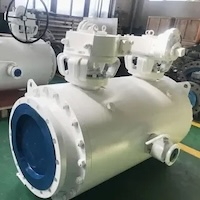
The operating environment of cryogenic valves places stringent demands on material properties, and material selection is directly tied to the safety and reliability of the equipment. Different operating temperatures of various media require careful material selection. For ammonia at −33.4 °C, LCB/LF2 materials are commonly used, and they are also suitable for propane at −45 °C. For lower-temperature media, such as carbon dioxide (below −78.5 °C), ethylene (−104 °C), and LNG, methane, oxygen, and nitrogen (−161 °C to −196 °C), austenitic stainless steel exhibits superior low-temperature performance. As a typical type of cryogenic valve, ball valves require special attention to the selection of materials for internal pressure-bearing components. When the valve body is made of CF8/F304, the ball and valve seat base should be forged from F304. For temperatures below −101 °C, the ball surface must be hardened, which can be accomplished using processes such as nickel-based alloy spray welding, STL alloy overlay welding, or carbide alloy spray welding. Metal-seated valve seat materials follow a specific pairing principle: STL6 with STL21/STL12, Ni60 with Ni55, and tungsten carbide with tungsten carbide. Valve stem materials are selected based on operating conditions, using either ASTM A182 XM-19 or Inconel 718 alloy. ASTM A182 XM-19 is suitable for manual valves and pressures below 900 psi, whereas Inconel 718 is recommended for high-pressure applications or conditions requiring rapid shut-off. The performance of fasteners in low-temperature environments directly impacts the reliability of valve sealing. A full-threaded design is preferred, as it improves tensile ductility at low temperatures and prevents loosening due to material shrinkage. Additionally, full threading increases the effective cross-sectional area, helping to distribute stress and minimize stress concentrations. Chemical composition testing is essential for quality control. While conventional portable spectroscopic analysis can verify the major metallic elements, it is equally important to test for non-metallic elements such as sulfur, phosphorus, and carbon. Excessive levels of these elements can significantly reduce low-temperature impact toughness. Therefore, a full elemental analysis of incoming raw materials is recommended. Ensuring compliance with both metallic and non-metallic element standards is essential to guarantee material quality from the source. A comprehensive record-keeping system for chemical composition testing should be maintained to provide data support for subsequent adjustments to process parameters. Finally, selecting materials for low-temperature valves requires a comprehensive consideration of multiple factors, including the characteristics of the medium, operating temperature, and pressure rating. Once the primary valve body material is selected, materials for internal pressure-bearing components, fasteners, and other supporting parts must be carefully chosen to ensure overall performance compatibility.
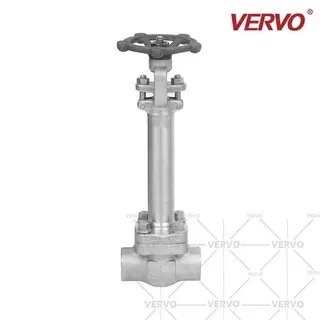
The connection between the valve body and valve cover should preferably use flanges and bolts instead of welding to minimize stress concentrations resulting from differences in thermal expansion coefficients. For example, when using a combination of stainless steel and carbon steel bolts, the difference in cold shrinkage must be calculated and accounted for. Critical components, such as valve seats and valve discs, are best produced as one-piece forged structures to minimize welding or casting defects, including pores and cracks.
An elastic pre-tightening design should be employed to compensate for material shrinkage at low temperatures by increasing the bolt pre-tightening force. For example, low-temperature bolts should be made of 316L stainless steel or Inconel X-750, with a pre-tightening force 15–20% higher than that used at room temperature. A double-sealing system—consisting of a main seal and an auxiliary seal—should be employed to prevent leakage in the event of main seal failure. Furthermore, “dead zones” within the valve cavity should be avoided to prevent the accumulation of liquid. This can be achieved by incorporating drainage holes or pressure relief devices, which also help prevent overpressure resulting from the vaporization of the medium at low temperatures. For example, LNG valves require safety relief devices to ensure safe and reliable operation under cryogenic conditions.
During blanking, spectroscopic analysis and ultrasonic flaw detection are employed to verify the chemical composition and identify internal defects in raw materials. For example, forgings must comply with the ASTM A370 standard, and material pre-treatment should be performed promptly to ensure optimal properties. Austenitic stainless steels require solution treatment—typically water quenching at 1050–1100 °C—to relieve residual stresses from processing and stabilize the microstructure. Nickel-based alloys require stress relief annealing, typically performed by holding at 600–700 °C followed by slow cooling.
The forming process is a critical step in shaping raw materials into valve bodies, valve covers, and other primary components. Forging or casting should be chosen based on material characteristics, with careful control of deformation temperature and rate to prevent internal stress concentrations at low temperatures. For medium- and high-pressure valves, forging is generally preferred. The initial forging temperature should be carefully controlled: 1150–1200 °C for austenitic stainless steels—above the solidus temperature to ensure adequate plasticity—and 1050–1100 °C for nickel-based alloys to prevent grain coarsening. The final forging temperature must be maintained at ≥850 °C for austenitic stainless steel or ≥900 °C for nickel-based alloys to prevent cracking caused by low-temperature deformation. Deformation rates should be carefully controlled, with slow forging at 1–2 mm per second recommended to prevent strain hardening. Subsequent processing involves air cooling to prevent quenching-induced embrittlement, followed by stress relief annealing at 600–650 °C for 4 hours and slow furnace cooling. For small-diameter valves, casting is often preferred. During melting, vacuum induction melting combined with electroslag remelting is employed to reduce gases and inclusions, thereby preventing potential crack initiation at low temperatures. Precision casting should be used, with pouring temperatures carefully controlled to 10–20 °C below the material’s liquidus, in order to prevent cold shuts and shrinkage cavities. After casting, X-ray inspection must be conducted in accordance with GB/T 3323, with Grade I acceptance allowing pores ≤2 mm and no cracks. A hydrostatic test at 1.5 times the nominal pressure is then performed to verify density. To prevent abrupt changes in wall thickness—such as at the junction between the valve body and cover—a tapered transition with a radius of R ≥ 3 times the wall thickness should be employed to minimize stress concentration. For large-diameter valves, a combination of forging and splicing is preferred to reduce casting defects, and all splice welds must undergo 100% radiographic inspection. For copper-based alloys, cooling rates must be carefully controlled to prevent the precipitation of the brittle B phase.
Dimensional accuracy must be strictly controlled. Sealing surfaces should achieve a surface roughness of Ra ≤ 0.8 µm for metal-to-metal seals or Ra ≤ 1.6 µm for soft seals, with flatness not exceeding 0.0005 mm for flat sealing surfaces. Hardfacing treatments are applied to the sealing surfaces. For hard-alloy surfacing, TIG or plasma welding is employed, with preheating to ≥200 °C to prevent cracking of the overlay layer. Slow cooling after welding is required, achieved through furnace cooling or insulation with thermal blankets. Subsequent grinding operations are performed to ensure the required sealing surface finish. Manual or mechanical grinding, for example using a cast-iron grinding disc embedded with diamond abrasives, is used to obtain a metal-to-metal fit clearance of ≤ 0.05 mm.
Appropriate welding methods shall be selected according to the material type. TIG welding is generally preferred, employing argon shielding and low heat input. For repair welding, the filler wire shall match the base material; for example, ER316L is used for 316L stainless steel. Preheating and interpass temperatures shall be strictly controlled. For nickel-based alloys, a preheating temperature of ≥150 °C and an interpass temperature of ≤250 °C are required to prevent precipitation-phase embrittlement. Austenitic stainless steel welding requires an interpass temperature of ≤150 °C to avoid carbide precipitation. Post-weld heat treatment should be applied in a timely manner when required. All welded joints shall undergo radiographic testing (RT) and penetrant testing (PT). In addition, hardness testing is required for nickel-based alloy welds to ensure structural integrity and performance.
Stress relief annealing shall be applied. Valves that have undergone welding or cold working should be uniformly heated to 600–650 °C for austenitic stainless steel or 500–550 °C for nickel-based alloys, held for 4–6 hours, and then cooled slowly. For certain high-precision valves, deep cryogenic treatment can also be performed. This treatment involves exposing the valve to −196 °C for 2–4 hours to relieve residual stresses, stabilize dimensions, and reduce shrinkage at low temperatures, thereby enhancing dimensional stability and overall performance.
External surfaces should be reinforced and protected. For stainless steel valves, passivation using a nitric acid–hydrofluoric acid mixture is required to enhance corrosion resistance. Copper-alloy valves should be protected with anti-oxidation coatings, such as molybdenum disulfide. Internal surface cleaning is equally important. All flow passages should be thoroughly purged with compressed air to remove iron filings, welding slag, and other debris, thereby reducing the risk of blockage or damage to the sealing surfaces during low-temperature operation.
In addition to using high-performance materials and implementing scientifically sound structural designs, cryogenic valves—typically ball valves used in the LNG industry—require stringent quality control during assembly. Beyond material and structural considerations, strict attention must be paid to component cleanliness, as impurities can severely affect valve performance. Cryogenic valves operate with ultra-low-temperature media, including LNG, liquid nitrogen, and liquid oxygen. Contaminants such as water or oil can freeze, forming ice that interferes with valve torque, reduces control accuracy during opening and closing, and may damage sealing surfaces, potentially causing leakage. Therefore, thorough cleaning of all components is a critical first step in the valve assembly process. During assembly, technicians must use specialized cleaning tools to ensure that all external and internal components, particularly metal parts, are thoroughly cleaned. Ultrasonic cleaning with a specialized cleaning agent is recommended, as the cavitation effect penetrates gaps and cavities to remove oil residues, rust, and metal debris accumulated during manufacturing. After cleaning, components should be carefully inspected to ensure they are free of impurities, and then dried using clean nitrogen gas. This prevents residual moisture that could freeze and form ice during valve operation at cryogenic temperatures.
In cryogenic valve assembly, the installation of the accumulator ring (lip seal) is one of the most challenging tasks. As a critical component for reliable sealing, improper installation of the accumulator ring can severely compromise the valve’s overall sealing performance and service life. According to technical specifications, the surface roughness of both mating surfaces of the accumulator ring must not exceed 0.2 µm, and their coaxiality must be strictly maintained to ensure proper sealing performance. The accumulator ring, consisting primarily of an O-ring and a metal spring, undergoes dimensional and mechanical changes at cryogenic temperatures, which can complicate smooth installation. To facilitate assembly, the valve seat design and machining are optimized. A chamfer with an angle of 15°–20° and a length of 5–10 cm is typically applied, with specific dimensions adjusted according to the available installation space.
Where space permits, the maximum dimensions are preferred. Appropriate fillets are added to create a smooth transition between chamfer edges, preventing damage to the accumulator ring during installation. To compensate for the increase in the spring’s outer diameter after assembly and to prevent uneven stress distribution within the valve cavity, the guide angle at the valve body inlet is carefully optimized. Using appropriate tooling, the base and valve seat are positioned flat on a workbench. A guide sleeve and pressure plate are then used to accurately align the accumulator ring at the valve seat inlet. By controlling the gap between the guide sleeve and the valve seat and applying external force with a pull rod, the accumulator ring can be smoothly guided to the outer edge of the valve seat. The machining accuracy of the valve seat and the clearance between the guide sleeve and valve seat are strictly controlled to ensure the correct compression and interference fit of the accumulator ring, thereby minimizing the risk of damage during assembly. After assembly, the valve’s sealing performance is verified. If any leakage is detected, further adjustments are made to ensure full compliance with sealing requirements.
The cryogenic impact test is primarily used to assess the low-temperature toughness of materials, ensuring that components resist fracture due to cold brittleness. Standard V-notch impact specimens measuring 55 mm × 10 mm, with a notch depth of 2 mm, are used. Specimens are taken from the heat-affected zone or base material of critical pressure-bearing components, including the valve body, valve cover, and valve stem. The test temperature is chosen based on the valve’s operating conditions and must encompass the lowest expected service temperature. Testing is conducted in accordance with material standards: austenitic stainless steel specimens must exhibit an impact energy of ≥27 J at −196 °C, whereas nickel-based alloys must achieve ≥20 J at −269 °C. If the average impact energy of three specimens falls below the specified standard, or if any individual specimen registers less than 70% of the average, the material’s low-temperature toughness is deemed inadequate. In such cases, the material selection or heat treatment process must be adjusted to ensure compliance with cryogenic performance requirements.
The low-temperature cycling test simulates frequent valve opening and closing under cryogenic conditions to evaluate sealing surface wear, dimensional changes from cold shrinkage, and structural fatigue life. During the pre-cooling stage, the valve is fully immersed in the cryogenic medium and held for 2–4 hours to ensure a uniform low-temperature state throughout the component. During cyclic operation, the valve is actuated by an electric actuator at a frequency of 1–5 cycles per minute. The total number of cycles depends on service requirements; for example, LNG valves typically undergo 10–20 cycles, whereas liquid hydrogen valves require more than 50 cycles. Intermediate inspections are performed every five cycles to evaluate sealing leakage, operating torque, and the condition of components.
The key monitored indicators include:
Leakage Rate: In the fully closed state, the medium leakage rate must not exceed 0.01% of the nominal diameter, in accordance with ISO 28921. For toxic or flammable media, the leakage rate must be ≤1 × 10⁻³ mbar·L/s.
Operating Torque: The maximum operating torque at low temperatures must not exceed 1.2 times the rated torque to prevent actuator overload or jamming of transmission components.
Structural Integrity: No surface cracks should be detected by magnetic particle or penetrant testing, and no internal defect propagation should be observed using ultrasonic testing after cycling.
The cold shrinkage test evaluates dimensional changes in critical valve components at low temperatures to ensure proper assembly clearances and operational flexibility. Key areas include the fit between the valve stem and packing gland, as well as the clearances between flanges and bolts.
A standard marking-and-measuring method is typically employed in practice: key valve dimensions are first recorded at ambient temperature. The valve is then immersed in a cryogenic medium for two hours until thermal equilibrium is achieved, after which the dimensions are re-measured. The evaluation focuses primarily on:
Valve Stem-to-Packing Gland Clearance: The actual clearance at cryogenic temperatures must be at least 80% of the design clearance (specified at room temperature) to prevent seizure due to excessive component shrinkage.
Flange-to-Bolt Clearance: The clearance at cryogenic temperature must be maintained within 0.1 mm to prevent leakage, which could result from bolt loosening under differential thermal contraction.
If the measured shrinkage exceeds the allowable design limits, the material selection or structural design shall be revised accordingly.
The test evaluates the valve's overpressure resistance and sealing reliability under cryogenic conditions, including its performance during phase changes of the medium, such as LNG vaporization or LOX evaporation.
During the test, the valve is housed within a sealed container containing the liquid medium, to simulate internal vaporization conditions.
The container pressure is precisely controlled, and the valve is monitored over a 24-hour period to evaluate whether internal overpressure leads to deformation or leakage.
Key evaluation parameters include:
Valve Body Deformation: The body shall exhibit no permanent deformation. Measured ellipticity shall not exceed 1% of the nominal diameter.
Sealing Performance: No leakage is permissible. The leakage rate shall be ≤ 0.01% of the nominal diameter.
If leakage or deformation is observed during testing, the design must be reviewed and revised. This may involve optimizing the drain hole geometry or incorporating a pressure relief valve.
In summary, the cryogenic valve manufacturing process centers on four critical aspects: ensuring material toughness at low temperatures, designing for thermal contraction resistance, controlling precision machining and welding, and conducting comprehensive cryogenic validation throughout the entire process.
Manufactured valves shall comply with all relevant standards, including GB/T 24925 "Cryogenic Valves," as well as applicable ASME codes and ASME B31.3 "Process Piping."
Rigorous testing under ultra-low-temperature conditions validates the safety, reliability, and long-term performance of cryogenic valves.
Previous: Development of a Hand-Operated Check Valve for Heavy Water Reactor Nuclear Power Plants
Next: Development of Low-Temperature High-Manganese Steel for Cryogenic Valves