Development of a Hand-Operated Check Valve for Heavy Water Reactor Nuclear Power Plants
Abstract: This study focuses on the development of a hand-operated check valve for the first-stage system of a heavy water reactor nuclear power plant. The work emphasizes the valve’s structural design, hand-operating mechanism, floating pre-loaded packing structure, and valve position indication mechanism. Through a combination of theoretical analysis and experimental validation, a novel hand-operated check valve was successfully developed. The valve features a simple structure, easy operation, and reliable sealing performance, effectively overcoming the limitations of conventional check valves in first-stage systems of heavy water reactor nuclear power plants. Experimental results demonstrate that the developed valve satisfies the operational requirements of first-stage systems and exhibits strong potential for practical application. This study provides a valuable reference for the design and development of similar valve products. In the nuclear energy sector, safety and reliability are of paramount importance. Heavy water reactors, as a major nuclear power generation technology, require rigorous design and verification of all critical components. As a key component of the first-stage system in a heavy water reactor nuclear power plant, the hand-operated check valve plays a vital role in preventing reverse flow of the working medium. Its operational stability and reliability directly affect the safe operation of the reactor. Therefore, in-depth research on the development of a first-stage hand-operated check valve for heavy water reactor systems is not only of theoretical significance but also of considerable practical value. This study focuses on the development process of the valve, outlining its design principles, technical challenges, and corresponding solutions, with the goal of providing a technical reference for the development of similar valves.
The development of the hand-operated check valve for heavy water reactors is part of the Nuclear Power Equipment Capacity Enhancement Project, organized by the National Energy Administration and implemented by the State Power Investment Corporation. This project focuses on developing a hand-operated check valve for the Qinshan heavy water reactor, designed to replace similar imported products previously supplied by VELAN. The goal is to ensure that the domestically developed valve fully meets the technical and operational requirements of heavy water reactor nuclear power units, thereby achieving localization of this critical nuclear equipment. The hand-operated check valve is installed in the emergency core cooling system (ECCS) of heavy water reactor units. Under normal operating conditions, the associated pipeline remains static, and the valve stays closed. When the emergency core cooling system is activated, the hand-operated check valve permits the working medium to flow into the affected loop. Simultaneously, valves not involved in the injection process remain closed to prevent unintended system depressurization, ensuring the safe and controlled operation of the ECCS.
The key technical parameters and performance indicators of the first-stage hand-operated check valve developed in this study are summarized in Table 1. The valve is a swing-type check valve with a Safety Class 1 rating, designed and manufactured in accordance with ASME BPVC Section III, Division 1, Subsection NB. It is engineered for a service life of up to 40 years. The valve has a nominal size of DN 300 with a pressure rating of Class 1000 lb, a design pressure of 12.89 MPa, and a design temperature of 316 °C. The valve body is made of carbon steel, with butt-welded end connections to seamless S-100/ASME SA-106 Grade C steel pipes, conforming to ASME B36.10M standards. When fully open, the valve has a minimum flow coefficient Cv of 4000, indicating excellent flow capacity. To ensure stability and durability under high-temperature and high-pressure conditions, a soft-seat design is not used. The seat leakage rate is limited to 0.08 cm³·h⁻¹·mm⁻¹, with leakage allowed only in the reverse direction, effectively preventing backflow. The valve is designed to handle light water and heavy water (D₂O) as the operating media, meeting the specific requirements of heavy water reactor nuclear power plants. In addition, the valve demonstrates excellent seismic performance, with a seismic classification of DBE Category B and a maximum acceleration capacity of 4.5 g in three orthogonal directions, ensuring safe operation under extreme seismic conditions. Detailed parameters are listed in Table 1.
Table 1. Main Technical Parameters and Performance Indicators of the Valve
Item | Specification |
Valve type | Swing check valve |
Safety class | Safety Class 1 |
Construction standard | ASME BPVC Section III, Division 1, Subsection NB |
Design life | 40 years |
Nominal size | DN 300 |
Pressure rating | Class 1000 lb |
Design pressure | 12.89 MPa(g) |
Design temperature | 316 °C |
Body material | Carbon steel |
End connection | Butt-weld |
Connecting pipe (schedule / material) | Sch 100, ASME SA-106 Grade C, seamless pipe, ASME B36.10M |
Minimum flow coefficient at full open | C<sub>v</sub> ≥ 4000 |
Soft seat | Not provided |
Seat leakage rate | ≤ 0.08 cm³·h⁻¹·mm⁻¹ |
Seat leakage direction | Reverse direction only |
Operating medium | Light water, heavy water (D₂O) |
Minimum closing differential pressure | 0.58 MPa(g) |
Seismic qualification category | DBE Category B |
Seismic acceleration level | 4.5 g (three orthogonal directions) |
Structural design constitutes a critical phase in the valve development process. The overall valve configuration was developed in accordance with ASME BPVC Section III, Division 1, Subsection NB, ensuring full compliance with Safety Class 1 requirements. Carbon steel was chosen for the valve body to ensure reliable performance under high-pressure and high-temperature conditions. During the design phase, three-dimensional (3D) modeling and simulation technology (Figure 1) was extensively used to accurately model individual valve components and to simulate their behavior under various operating conditions. This approach ensured that the structural design was rational, complete, and reliable. The handle-operating mechanism was designed to prioritize ease of operation and mechanical stability. Optimizing the handle’s geometry and dimensions effectively reduced the required operating torque, thereby enhancing operational efficiency. In addition, a precision transmission mechanism was incorporated to ensure precise synchronization between handle movement and the valve’s opening and closing actions. To overcome the leakage issues commonly seen in conventional packing seals, a floating preloaded packing mechanism was adopted. This design enables automatic compensation for clearance variations between the packing and the valve stem, thereby maintaining reliable sealing performance under varying operating conditions. High-performance packing materials with excellent wear and corrosion resistance were selected to further extend the service life. The valve position indication system was designed to provide accurate and intuitive feedback. Magnetic or mechanical indication methods were employed to display the valve’s real-time open or closed status. This feature enhances operational convenience and effectively reduces the risk of misoperation. From a design methodology perspective, the valve’s structural design integrates principles of fluid dynamics, material mechanics, and structural mechanics. Through detailed calculations and analyses, key technical parameters—such as design pressure, design temperature, and nominal dimensions—were determined. Based on experimental validation and engineering experience, the valve structure was continuously refined and optimized to ensure reliable performance in the first-stage system of a heavy-water reactor core. The adoption of the floating preloaded packing mechanism and the improved valve position indication system significantly enhanced sealing performance and operational reliability. Moreover, the use of high-performance materials enhanced resistance to corrosion and wear. Through a combination of 3D simulation and experimental verification, the valve structure was comprehensively optimized, resulting in improved overall performance and long-term reliability.
In this study, the structure of the hand-operated check valve was analyzed using three-dimensional (3D) modeling techniques, incorporating fluid dynamic analysis and seismic simulation, as shown in Figure 1. Based on the optimized design, a prototype valve was subsequently manufactured for functional verification, as shown in Figure 2. To evaluate and verify the flow capacity of the hand-operated check valve, FLUENT computational fluid dynamics (CFD) software was used to perform flow-field analysis. In the simulation, the inlet was defined as a velocity inlet with a velocity of 5 m/s, while the outlet was specified as a pressure outlet with a pressure of 0 MPa. By extracting the average static pressures at the inlet and outlet cross-sections of the valve model, the pressure drop across the valve was calculated to be 9,632.9 Pa. In addition to numerical simulation, the minimum flow coefficient under fully open conditions was determined through independent performance testing conducted by the Shanghai Instrument & Meter Automation System Testing Institute Co., Ltd., providing experimental validation of the valve’s flow performance.
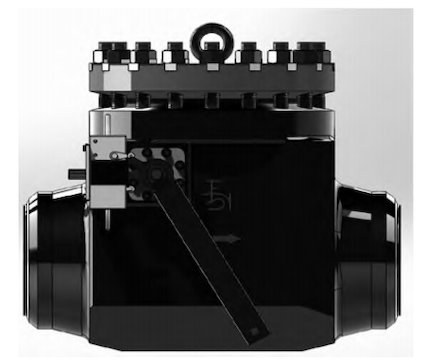
Figure 1: 3D Simulation Diagram of the Valve
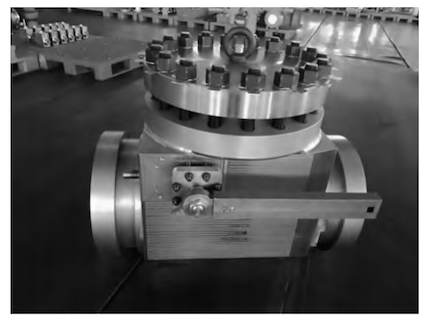
Figure 2 Prototype of the Hand-Operated Check Valve
The results of three minimum fully open flow tests are summarized in Table 2.
Test No. | Flow Rate (m³/h) | Differential Pressure (Pa) |
First test | 1206.792 | 10,577.63 |
Second test | 1194.480 | 10,313.81 |
Third test | 1199.070 | 10,435.31 |
According to the flow coefficient calculation method specified in Section 7.3.2 of GB/T 30832—2014, Test Method for Flow Coefficient and Flow Resistance Coefficient of Valves, the valve’s flow coefficient can be determined. The calculation procedure is described as follows.
Relevant flow data were analyzed using FLUENT software. The valve flow coefficient C0C_0C0 was calculated using the following expression:

where
Q is the volumetric flow rate.
ΔP is the differential pressure across the valve, and
ρ is the fluid density.
By substituting the experimental and simulation data into Equation (1), the valve flow coefficient was determined.
The results indicate that the Cv value calculated from the FLUENT simulation is highly consistent with that obtained from the physical flow tests. Both values significantly exceed the design requirement of 4000, confirming the excellent flow performance of the hand-operated check valve developed in this study.
From CFD analysis, the calculated flow coefficient was:
Cv=4217
During the physical flow tests, the flow coefficient was calculated using the same formula. The experimentally determined flow coefficient was:
Cv=4280
The close agreement between numerical simulation and experimental testing further confirms the reliability of the valve design and the accuracy of the analytical method.
In addition to evaluating flow performance, detailed seismic simulations and verifications were conducted. Dynamic analyses of the check valve were performed using the ANSYS Workbench platform to simulate its structural response under various seismic acceleration levels. The analysis results indicate that, under DBE Class B seismic acceleration conditions, stresses in all critical valve components remained within allowable limits, with no significant deformation or structural damage observed. This demonstrates that the valve possesses satisfactory seismic resistance and maintains structural integrity.
Finite Element Modeling and Mesh Independence Verification
For further structural analysis, the three-dimensional geometric model of the check valve was imported into ANSYS Workbench for finite element meshing. Components such as the valve body, seat, disc, bushing, rocker arm, and cover are prone to stress concentration under actual operating conditions. Therefore, regions with geometric discontinuities and potential stress concentrations were locally refined to ensure accurate stress-wave transmission. To ensure computational accuracy, a mesh independence study was conducted. The mesh was considered adequate when further refinement produced negligible changes in the calculation results. Following verification, the final finite element model consisted of 199,195 elements and 366,564 nodes, as shown in Figure 3.
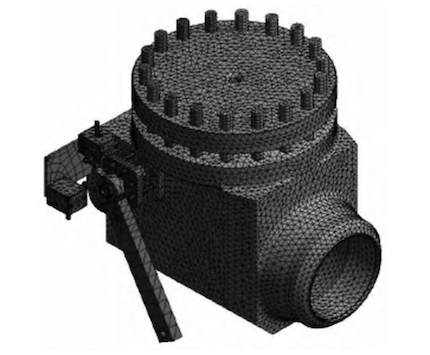
Figure 3 Finite Element Mesh Model of the Valve
Modal Analysis
Modal analysis was performed using ANSYS software to determine the natural frequencies of the check valve. The first three natural frequencies were identified. The first natural frequency is 44.58 Hz, exceeding 33 Hz, indicating that the valve can be considered a rigid structure. Therefore, seismic analysis using the equivalent static method is applicable.
Mode Order | Natural Frequency (Hz) | Mode Description |
1 | 44.58 | Handle vibration in horizontal X-direction |
2 | 76.56 | Handle vibration in horizontal Z-direction |
3 | 90.65 | Limiter vibration |
When manual operation is not needed, the handle can be detached from the handle seat. This design ensures that the handle does not impose any additional load on the valve during automatic opening caused by pressure differentials between the upstream and downstream sides. When manual operation is required, the handle can be easily inserted into the handle seat and secured with an Allen screw, enabling quick and convenient engagement. This detachable handle design offers operational flexibility while ensuring reliable mechanical transmission. Considering the valve’s maximum design temperature of 316 °C, the handle structure is designed to minimize heat transfer from the valve body. This effectively limits heat transfer to the handle during prolonged exposure, thereby reducing the risk of operator burns and enhancing operational safety.
A spacer ring and packing set are installed in the stuffing box. The packing is made of a 316L stainless steel–reinforced flexible graphite composite, providing mechanical support while maintaining excellent sealing performance, thermal stability, and self-lubricating properties under high-temperature operating conditions. A floating preloaded packing mechanism is arranged at the stem bearing interface, as shown in Figures 4 and 5. Specifically, a disc spring (Belleville washer) assembly is installed beneath the packing follower. This spring assembly automatically compensates for packing deformation caused by thermal expansion, long-term relaxation, and variations in stud preload, thereby ensuring stable sealing performance over extended service periods. Simultaneously, the packing sleeve and packing follower are guided by controlled clearances to prevent eccentric loading of the packing follower during tightening, ensuring uniform compression of the packing.
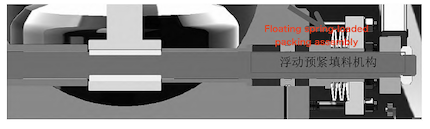
Figure 4 3D sectional view of the floating pre-tightening packing mechanism
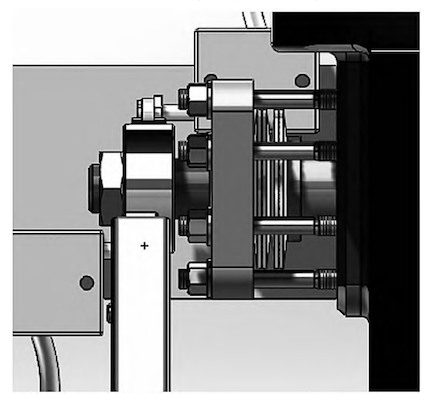
Figure 5 Schematic diagram of the floating pre-tightening packing mechanism
In this design, the floating preloaded packing mechanism provides reliable sealing during normal operation without introducing excessive frictional resistance. Consequently, selecting an appropriate tightening torque for the packing studs is critical. Only the minimum preloaded force required to achieve the necessary packing contact pressure should be applied. The torque selection methods used for valve flange bolting—such as calculating preload based on stud strength classes (e.g., API 6A Table H.1 for inch threads) or applying the formulas in Appendix K-1 of ASME PCC-1—must not be used for tightening the packing studs.
Excessive tightening torque can cause excessive friction, potentially leading to valve stem jamming during opening and closing and preventing proper valve reset and closure. Conversely, insufficient tightening torque can cause packing leakage under low-pressure conditions, failing to meet the minimum required closing differential pressure of 0.58 MPa (g). To address this issue, a gas-tightness test method was proposed and implemented. In this test, compressed air is introduced at the valve outlet and pressurized to 0.58 MPa (g), while the valve inlet is sealed with a blind flange. The entire valve assembly is then immersed in water, as shown in Figure 6. The packing nut is gradually tightened until no air bubbles are observed in the packing area or at the drain connection. Subsequently, the valve is repeatedly opened and closed while submerged to verify the stability of the packing seal, and the corresponding tightening torque of the packing nut is recorded. The results of the floating preloaded packing test demonstrate that, under a test pressure of 0.58 MPa (g), no leakage occurred at the packing or drain connection. After multiple opening and closing cycles, the packing seal remained stable, and the tightening torque stayed within a reasonable range, ensuring effective sealing performance and smooth valve operation without jamming. These test results confirm the effectiveness, soundness, and reliability of the floating preloaded packing mechanism. This design provides robust technical support for the stable and safe operation of the valve in the emergency core cooling system of heavy-water reactor nuclear power units and serves as a valuable reference for subsequent valve manufacturing and applications.
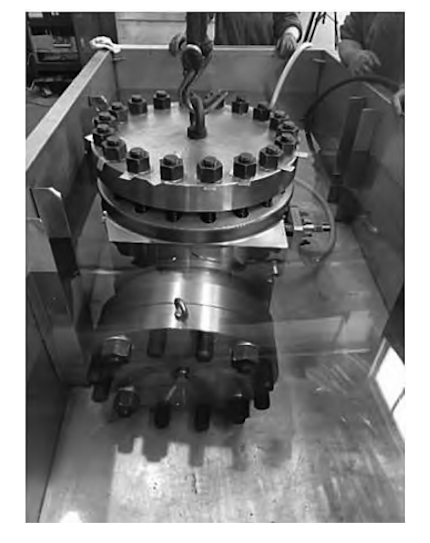
Figure 6 Floating pre-tightening packing test setup
A mechanical swing-arm limit switch, manufactured by a reputable domestic supplier, was selected as the valve position indicator. The limit switch is K1-qualified, meeting the environmental and functional reliability requirements for nuclear power applications. The installation location of the limit switch and the protrusion position of the handle seat were determined through analytical calculations and three-dimensional modeling, enabling accurate indication of the valve’s fully open and fully closed positions, as shown in Figure 7. During assembly and commissioning, the limit switch can be finely adjusted to ensure precise alignment between the valve’s mechanical position and the corresponding electrical indication signals. The valve handle operating mechanism and the valve position indication mechanism operate in coordination, enabling operators to manually verify valve operability and confirm the accuracy of position indications at both the fully open and fully closed states during plant operation.
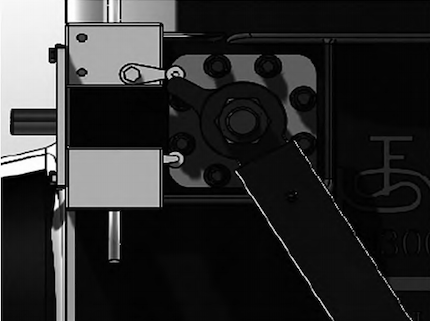
Figure 7 Valve position indication mechanism
As shown in Figure 7, the valve position indication mechanism is designed with full consideration of both operational convenience and indication accuracy. In practice, operators can quickly and reliably check the valve’s status by observing the mechanical swing-arm limit switch. The mechanism demonstrates high reliability and operational stability, maintaining accurate performance under the harsh operating conditions typical of nuclear power plants, thereby contributing to overall plant safety. To ensure the accuracy and long-term reliability of the valve position indication mechanism, strict quality control measures and advanced manufacturing processes were applied throughout the design and fabrication stages. All critical components were precision-machined and subjected to rigorous inspections to verify their dimensional accuracy and functional performance. In addition, the position indication mechanism underwent comprehensive functional testing and validation to ensure reliable operation under a range of operating conditions.
In summary, this study developed a hand-operated check valve for the first-stage system of a heavy-water reactor core, achieving significant advances in structural design, material selection, and performance optimization. Using 3D simulation and experimental validation, the valve’s key technical parameters and performance indicators were thoroughly analyzed and confirmed, demonstrating compliance with the stringent requirements of the first-stage reactor system. The incorporation of a novel floating preloaded packing mechanism and a precise valve position indication mechanism effectively improved sealing performance and operational convenience. Simultaneously, optimization of the handle operating mechanism and transmission system reduced the operating torque, enhancing operational efficiency. In terms of material selection, high-performance materials were employed to improve corrosion and wear resistance, thereby extending the valve’s service life. With regard to seismic performance, detailed simulations and experimental verifications were conducted. The results demonstrate that the designed check valve performs reliably under DBE Class B seismic conditions, with all critical components remaining within allowable stress limits and exhibiting no significant deformation or damage.