Cryogenic Instrument Valve Design for LNG Receiving Terminals
In LNG receiving terminals, the process medium exists at ultra-low temperatures below −160 °C. Compared with conventional instrument control valves, cryogenic valves used in LNG service are subject to significantly more stringent technical requirements. Due to the ultra-low operating temperature of LNG and its flammable and explosive nature, stringent requirements are imposed on valve type selection, valve body structure, valve seat and bonnet design, sealing mechanisms, material selection, and fire-safe performance. Based on relevant domestic and international standards and practical engineering experience, this paper summarizes and discusses the key considerations for the selection and design of cryogenic instrument control valves used in LNG receiving terminals, providing a technical reference for related engineering applications.
In recent years, driven by the global transition toward a low-carbon energy structure, liquefied natural gas (LNG), as an efficient and relatively clean fossil energy source, has played an increasingly important role in replacing traditional coal- and oil-based energy. With growing global demand for low-carbon energy and rising energy prices worldwide, the LNG market continues to expand steadily. Against this backdrop, the safety and reliability of LNG receiving terminals, which serve as critical hubs in the energy supply chain, have become a major focus of industry attention. As key control components within LNG process systems, cryogenic instrument control valves are required to operate reliably over extended periods under extremely low-temperature conditions. Their performance directly influences process control accuracy, equipment safety, and overall operational efficiency. Compared with valves operating at ambient temperatures, cryogenic control valves impose more demanding requirements on material selection, structural design, sealing technology, fire-safe performance, and inspection and testing procedures. Consequently, these factors must be given special consideration during the valve selection and design process.
Liquefied natural gas (LNG) is a hydrocarbon mixture composed primarily of methane, with smaller amounts of ethane, propane, nitrogen, and trace quantities of heavier hydrocarbons. The exact composition of LNG varies depending on the gas source and processing conditions. Table 1 presents representative compositions of two LNG samples.
Table 1. Typical LNG Compositions (mol%)
Component | LNG Sample 1 | LNG Sample 2 |
Nitrogen (N₂) | 0.8000 | 0.6878 |
Carbon dioxide (CO₂) | 0.0059 | 0.0058 |
Methane (CH₄) | 91.2167 | 87.3131 |
Ethane (C₂H₆) | 6.6711 | 8.3783 |
Propane (C₃H₈) | 0.8977 | 2.6307 |
Isobutane (i-C₄H₁₀) | 0.1153 | 0.3450 |
n-Butane (n-C₄H₁₀) | 0.1369 | 0.4881 |
Isopentane (i-C₅H₁₂) | 0.1399 | 0.1350 |
n-Pentane (n-C₅H₁₂) | 0.0165 | 0.0162 |
Hexane (C₆H₁₄) | 0.0000 | 0.0001 |
The density of LNG depends on its composition and typically ranges from 430 to 480 kg/m³, with variations influenced by temperature. LNG exists at ultra-low temperatures, with a boiling point of approximately −160 °C at atmospheric pressure, depending on its composition. It is typically stored in low-pressure tanks, making it highly volatile. Any heat entering the storage tank will cause a portion of the LNG to vaporize, generating boil-off gas (BOG), which is primarily composed of methane, with minor amounts of nitrogen and trace quantities of ethane. LNG is also prone to flash vaporization. For instance, when it passes through a control valve, flash vaporization can occur if the downstream pressure drops below the saturated vapor pressure. Owing to its ultra-low temperature and the endothermic nature of vaporization, LNG can cause the surfaces of pipelines and equipment to drop to extremely low temperatures. In poorly insulated areas, atmospheric moisture may condense or freeze on equipment surfaces. Direct contact with cryogenic LNG or supercooled surfaces can cause severe frostbite, and condensation or icing may also damage equipment.
LNG is a flammable and hazardous substance. In the event of a leak, the liquid quickly absorbs heat, vaporizes, and mixes with air, and if the vapor concentration reaches approximately 5%–15% by volume, ignition and explosion may occur. LNG fires are characterized by rapid flame propagation, high mass burning rates—reaching up to 0.106 kg/(m²·s) on land and 0.258 kg/(m²·s) on water, roughly twice that of gasoline—high flame temperatures, and intense radiant heat. LNG fires tend to spread rapidly over large areas, are prone to reignition and secondary explosions, and are difficult to extinguish. Therefore, effective fire prevention and protection measures are essential in the design of LNG facilities.
In China, LNG is primarily imported, so most LNG facilities function as receiving terminals. A typical LNG receiving terminal primarily comprises LNG carriers, unloading terminals, storage tanks, boil-off gas (BOG) compressors, recondenser systems, LNG truck loading facilities, vaporizers, metering stations, and export pipelines (Figure 1). LNG receiving terminals typically use fully enclosed, concrete-roofed storage tanks featuring a double-containment design, consisting of an inner tank and an outer tank. The inner tank is usually made of 9% nickel steel to ensure sufficient strength and toughness at cryogenic temperatures, while the outer tank is constructed from reinforced concrete to provide structural support and secondary containment. During storage, a portion of LNG inevitably vaporizes, producing boil-off gas (BOG). The BOG is compressed to a designated pressure by a BOG compressor and then reliquefied in a recondenser before being returned to the LNG storage system. Natural gas (NG) is generated by vaporizing LNG in vaporizers and is subsequently transported downstream after measurement at the metering station.
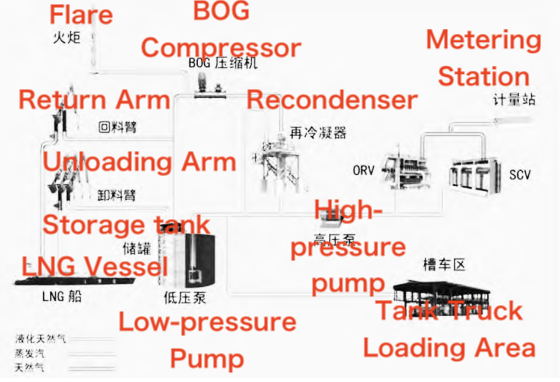
Figure 1 Schematic diagram of the LNG receiving station process
Instrument valves in LNG receiving terminals are primarily cryogenic valves intended for liquid LNG and boil-off gas (BOG) service. Due to the ultra-low temperatures, flammability, and inherent safety hazards of LNG, these valves require specialized design considerations across multiple aspects, including structural design, material selection, sealing mechanisms, and testing procedures. For cryogenic valves, the Chinese national standard GB/T 24925 is commonly applied. This standard specifies detailed requirements for terminology, structural design, technical performance, and inspection and testing procedures for cryogenic valves. Internationally, BS 6364 is a widely recognized standard for the testing and qualification of cryogenic valves, providing detailed requirements for design, manufacturing, performance testing, and inspection under cryogenic conditions. Additionally, ISO 28921-1, issued by the International Organization for Standardization (ISO), defines the general requirements for the design, manufacture, and testing of cryogenic valves. Within the European Union, EN 12567 is the applicable standard for cryogenic valves in LNG applications, specifying technical requirements for materials, pressure ratings, structural design, and performance verification. Adherence to these domestic and international standards provides the essential foundation for ensuring the safety, reliability, and long-term stable operation of instrument control valves in LNG receiving terminals.
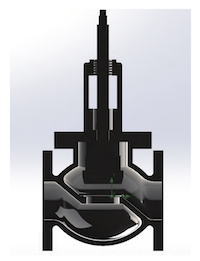
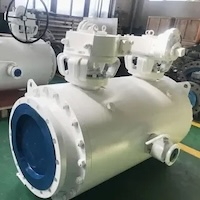
Taking into account the specific service requirements, desired control performance, and cost considerations of LNG applications, globe valves and butterfly valves are commonly chosen for control duties in LNG receiving terminals. Globe valves offer excellent throttling capabilities and precise control, making them well suited for LNG service. However, their flow capacity is relatively limited, and their design is more complex. For large-diameter applications, globe valves also involve significantly higher manufacturing costs and greater installation weight. In contrast, butterfly valves have a simpler design, higher flow capacity, and lower cost, making them ideal for large-diameter, high-flow control applications. Consequently, they are widely used where both performance and cost efficiency are important. For isolation service, either ball valves or butterfly valves are commonly used. Ball valves provide excellent sealing and reliable leak-tight performance. However, because of their more complex design, large-diameter ball valves tend to be relatively expensive. For cost-effective solutions, butterfly valves are often chosen for large-diameter isolation applications. For LNG applications requiring strict leakage control, triple-eccentric butterfly valves with metal-to-metal seats, which provide superior sealing reliability, are commonly used for isolation service.
Valves in LNG applications can be connected to pipelines using either flanged or welded joints. While flanged connections simplify installation and maintenance, the ultra-low temperatures and highly flammable nature of LNG make leakage a significant concern. To minimize the risk of external leakage, welded connections are increasingly favored in LNG receiving terminals, especially for critical service valves. Furthermore, to reduce potential leak points, one-piece valve bodies are often used, with the valve directly butt-welded to the pipeline. This approach effectively reduces the number of sealing interfaces, thereby improving the overall safety and reliability of the LNG process system.
Materials for LNG service valves must maintain sufficient mechanical strength at cryogenic temperatures. Austenitic stainless steels, especially AISI 304 and 316 grades, are commonly used for valve bodies and main pressure-containing components. These materials offer excellent toughness, high structural stability, and strong mechanical performance at ultra-low temperatures, without suffering from cold brittleness, making them ideal for cryogenic LNG applications. However, austenitic stainless steels may experience microstructural changes and redistribution of residual stresses during their initial exposure to cryogenic temperatures. This initial cooling can result in slight permanent dimensional changes in valve components, potentially affecting component fit and sealing performance. To mitigate these effects, cryogenic treatment is commonly applied after machining and forming.
Cryogenic treatment typically involves cooling the valve components to around –196 °C using liquid nitrogen, holding them at this temperature for a specified period, and then allowing them to gradually return to ambient temperature. This process stabilizes the material’s microstructure, relieves residual stresses, and enhances dimensional stability. Additionally, the valve body design must accommodate thermal contraction and expansion resulting from temperature fluctuations during operation. Careful structural design and appropriate material selection are crucial to minimizing the impact of thermal cycling on sealing performance and ensuring the long-term reliability of cryogenic valves. After cryogenic treatment, valve components experience significantly less deformation during subsequent exposure to cryogenic temperatures, thereby improving sealing integrity and operational stability in LNG service.
Cryogenic valves are typically designed with an extended bonnet (neck) to allow for thermal insulation and to thermally isolate critical components from ultra-low-temperature service, in accordance with the applicable operating temperature requirements (Figure 2). The length of the extended bonnet shall be sufficient to provide the required vapor space and to ensure that the operating temperatures of the packing gland and actuator remain within their allowable service limits.
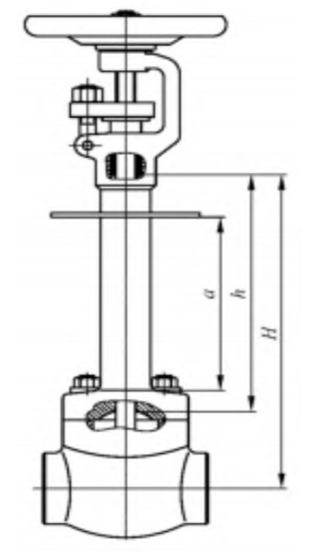
Figure 2 Schematic diagram of extended bonnet structure
In LNG service, the valve stem is exposed to cryogenic temperatures, resulting in condensation and frost formation on its surface. Condensed moisture can migrate downward along the interface between the insulation and the valve bonnet, enter the insulation system, and subsequently refreeze within gaps in the insulation material. This phenomenon reduces thermal insulation effectiveness and may adversely affect the structural integrity of the insulation system, potentially resulting in insulation failure. To mitigate this issue, a drip pan (condensate tray) should be installed on the extended bonnet. The drip pan intercepts condensed moisture and prevents it from entering the insulation layer, thereby avoiding ice formation within the insulation system and ensuring long-term insulation performance and valve reliability.
Emergency shut-off valves (ESDVs) used for isolation service must meet stringent fire-resistance (fire-safe) requirements. In LNG applications, fire-safe design is particularly critical for ball valves that incorporate non-metallic sealing materials. Ball valves with soft (non-metallic) seats typically provide superior sealing performance and lower leakage rates under normal operating conditions. However, non-metallic sealing materials are susceptible to degradation or melting at elevated temperatures and therefore cannot, on their own, satisfy fire-resistance requirements. To overcome this limitation, a metal–soft seat composite sealing design is widely employed. In this configuration, the metal sealing components are typically made of austenitic stainless steel, such as AISI 316L, while the soft sealing elements are constructed from cryogenically compatible fluoroplastics, such as polychlorotrifluoroethylene (PCTFE). This design ensures reliable sealing performance under LNG cryogenic conditions. Under normal operating conditions, the soft sealing ring ensures tight sealing by maintaining close contact with the valve seat. In the event of a fire, the non-metallic sealing material degrades or melts, allowing the backup metal sealing surface to engage the valve seat under the force of internal pressure. This pressure-assisted metal-to-metal contact forms a secondary hard seal, thereby preserving sealing integrity and preventing catastrophic leakage during fire exposure. For butterfly valves, an all-metal hard-sealing design is typically employed, which inherently meets fire-resistance requirements and is well suited for LNG emergency isolation applications.
Because LNG is highly flammable and explosive, valves with non-metallic seats must incorporate anti-static features to prevent ignition from electrostatic discharge. During operation, friction between non-metallic components—such as the ball and seat in a soft-seated ball valve—can generate static electricity. Due to the clearances between the valve stem, ball, and body, this static charge may not dissipate naturally, allowing electrostatic energy to accumulate. To ensure effective dissipation of static electricity, the valve design must provide electrical continuity between the ball (or other closure element), the valve stem, and the valve body. In a typical anti-static design, a small conductive metal spring is installed between the ball and the valve stem to transfer static electricity from the ball to the stem. An additional conductive path or anti-static spring between the valve stem and the valve body then directs the charge to the valve body for safe dissipation. Finally, grounding the valve body ensures that any accumulated static electricity is safely discharged. This anti-static design effectively prevents electrostatic ignition and is a critical safety feature for valves in LNG service.
Cryogenic valves generally feature an extended-neck bonnet that positions the stuffing box and sealing assembly away from the cryogenic zone. This arrangement keeps the packing area near ambient temperature, ensuring consistent and reliable sealing performance. The packing system typically uses a combination of materials—such as PTFE, flexible graphite, and lip seals—either individually or in hybrid arrangements, depending on the service conditions and performance requirements. Given that LNG is flammable and explosive, and that its primary components are small-molecule hydrocarbons with high permeability, the packing and stuffing box structure must be designed to achieve very low fugitive emissions. Therefore, the packing gland must be designed to meet stringent low-leakage and low-evaporation requirements, ensuring both operational safety and environmental protection.
LNG is an extremely volatile cryogenic fluid, and even small increases in temperature or drops in pressure can cause partial vaporization. When vaporization occurs, the LNG expands rapidly in volume. In valves that create a sealed cavity—such as ball valves—when fully open or fully closed, vaporization of the liquid trapped inside the cavity can lead to a rapid increase in internal pressure. If this pressure is not relieved, it can cause seal damage, external leakage, or even structural failure of the valve components. Therefore, LNG service valves are typically equipped with a mid-cavity pressure relief (self-relieving) mechanism, allowing excess pressure within the cavity to be safely vented. The pressure relief system should be designed to vent the medium toward the upstream (inlet) side of the valve, preventing overpressure from reaching the downstream side and ensuring safe, controlled pressure equalization.
When LNG passes through a control valve, the pressure drop across the valve lowers the local boiling point, making the fluid highly prone to flash evaporation immediately downstream. A typical example is the inlet flow control valve of an LNG storage tank, where the downstream pressure is nearly equal to the vapor-phase operating pressure inside the tank—typically just 5–15 kPa above atmospheric pressure. Under these conditions, flash evaporation inevitably occurs downstream of the valve. The rapid volume expansion caused by flashing subjects the valve trim to significant mechanical stress, resulting in flow-induced vibration, erosion, and accelerated wear of the internal components. To mitigate these effects and prolong service life, control valves exposed to flashing LNG should be equipped with hardened trim materials and erosion-resistant surface treatments.
In some operating conditions at LNG receiving terminals, gas-phase control valves must handle very high flow rates and velocities, which can generate excessive noise. A typical example is the gas supply control valve used to regulate LNG tank pressure under low-pressure conditions, which is usually a globe control valve. During gas injection, the valve is subjected to a high pressure drop and elevated flow rate. Without proper noise-reduction measures, the flow velocity through the valve can reach Mach 0.8–0.9, producing extremely high noise levels and placing substantial stress on the valve internals. To mitigate this issue, a noise-reducing valve trim, combined with a downstream pressure-reducing orifice plate, should be used to lower flow velocity and minimize noise generation. Additionally, the valve trim should be surface-hardened to withstand erosion from high-velocity gas flow, ensuring long-term durability and reliable operation.
Cryogenic valves used in LNG service must undergo thorough inspection and testing to ensure they meet operational requirements, prevent internal and external leakage at the pressure boundary and sealing surfaces, and verify that all functional and mechanical performance standards are satisfied. Such measures are critical for preventing safety incidents, including LNG leaks, fires, or explosions. Testing of cryogenic valves primarily involves functional verification and leakage assessment under defined cryogenic conditions, ensuring reliable valve performance at extremely low temperatures. Although testing conditions and procedures differ slightly across standards, their underlying objectives are the same. For example, BS 6364 specifies that cryogenic valve inspection and testing generally include the following elements.
Before cryogenic testing, the valve body and bonnet should undergo a room-temperature pressure test to verify the integrity and strength of the pressure-containing shell. For LNG service, water is not recommended as the test medium because any residual moisture inside the valve can freeze during subsequent cryogenic testing, potentially damaging internal components. In practice, dry, oil-free air, nitrogen, or gaseous ammonia is commonly used as the test medium. After the shell strength test, a leakage test should be performed on the valve body, body–bonnet joint, and packing area at full rated pressure. Leakage testing can be carried out using a soap solution or by immersing the valve in water, with dry, oil-free air or nitrogen as the pressurizing medium. No visible leakage is allowed during the test. The valve seat shall also be tested for leakage, using dry, oil-free air or nitrogen as the test medium under full differential pressure conditions. For ball valves, the typical test pressure is 6.9 bar. During the test period, the maximum allowable leakage rate for metal-seated valves is:
0.3 mm3/s×nominal size (DN)
For soft-seated valves, no visible leakage is permitted.
The target test temperature is –196 °C. According to BS 6364, liquid nitrogen is the standard cooling medium, although liquid ammonia is also commonly used in practical applications. Before cryogenic testing, an initial verification test shall be conducted using dry, oil-free ammonia gas. The valve is then gradually cooled by immersion in the cryogenic medium to ensure controlled cooling and avoid excessive thermal stress. The liquid level must cover at least the valve body and the body–bonnet joint. Thermocouples shall be installed at key locations to continuously monitor the temperatures of the valve body, bonnet, and cooling medium. Cryogenic testing should only begin once the temperatures of the valve body and bonnet have stabilized uniformly at –196 °C. According to BS 6364, the cryogenic test sequence comprises an initial verification test with ammonia, 20 full open–close operating cycles, and valve seat leakage testing under the specified pressure conditions.
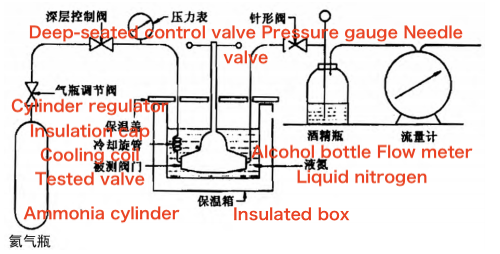
Figure 3 Typical diagram of the low-temperature test device
During cryogenic seat leakage testing, the maximum permissible leakage rate shall not exceed:
100 mm3/s×nominal size (DN)
After completing cryogenic testing, the valve shall be gradually brought back to ambient temperature. The ammonia verification test should then be repeated, and the valve’s opening and closing torques measured and recorded to ensure that no abnormal mechanical degradation has occurred.
Owing to the unique properties of liquefied natural gas (LNG), the selection and design of cryogenic valves for LNG receiving terminals demand more rigorous considerations than those applied to conventional valves. Beyond the challenges of the extreme cryogenic environment, the highly flammable and explosive nature of LNG places stringent demands on valve design, material selection, sealing performance, and fire safety. Only by comprehensively evaluating these factors—along with service life, operational reliability, safety, and cost-effectiveness—can cryogenic valves for LNG receiving terminals be properly selected and designed to ensure long-term, safe, stable, and efficient operation.