Design of a Split-Compensating Ball Valve
Aug 28, 2025
Abstract: The split-compensating ball valve is a sealing valve with automatic compensation, designed to meet the stringent requirements for toxic and hazardous service conditions. Its design emphasizes low operating torque, high sealing performance, rapid opening and closing, and automatic wear compensation. This article focuses on the safety design and structural analysis of the split-compensating ball valve, ensuring reliable performance in harsh working conditions. The upgraded design has achieved superior performance and has been well received by users, providing a safe and durable solution that meets the demanding requirements of toxic and hazardous media applications.
The split-compensating ball valve combines the wedge-shaped gate mechanism of a gate valve with the spherical sealing interface of a ball valve. During structural optimization, rational design, judicious material selection, and process improvements were implemented to enhance reliability and stability. Mechanical seals are inherently prone to wear, leading to reduced service life. Without compensation, wear-induced leakage can release hazardous media into the environment, thereby endangering health and safety. Unlike conventional designs, the split-compensating structure prevents friction between the ball and the valve body sealing surface during closure, thereby ensuring continuous and reliable sealing performance. By providing a reliable seal and extending service life, the design offers clear operational benefits. The valve’s large flow area and low flow resistance enable high-capacity operation, and its hardened sealing surfaces deliver superior durability and performance under demanding conditions. In terms of structure, the valve integrates a wedge-shaped cone, ball, stop ring, and adjustment washer. This configuration ensures quick actuation, compensates automatically for wear, maintains reliable sealing, requires low operating torque, and enables user-friendly operation. The split-compensating ball valve is designed for versatile performance across diverse media and operating conditions, including challenging applications such as hydrocarbons, acidic or alkaline solutions, coatings, pastes, ferrous semi-finished products, high-viscosity crude oil, and toxic or hazardous gases, liquids, and steam. In summary, the split-compensating ball valve combines reliable sealing, swift operation, and versatile performance, making it well-suited for challenging industrial applications.
The valve body, as the primary component of a ball valve, is typically made from forged or cast metals, such as carbon steel, alloy steel, or stainless steel. Ball valve bodies are available in one-piece, two-piece, and multi-piece designs. Two-piece and multi-piece configurations offer the advantage of easier maintenance and overhauls. The ball acts as the valve’s closing element. It is typically made from forged metal and may be spray-welded or electroplated to enhance durability. The ball rotates 90° about the valve body’s centerline to open or close the valve. Depending on the design, it may be either a floating or a trunnion-mounted (fixed) ball. A floating ball shifts slightly downstream under differential pressure to achieve sealing, whereas a fixed ball remains stationary, with the seat’s sealing ring exerting pressure to maintain a tight seal. The sealing ring, located between the ball and the seat, ensures the valve’s tight sealing performance. It can be made from metallic or non-metallic materials, with the choice depending on the type of media, operating conditions, and user requirements. Proper design and material selection are essential for ensuring reliable sealing, accurate performance under operating conditions, and long-term stability. The actuator provides the mechanism for opening and closing the valve. Common types include manual, electric, pneumatic, and hydraulic actuators. The selection of an actuator depends on application requirements, the operating environment, and cost-effectiveness. Figure 1 shows a schematic diagram of a conventional hard-seal ball valve. This type of valve typically features a full-bore design, allowing pigging operations for pipeline cleaning. It offers advantages such as a simple structure, ease of operation, reliable sealing, and minimal flow resistance, making it suitable for high-pressure, high-temperature, and cryogenic service conditions. In addition, maintenance is straightforward, and the sealing ring can be easily replaced, reducing downtime and overall maintenance costs. Seat gasket, seat ring, seat sprayed with Ni55, and ball sprayed with Ni60.
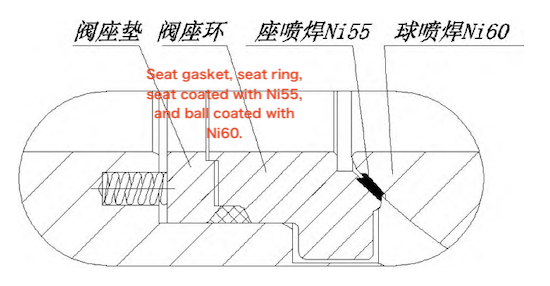
Figure 1. Schematic diagram of a traditional metal-seated structure
The valve body, as the main component of a ball valve, is typically made from forged or cast metals, such as carbon steel, alloy steel, or stainless steel. Ball valve bodies are available in one-piece, two-piece, and multi-piece designs. Two-piece and multi-piece configurations offer the advantage of easier maintenance and overhauls. The ball acts as the valve’s closing element. It is typically made from forged metal and may be spray-welded or electroplated to enhance durability. The ball rotates 90° about the valve body’s centerline to open or close the valve. Depending on the design, the ball can be either floating or trunnion-mounted. A floating ball shifts slightly downstream under differential pressure to achieve sealing, whereas a trunnion-mounted (fixed) ball remains stationary, with the seat’s sealing ring exerting pressure to maintain a tight seal. The sealing ring, located between the ball and the seat, ensures the valve’s tight sealing performance. It can be made of metallic or non-metallic materials, with the choice depending on the type of media, operating conditions, and user requirements. Proper design and material selection are critical for ensuring reliable sealing, accurate performance under operating conditions, and long-term stability. The actuator provides the mechanism for opening and closing the valve. Common types include manual, electric, pneumatic, and hydraulic actuators. The selection of an actuator depends on application requirements, the operating environment, and cost-effectiveness. Figure 1 shows a schematic diagram of a traditional hard-seal ball valve structure. This type of valve typically features a full-bore design, allowing pigging operations for pipeline cleaning. It offers advantages such as a simple structure, easy operation, reliable sealing, and minimal flow resistance, making it suitable for high-, low-, and high-temperature service conditions. In addition, maintenance is straightforward, and the sealing ring can be easily replaced, which reduces downtime and lowers overall costs.
Ball valve seat structures are generally classified into suspended and elastic sealing types. The suspended seat achieves sealing through preload and medium pressure, but it is susceptible to wear and sticking. The elastic sealing type achieves sealing through spring force and pipeline pressure, but its elastomer is prone to fatigue and aging over time. Therefore, a more reliable valve seat structure can be designed by integrating the advantages of both types, as shown in Figure 2.
(1) Packing seal and piston valve seat seal
The packing seal relies on packing compression to achieve sealing, which provides high reliability and good adaptability to changing operating conditions. Packing materials may be selected from high-temperature- and corrosion-resistant options, such as fluoroplastics (e.g., polytetrafluoroethylene, PTFE) and graphite rings, and may also undergo special treatment to extend service life. The piston valve seat relies on piston movement to achieve sealing, offers reliable sealing and flexible operation, and is therefore suitable for high-pressure and high-flow applications.
(2) Sealing Surface Structure Combination Design
A narrow-face sealing design increases the sealing pressure per unit area, which improves sealing performance. A pressure self-sealing design uses medium pressure to enhance the self-sealing effect. A double-sealing structure positions seals on both the upper and lower sides of the ball, ensuring that if one seal fails, the other continues to maintain effective sealing. Elastic compensation elements, including springs, disc springs, and bellows, accommodate dimensional changes due to thermal expansion and contraction, ensuring continuous and reliable sealing performance. These improvements significantly enhance the ball valve’s sealing performance and service life, enabling it to meet application requirements across diverse operating conditions.
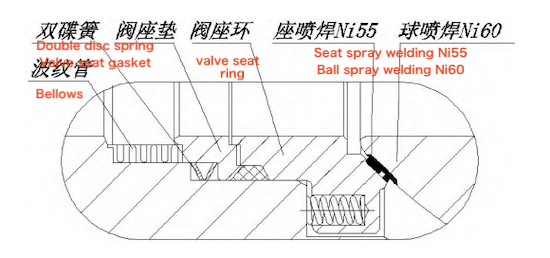
Figure 2. Schematic diagram of the improved sealing ring structure
The spread-compensating ball valve mainly consists of a central body, left and right bodies, discs, seat rings, wedges, connecting rods, a stem, a bracket, and an actuator. Its unique feature lies in the elastic discs, which consist of a wedge and a connecting rod. The central piece is a wedge-shaped cone with a 5° bevel on each side (similar to a gate valve), into which T-slots are machined. The conical wedge at the top of the combined ball valve is called the sliding wedge, with its spherical surface serving as the sealing surface. The ball valve and the wedge-shaped cone are connected via a T-slot, allowing them to slide vertically in unison. A schematic diagram and a photograph of the structure are shown in Figure 3. The valve disc of the spread-compensating ball valve is a specially engineered component, comprising connecting rod holes on both sides, a trapezoidal groove, a slider, a circular pin hole, and an elastic ball disc. A 5° T-slot is machined at the center of the upper end of the ball disc, with a slider positioned in the middle of the groove. The bottom of the ball disc features a U-shaped elastic design. When the connecting rod drives the wedge downward, the ball disc expands to form a seal. When the wedge is lifted upward, the ball disc contracts and rotates 90° to open. The wedge-type sliding ball valve thus offers reliable sealing, wear resistance, and a compensation function. Different structural variations can significantly improve sealing performance for various applications, ensuring safe and stable system operation. The detailed structure of the ball disc is shown in Figure 4.
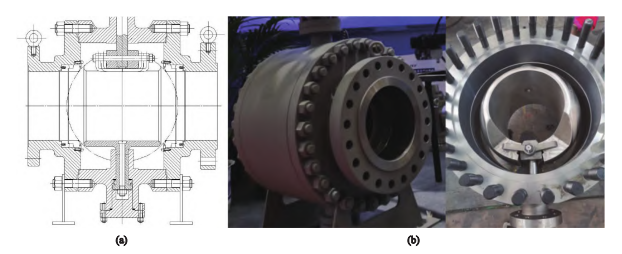
Figure 3 Schematic diagram and actual image of a spread-compensating ball valve
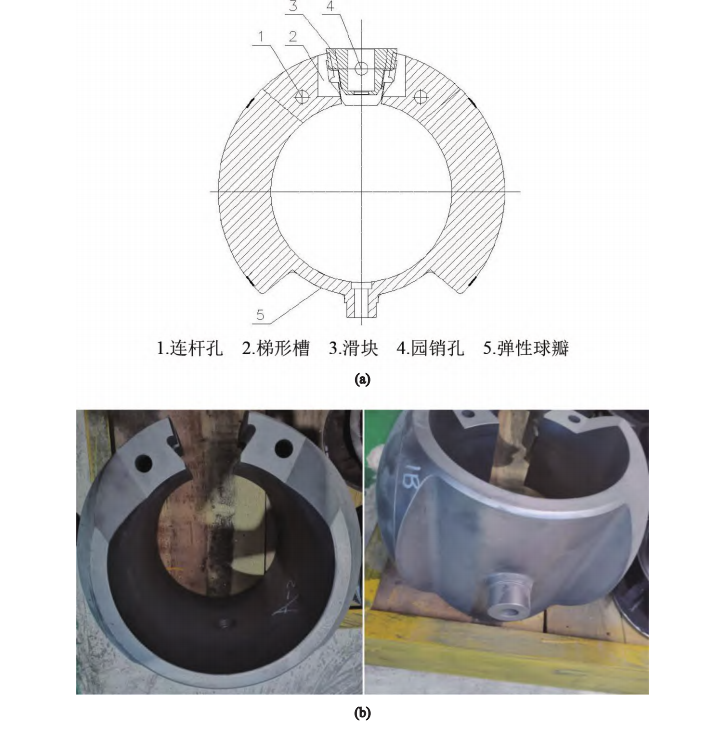
Figure 4 Detailed schematic and structure of the ball disc
1. Connecting rod hole 2. Trapezoidal groove 3. Slider 4. Pin hole 5. Elastic ball disc
The spread-compensating valve seat functions by regulating the valve core’s movement via the vertical motion of the valve stem. As the stem descends, the elastic ball discs are pushed outward, causing the assembled discs to press tightly against the seat rings on both sides, forming a seal and closing the valve. As the stem rises, the elastic ball discs return to their original position, drawing the assembled discs away from the seat rings while simultaneously rotating 90° to balance the pressure, thereby opening the valve. This structural design provides low operating torque and excellent sealing performance, allowing for online secondary sealing compensation. Consequently, it enhances operational efficiency, accuracy, and safety, while reducing both labor and material costs. In summary, the spread-compensating ball valve design combines the mechanical principles of wedge-type gate valves and ball valves, incorporating improvements to both the ball disc and the seat. This results in an advanced design that enables domestically manufactured valves to achieve performance and quality comparable to imported products. Leading domestic manufacturers now employ advanced technologies to produce valves with reliable performance and quality. These valves have gained widespread adoption and recognition in sectors such as oil and gas, chemical, power generation, water and wastewater treatment, papermaking, metallurgy, pharmaceuticals, and food processing.
In applications handling toxic or hazardous media, valves must be carefully designed and selected to provide reliable leak prevention, ensuring the safety of personnel and the protection of equipment. In an expansion-compensated ball valve, the wedge mechanism expands the ball disc, ensuring firm contact with the sealing ring for rapid and dependable sealing. Furthermore, the sealing structure provides automatic wear compensation, delivering outstanding sealing performance and ensuring safety and reliability in the handling of toxic media. Pipeline valves play a critical role in industrial operations and pipeline transportation, functioning as vital components for regulating flow and ensuring the safe and reliable conveyance of media. Common safety issues during valve operation and their corresponding solutions include:
Leakage – As one of the most frequent safety issues, leakage can result in significant hazards, including loss of media, fire, or explosion. Prevention involves choosing suitable materials (e.g., high-temperature and high-pressure resistant) and conducting routine inspections and maintenance.
Operational Failure – Issues such as handwheel jamming or valve stem breakage can prevent normal opening and closing. Preventive measures include routine inspections and maintenance to ensure the actuating device operates reliably.
Pressure fluctuations – Sudden variations in system pressure may lead to valve rupture or deformation. Preventive measures include using high-strength materials and reinforcing structural stability.
Temperature variations – Materials can expand or soften at high temperatures, or become brittle at low temperatures. Preventive measures include selecting materials with low thermal expansion coefficients and strong adaptability to temperature changes.
Corrosion and wear – Over extended service periods, metal components may undergo corrosion or wear. Preventive measures include using corrosion-resistant materials and performing regular inspections and maintenance.
The expansion-compensated ball valve combines the advantages of gate valves and ball valves. Its valve core comprises a sliding wedge and a connecting rod. The central component is a wedge-shaped cone with a 5° bevel on each side, each side machined with a T-slot. This cone is attached to the valve stem and moves in unison with it, rising, lowering, or rotating as needed. During opening and closing, the sealing pair separates, eliminating friction, thereby reducing operating effort and extending service life. Opening requires only a short lift followed by a 90° rotation, resulting in a significantly shorter opening time—approximately one-tenth that of a gate valve. In addition, the compact design and ease of installation of the expansion-compensated ball valve simplify piping layout, making it suitable for a wide range of industrial applications and capable of meeting diverse customer requirements. Its simple structure also facilitates maintenance and the replacement of components. In summary, the expansion-compensated ball valve, with its unique structure and operating characteristics, has demonstrated reliable performance in industrial applications and exhibits broad potential for future use.
Previous: Optimizing DLC Coatings for Hardness and Low Friction on Nuclear Valve Stems
Next: L Type Three-Way Ball Valves for Natural Gas Reversing in Glass Melting Furnaces